
Summary
Editor's rating
Is it worth the money compared to Apple, Samsung & others?
Looks like a real watch, not a toy on your wrist
Battery life: finally something that doesn’t live on the charger
Comfort: fine for all-day wear, but size matters
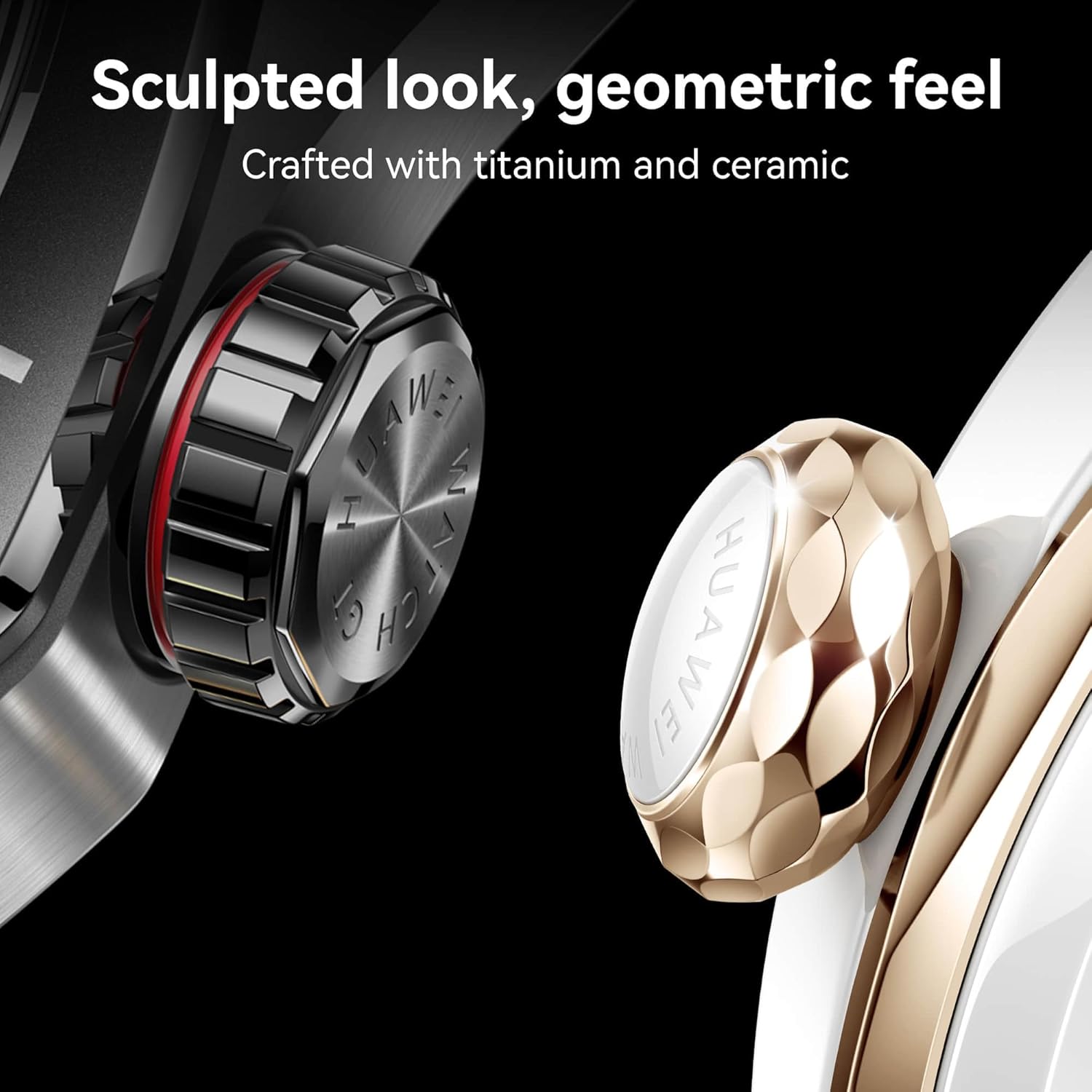
Titanium and sapphire that actually feel tough
Day-to-day performance and smart features
What this watch actually offers in real life
Health and fitness tracking: accurate enough to trust
Pros
- Very good battery life (about 7–12 days in real use with full tracking on)
- Premium materials (titanium case and sapphire glass) that resist scratches and feel solid
- Accurate and comprehensive health and GPS tracking, including ECG and sleep monitoring
Cons
- Limited smart features and weaker app ecosystem compared to Apple Watch or Wear OS
- Audio stays on the watch if you answer calls there, and switching back to earbuds is clumsy
- 46 mm size can feel bulky on smaller wrists

Specifications
View full product page →| Brand | HUAWEI |
A smartwatch that actually lasts more than two days
I’ve been using the HUAWEI WATCH GT 5 Pro 46 mm for a few weeks now, mainly as my daily watch, fitness tracker, and for handling calls when my phone is in my bag. I came from a Samsung smartwatch that needed charging every 1–2 days, so I wanted something that doesn’t live on the charger. This one is clearly built for people who are sick of babying their battery and still want proper health and sport features.
In day-to-day use, I’ve used it for walks, a bit of running, indoor cycling, sleep tracking, and normal office life. Notifications, calls over Bluetooth, GPS runs, always-on heart rate, SpO2, and sleep tracking are all on. I also tested the ECG a few times out of curiosity and played a bit with the golf and hiking profiles just to see how they work. I paired it to an Android phone first, then tried it with an iPhone for a few days to see the difference.
Overall, my first impression is that it’s a pretty solid watch if you care more about battery and health tracking than deep app integration. It looks and feels like a regular high-end watch, not like a plastic fitness band, which I liked. But there are a few quirks, especially if you’re on iOS or used to the Apple/Samsung ecosystem, that you should know before buying.
So I’ll break it down in simple terms: how it looks on the wrist, how it feels to wear all day, how the health and sports stuff behaves in real life, how the battery actually performs, and whether I think the price makes sense compared to other brands. It’s not perfect, but it does a lot of things right, especially if long battery life is high on your list.
Is it worth the money compared to Apple, Samsung & others?
In terms of price, the HUAWEI WATCH GT 5 Pro 46 mm usually sits in the mid-to-high range, under a high-end Apple Watch but above cheap fitness bands and budget smartwatches. For what you get – titanium, sapphire, long battery life, ECG, strong GPS, and a decent software experience – I’d say it’s good value if your priorities match what it does well. You’re basically paying for build quality and battery rather than a huge app store.
Compared to an Apple Watch, you lose deep iOS integration, payments, and a big ecosystem of apps. But you gain a lot of battery life and a more traditional watch look. If you’re fully embedded in Apple’s world and want maximum convenience with iMessage replies, Apple Pay, and app integration, this is not the best choice. If you’re on Android, especially Huawei or other brands, the trade-off makes more sense: you still get notifications, calls, health metrics, GPS, and you charge it way less often.
Against Garmin and other sports-focused watches, this sits somewhere in the middle. It looks nicer for daily wear than many chunky sports watches, and the screen is sharper and more colorful. On the other hand, serious athletes who want very deep training metrics and ecosystem (like Garmin Connect) might still prefer Garmin. For casual to moderately serious runners, cyclists, and gym users, the GT 5 Pro is already more than enough.
So overall, value is solid but not mind-blowing. There are cheaper smartwatches that do the basics, but they often cut corners on materials, sensors, or battery life. There are more expensive ones with more apps and tighter phone integration, but they usually need charging almost daily. If you want a watch that looks good, tracks health well, and lasts a long time between charges, the price feels fair. If you mainly want a wrist extension of your phone with lots of apps, your money is probably better spent on a different ecosystem.
Looks like a real watch, not a toy on your wrist
Design-wise, this is one of the main reasons I stuck with it. The 46 mm size is on the larger side, but it looks like a proper men’s watch rather than a square gadget. The round AMOLED screen is sharp (466 x 466) and bright enough outdoors. In direct sun during a midday walk, I could still read my pace and heart rate without squinting, which is something my older watch struggled with. The bezels are not razor-thin, but they’re not chunky either – it looks balanced.
The watch has two physical buttons: a rotating crown and a lower button you can map to a favorite function (I set mine to workouts). The crown scrolls smoothly through menus, and the vibration feedback is decent, not too aggressive. The overall look is more on the classic/sporty side than techy. With a simple analog watch face, it passes easily for a normal watch in an office or at dinner, unlike some bright plastic fitness watches that scream “gym only”.
Huawei’s watch face store is surprisingly packed. There are hundreds of free faces, from minimal analog to info-heavy digital. You can also get paid faces if you want more variety, but I didn’t feel the need. I liked that many faces have an Always-On Display version that keeps a basic clock visible without draining the battery too fast. Switching faces is quick on the watch or through the app, so I ended up using a simple analog face in the week and a more data-heavy one for workouts.
If you hate the look of typical smartwatches like some people mention in the reviews (Apple, Fitbit, etc.), this one sits in a nicer spot. It’s not flashy or covered in chrome, but it looks clean and grown-up. Only thing to keep in mind: 46 mm is big. On a small wrist, it will look chunky. On my medium wrist it looks fine, but if you’re very slim or buying for someone with a tiny wrist, the 41 mm version might make more sense.
Battery life: finally something that doesn’t live on the charger
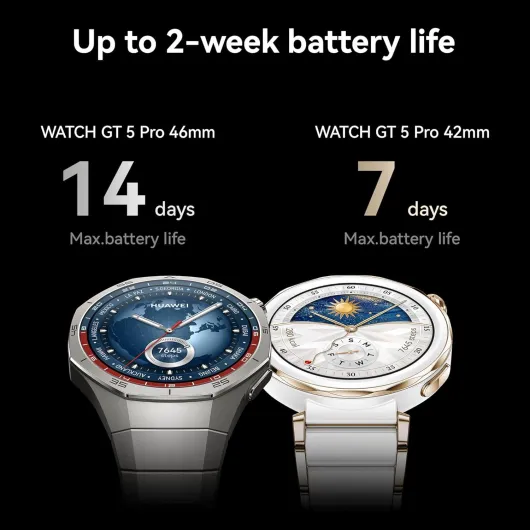
This is the part that sold me the most. With my usual setup – always-on heart rate, SpO2 at night, sleep tracking, notifications, a couple of GPS workouts per week, and no always-on display – I easily got 9–12 days on a charge. That lines up pretty well with Huawei’s “9 days typical / 14 days max” claim. When I pushed it with more GPS activity and more screen-on time, it still gave me around a week. Coming from a watch that barely survived two days, this feels like a relief.
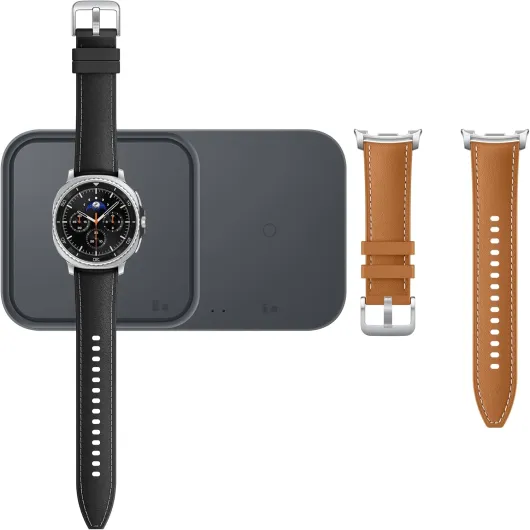
Charging is done via the included wireless charging puck. From around 10% to full took me roughly 1.5–2 hours in my tests, which is decent. One Amazon user mentioned about 40 minutes, but that’s likely from a higher starting percentage. Either way, you’re not stuck waiting half a day. I typically just dropped it on the charger during a shower and breakfast once every week or so, and it was enough to keep it topped up.
With always-on display enabled and brightness higher, the battery obviously drops faster. In that mode, I was looking at more like 5–7 days, depending on how much I used GPS. Still far better than watches that need daily charging. A 2.5-hour outdoor walk with GPS and heart rate monitoring used about 20% of the battery, which fits with my longer-term experience – GPS does drain it, but not in a dramatic way.
If you’re the type who forgets to charge gadgets, this watch is very forgiving. You can comfortably take it on a week-long trip without packing the charger if you start at 100%, as long as you’re not doing long GPS workouts every single day. For me, the battery life is one of the main reasons to pick this over more app-heavy competitors. It’s simply less hassle, and you actually get to use the health and sleep features because you’re not constantly choosing between wearing it and charging it overnight.
Comfort: fine for all-day wear, but size matters
Comfort-wise, I’d call it good, but clearly a 46 mm watch. If you’re used to small, light fitness bands, you’ll notice it the first couple of days. It sits flat on the wrist, and the fluoroelastomer strap wraps nicely without pinching. I wore it day and night, including for sleep tracking, and after the first few nights I stopped noticing it unless I slept with my wrist bent under my head, where the size becomes more obvious.
The underside sensors don’t dig into the skin, and I didn’t get any irritation spots, even when sweating during workouts. I kept the strap fairly snug to get reliable heart rate readings, but not tight enough to leave deep marks. If you have sensitive skin, this material is usually okay, and I had no redness or itching after long use. The watch doesn’t slide around much during runs or bike rides, which helps with consistent readings.
One thing to be aware of: with jackets or tighter shirt cuffs, the 46 mm case can catch a bit. It’s not crazy thick (about 10.9 mm), but the diameter and lugs mean it will bump under a tight sleeve. With hoodies and casual shirts it’s fine, but with slim dress shirts it can be a bit annoying. That’s not specific to this model; it’s the same story with most large round smartwatches.
For workouts, I had no real complaints. During a 2.5-hour outdoor walk with GPS on, the strap stayed comfortable, and the watch didn’t feel like a brick swinging on my wrist. If you’re used to heavy metal watches, this will feel light. If you’re used to ultra-light fitness bands, it will feel like an upgrade in quality but a step up in bulk. Overall, comfortable enough for 24/7 wear, as long as you accept that 46 mm is substantial on smaller wrists.
Titanium and sapphire that actually feel tough
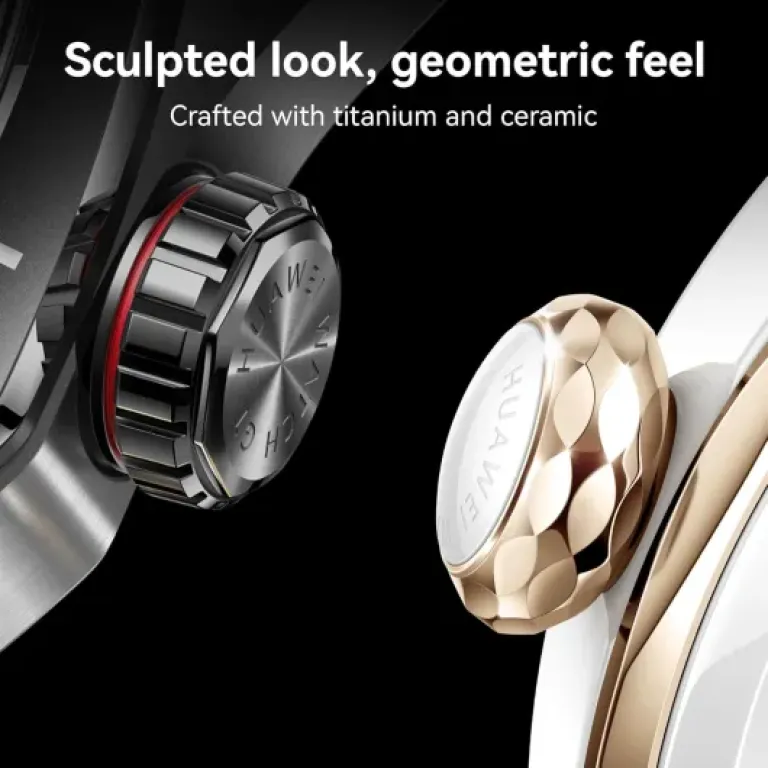
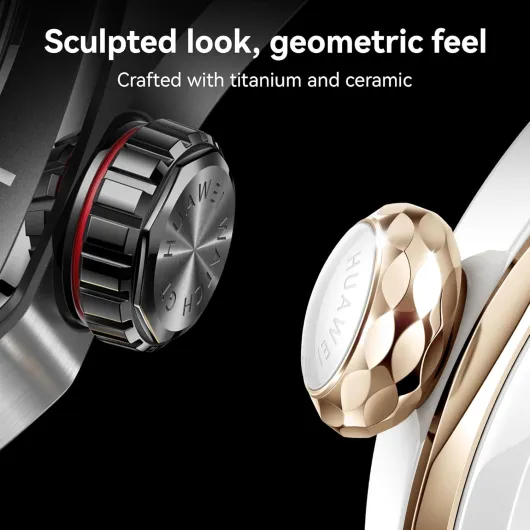
The case is titanium alloy with sapphire glass, which is a big step up from the usual aluminum or plastic you get on mid-range watches. In the hand and on the wrist, it has that cold metal feel, not the hollow plastic vibe. It’s not super heavy, though – about 53 g without the strap – so it doesn’t drag your wrist down. After a full day, I forgot about the weight, which is what you want for sleep tracking and long hikes.
The sapphire glass is the bit I was most curious about. I’m not nice to my watches: door frames, metal gym machines, backpacks – they all get in contact. After a few weeks, no visible scratches on the glass, even though I definitely clipped it against a door handle once. With standard Gorilla Glass on other watches, I usually get little hairline scratches pretty fast, so here the material choice seems to pay off. The titanium case also hides micro-scratches well because of the finish; it doesn’t show every mark like polished steel.
The strap on my unit is the black fluoroelastomer one. It’s basically a high-quality rubbery material. It feels nicer than cheap silicone bands: a bit smoother, doesn’t trap as much sweat, and hasn’t picked up lint like crazy. It uses a standard 22 mm width, so you can swap it with third-party straps if you want leather or metal later. The tang buckle is simple and holds well; I never had it come loose in workouts.
Water resistance is rated for up to 40 m free diving, which is way above casual swimming. I only tested it in a pool and in the shower, but no issues: no fog under the glass, no odd behavior. Specs say IPX0 which is weird on paper, but real-world use plus user reviews clearly show it’s fine for water sports. So from a materials and build standpoint, it feels like a watch you can beat up a bit without babying it. If you want something that can handle daily abuse and still look decent, this checks that box.

Day-to-day performance and smart features
Performance in daily use is smooth for the basics. Menus scroll without lag, apps open quickly, and the touch screen responds well. I didn’t run into freezes or random reboots. HarmonyOS on the watch feels lightweight; it’s not trying to be a full phone on your wrist. Notifications from WhatsApp, SMS, email, and other apps popped up reliably on both Android and iOS. You can read them easily, but replies are limited, especially on iPhone – no full keyboard or app-specific replies like on Apple Watch.
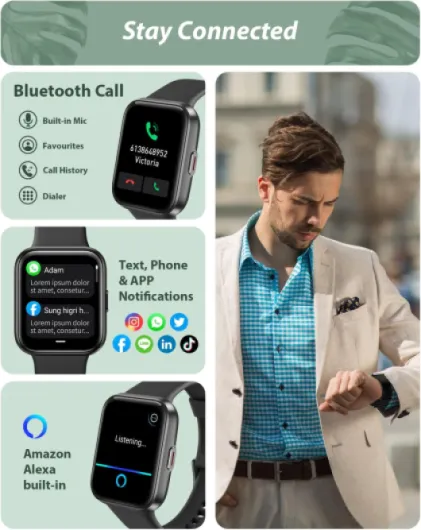
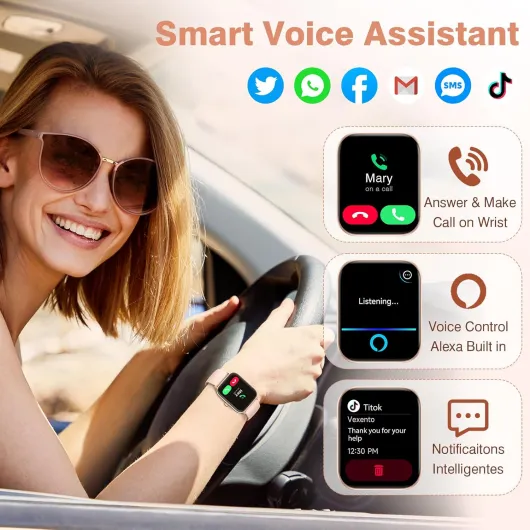
Bluetooth calls worked better than I expected. The speaker is loud enough to handle calls in a quiet or moderately noisy room, and the microphone picked up my voice clearly according to people on the other end. Taking quick calls while cooking or when the phone is across the room is genuinely handy. The downside, as mentioned in a review and confirmed in my use, is audio routing: if you answer on the watch, the sound stays on the watch. You can’t swap it back to earbuds from the watch; you have to grab your phone and change the audio output. It’s a small but annoying limitation if you use wireless earbuds a lot.
There’s no Wi‑Fi, which sounds like a big missing piece but in practice didn’t bother me much. Updates and data sync go through Bluetooth to your phone, and it works fine. The bigger limit is the lack of a strong third-party app ecosystem. You won’t be installing Spotify, Google Maps, or a ton of niche apps directly on the watch. There is some basic music support and offline maps, but it’s mostly Huawei’s own stuff. If you’re used to Apple Watch or Wear OS with lots of apps, this will feel more closed.
For sports, starting workouts is quick, GPS locks fairly fast, and the watch gives clear real-time stats: pace, distance, heart rate zones, etc. The vibration alerts for laps or zones are easy to feel. After the workout, the summary on the watch is decent, and the app gives more detail with maps, splits, and training load. It’s not as deep as a top-end Garmin for advanced training metrics, but for most users it’s more than enough. So performance-wise, no big complaints, just know that it’s more of a strong standalone tracker than a smartwatch full of apps.
What this watch actually offers in real life
On paper, the HUAWEI WATCH GT 5 Pro 46 mm is packed: titanium case, sapphire glass, 1.43" AMOLED screen, built-in GPS, ECG, SpO2, sleep tracking, golf mode, diving up to 40 m, Bluetooth calls, and up to 14 days of battery life. Storage is 4 GB, which is enough for some music and watch faces, but you’re not installing loads of third-party apps like on an Apple Watch. It runs Huawei’s HarmonyOS, not Wear OS, which matters if you’re expecting the Play Store experience.
In practice, the core functions are: fitness tracking, health monitoring, GPS sports tracking, notifications, and calls. You get the usual stuff: steps, heart rate, stress, sleep stages, workouts (running, cycling, hiking, gym, etc.). There’s also ECG and arterial stiffness on the Pro version, plus some extra modes like golf and free diving. The watch syncs with the HUAWEI Health app, which is actually pretty clean and easy to read once you get used to the layout. No nonsense, you see your workouts, sleep, and heart data quickly.
With Android, you get a better experience: more watch faces, easier updates, and slightly smoother notifications. With iOS, it works, but there are some limits: you can’t respond to messages directly from the watch, and integration with AirPods (or other headsets) during calls is not as smooth as on an Apple Watch. One Amazon reviewer mentioned the annoyance that when you accept a call on the watch, the audio sticks to the watch and you need to grab your phone to move it back to your earbuds. I ran into the same behavior – it’s not broken, just clumsy.
So if you expect it to replace an Apple Watch in terms of smart features and app ecosystem, you’ll be a bit underwhelmed. But if your main goal is accurate tracking, long battery life, and a watch-like look, it covers the basics well and adds some advanced health tools that cheaper bands simply don’t have. It’s more like a very capable sports watch with some smart functions than a mini smartphone on your wrist.
Health and fitness tracking: accurate enough to trust
On the health side, this watch does a thorough job for everyday tracking. Heart rate, SpO2, sleep, stress, ECG, and even arterial stiffness are available. I compared heart rate readings during runs and indoor cycling against a chest strap. Most of the time, the values were within a few beats per minute, and trends matched well. There were occasional small spikes or dips, which is normal for wrist-based sensors, but nothing dramatic. For casual and fitness use, I’d trust the numbers.
Sleep tracking is one of the better ones I’ve used. It breaks sleep into deep, light, REM, and awake times, and the graphs in the app are easy to read. The comments and scores are a bit “coachy”, but you can ignore the fluff and just focus on duration and patterns. The watch also monitors for possible sleep apnea and irregular heart rhythm (like AFib). Obviously, this is not medical grade, but as an early warning or general check, it’s useful. I liked glancing at the weekly view to see if my sleep was going off the rails.
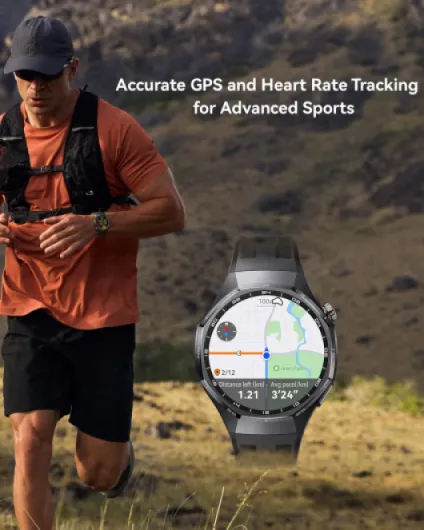
GPS performance is pretty solid. On outdoor runs and walks, distance and route matched closely with my phone and a Garmin I borrowed once for comparison. On a 5 km loop, the difference was usually within 50–100 m, which is good enough for most people. One user mentioned a 0.1 km discrepancy on treadmill runs; I saw similar minor differences indoors, but that’s more about treadmill calibration than the watch. You can manually correct the distance in the app if you care.
The ECG feature works, but it’s more of a “check now and then” tool than something you’ll use daily. You hold your finger on the electrode and get a reading in about 30 seconds. It shows a basic rhythm assessment in the app. Nice to have for peace of mind, but don’t expect a full medical report. Overall, for everyday health and sport tracking, it gets the job done well and feels reliable, as long as you remember it’s still a consumer gadget, not a hospital machine.
Pros
- Very good battery life (about 7–12 days in real use with full tracking on)
- Premium materials (titanium case and sapphire glass) that resist scratches and feel solid
- Accurate and comprehensive health and GPS tracking, including ECG and sleep monitoring
Cons
- Limited smart features and weaker app ecosystem compared to Apple Watch or Wear OS
- Audio stays on the watch if you answer calls there, and switching back to earbuds is clumsy
- 46 mm size can feel bulky on smaller wrists
Conclusion
Editor's rating
After living with the HUAWEI WATCH GT 5 Pro 46 mm, my take is simple: it’s a strong choice if you care about battery life, build quality, and health tracking more than fancy apps. The titanium and sapphire combo feels tough and looks good, the screen is sharp and bright, and the sensors (heart rate, GPS, sleep, ECG) are accurate enough for everyday use and regular training. The fact that you can go roughly a week or more between charges without babying it is a big plus in real life.
It’s not perfect. On iOS, you feel the limits more: no replies to messages, clunky audio switching if you answer calls on the watch, and no rich app store like Apple Watch. Even on Android, you don’t get the same third-party app scene as Wear OS. It’s more of a polished sports/health watch with smart extras than a full smartwatch platform. Also, the 46 mm size will be too big for some wrists, and there’s no blood pressure tracking if you’re specifically after that.
Who is it for? People who want a solid, tough-looking watch that tracks health and workouts well, handles calls, looks decent with normal clothes, and doesn’t need charging every night. Great for Android users and okay for iPhone users who don’t care about deep integration. Who should skip it? If you live in the Apple ecosystem and want maximum smart features, or if you really need lots of third-party apps on your wrist, you’ll likely be happier with an Apple Watch or a Wear OS device, even if you sacrifice battery life. For everyone else, this is a pretty solid balance between style, tracking, and endurance.