
Summary
Editor's rating
Value: strong for athletes, less so if you want full smartwatch features
Design: looks tough, not flashy, and a bit chunky
Battery: strong endurance, not magical but very solid
Comfort: fine for training, a bit heavy for 24/7 wear
Durability and build: feels tough, but support is a concern
Performance: GPS and sports tracking are the strong points
What this watch actually offers in real life
Pros
- Very accurate dual-band GPS and reliable tracking, even in forests and city canyons
- Strong battery life with 10–12 days of real mixed use and plenty of hours of GPS
- Bright AMOLED screen with offline maps that are actually useful for hiking and trail
Cons
- Heavier and bulkier than many alternatives, not ideal for small wrists or sleep wear
- Customer support and quality control feedback from users is weak and slow
- Software can feel a bit sluggish and wrist-based heart-rate is only moderately accurate

Specifications
View full product page →| Brand | SUUNTO |
A watch built for training, not for showing off
I’ve been using the Suunto Race Birch for a few weeks as my main training watch, mainly for running, cycling, and some hiking. I came from a Garmin Forerunner and an older Suunto, so I wasn’t expecting miracles, just something reliable with good GPS, solid battery, and proper maps. On paper, this watch ticks almost every box: AMOLED screen, dual-band GPS, offline maps, long battery life, and a bunch of sports modes. In reality, it’s good overall, but not everything is as smooth as the product page suggests.
The first thing that hit me is that this is clearly a sports tool first and a smartwatch second. If you want apps, contactless payment, and deep smart features, this is not it. But if your main use is training, tracking your sessions, and following routes in the mountains or in new cities, then it starts to make more sense. The interface is fairly simple, the Suunto app is focused on training, and the hardware feels like it’s built to be used, not just looked at.
That said, it’s not perfect. Some bits of the software feel a bit slow, heart-rate accuracy on the wrist is decent but not great, and the customer service feedback from other buyers is honestly worrying. I personally didn’t have to deal with support beyond initial setup, but reading those experiences, I would not rely on them if something serious breaks. Also, some people keep receiving units that look like they’ve already been opened, which doesn’t inspire much confidence when you’re paying this kind of money.
So this review is not going to hype it up. I’ll go through what actually works in day-to-day use, what’s just okay, and what might push you towards Garmin, Polar, or even a cheaper watch. If you mainly care about battery, GPS, and maps, you’ll probably like it. If you want smooth software, quick support and full smartwatch functions, you might be disappointed.
Value: strong for athletes, less so if you want full smartwatch features
On value for money, the Suunto Race Birch sits in an interesting spot. It’s not cheap, but compared to some high-end Garmin or premium multisport watches, it’s usually a bit more affordable while still giving you dual-band GPS, offline maps, and a bright AMOLED screen. For someone who mainly cares about training, navigation, and battery life, that’s a pretty solid mix. You’re paying for a serious sports tool, not for a fashion piece or a smartwatch full of apps.
Where the value is good is if you’re the type of person who does regular running, trail, cycling, hiking, maybe some triathlon, and you don’t care too much about paying with your wrist or installing a ton of apps. The watch tracks training well, the GPS is accurate, the battery is long-lasting, and the maps are actually useful. Compared to some Garmins at similar prices, the Suunto often has a better screen and free maps, while being slightly cheaper. You do, however, trade off some ecosystem size and polish.
The value drops a bit if you also want a smooth, fully featured smartwatch experience and strong customer support. The Suunto ecosystem is smaller, the app is focused on training only, and the whole thing doesn’t feel as polished as Apple or Garmin when it comes to user experience and after-sales service. When I read reviews from people who had to return watches twice or fight with support for weeks, it makes me hesitate to call this a great deal, because part of value is also how easy it is to get problems fixed.
So I’d say: for pure sports and navigation use, the value is good to very good. You get a lot of serious features for the price. For a mixed use as both smartwatch and training watch, it’s more of a “depends what you expect” situation. If you mainly want a training tool and you’re okay living with a few software quirks and a smaller ecosystem, the price starts to make sense. If you want a smooth, worry-free experience and strong support, you might be better off spending similar money on a Garmin or even stretching to an Apple Watch if battery life isn’t your priority.
Design: looks tough, not flashy, and a bit chunky
The Suunto Race Birch has a fairly classic sports watch look: round case, metal bezel, and a silicone strap. It’s not tiny. At around 49 mm case size and 83 g, you definitely feel it on the wrist, especially if you’re used to smaller watches or something like a basic Fitbit. For my medium wrist, it feels like a proper sports watch, a bit on the chunky side but not ridiculous. On a very small wrist, it might look oversized. On a bigger wrist, it actually looks pretty balanced and solid.
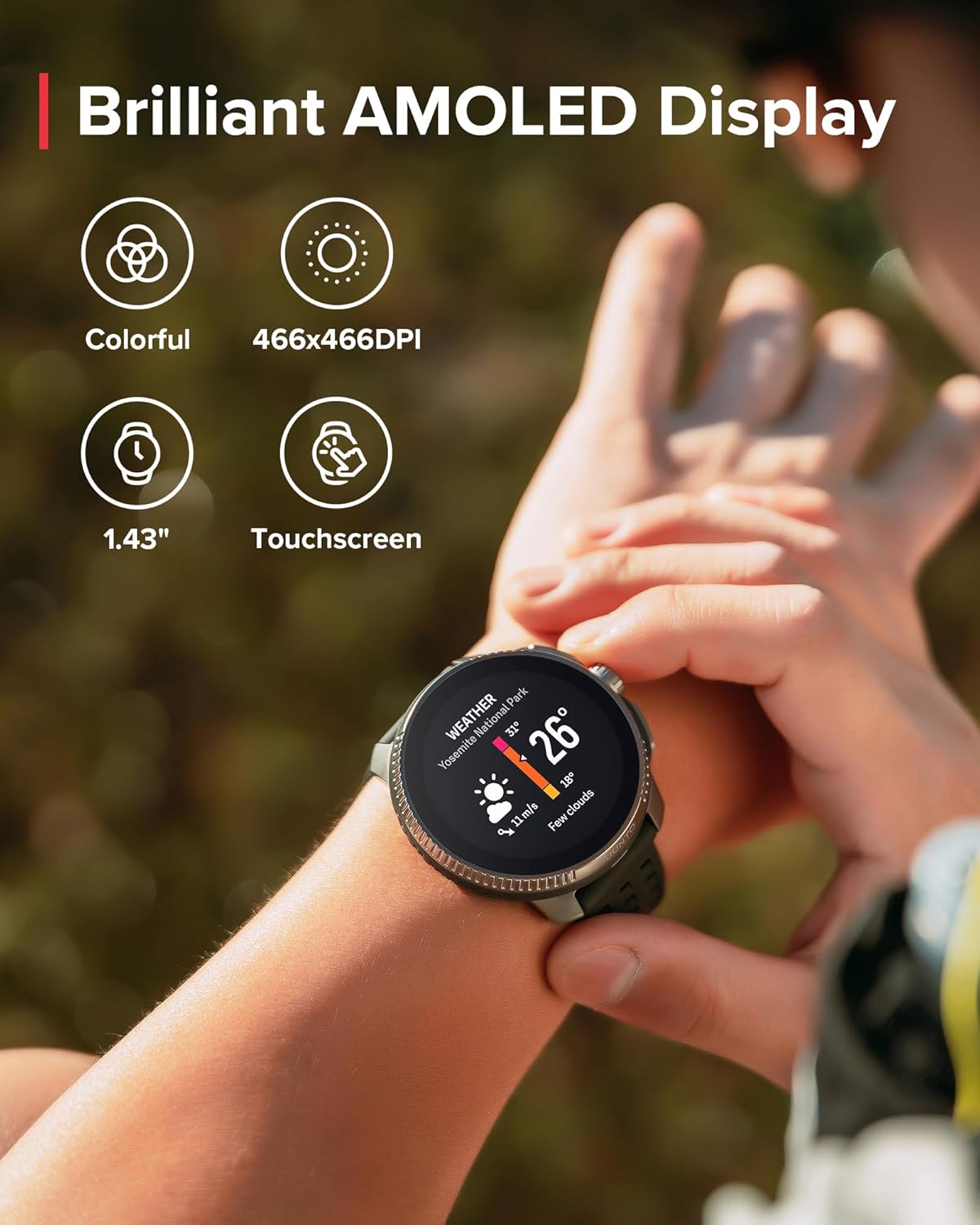
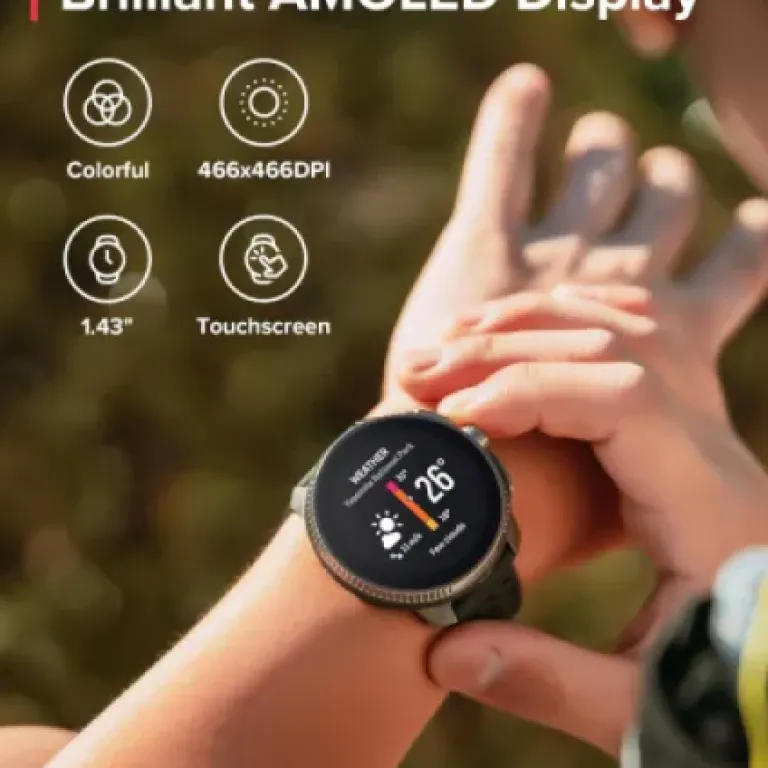
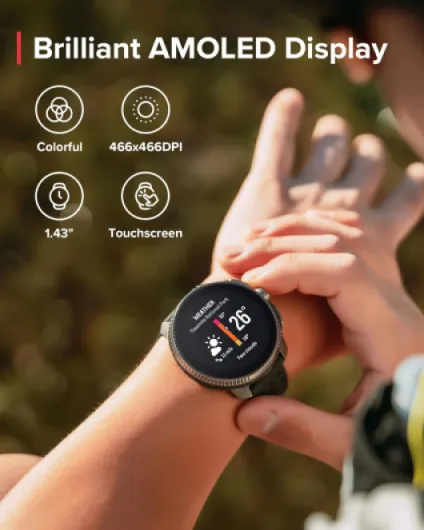
The AMOLED screen is one of the best parts of the design. It’s sharp (466 x 466), bright enough in sunlight, and the colors make the maps and data fields easy to read. The bezels are there, but not huge. You get both a touchscreen and a digital crown plus buttons. The crown is handy when your fingers are sweaty or when it’s raining and the touchscreen gets annoying. The click feels solid, not cheap. I found myself using the crown for scrolling through data screens during runs instead of swiping, which is safer and more precise.
The Birch color is fairly neutral – kind of a light, off-white strap with a metal case that doesn’t scream for attention. If you like loud colors, this is not that. It’s more of a clean, simple look that works with sports gear and doesn’t look too weird with a casual shirt. It’s not something I’d wear with a suit, but that’s not what it’s built for anyway. The strap is 22 mm and uses a standard pin style, so you can swap it for another if the stock one doesn’t suit you.
My main criticism on design is the bulk and weight. During long runs, I noticed the weight more than with my previous Garmin, especially when sweating – the watch tends to slide a bit if the strap isn’t tight. Also, it’s not the most discreet watch for daily office use, especially if you wear tighter cuffs. But overall, the build looks and feels solid, the screen is genuinely good, and the combination of touchscreen and crown is practical in real training conditions.
Battery: strong endurance, not magical but very solid
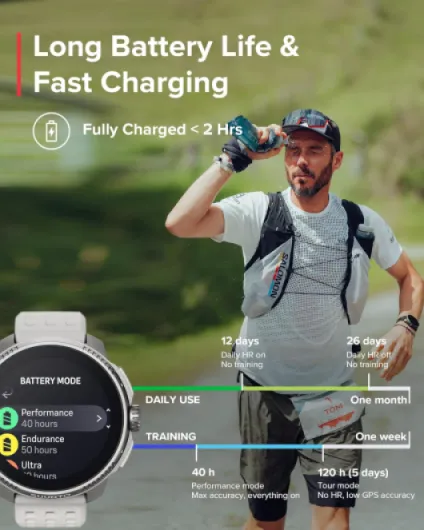
The battery life is one of the reasons I was interested in this watch. Suunto claims up to 26 days of daily use and about 40 hours with GPS in full mode. In real life, with the AMOLED screen on, notifications active, sleep tracking on, and 4–5 workouts per week (runs and rides of 45–90 minutes), I was getting around 10–12 days per charge. That’s with GPS set to the more accurate modes, not the most battery-saving ones. So the 26 days claim is clearly under very light use, but 10+ days in normal training use is still good.
For GPS activities, I didn’t manage to drain it in one go, but on a 4-hour hike with full GPS and maps, I used roughly 10–12% battery. That suggests that the 40-hour figure is not totally fake if you use a single, long activity. It’s more than enough for marathons, ultras, or multi-day hikes if you’re careful. The big difference compared to a more smartwatch-style device like an Apple Watch is that you don’t stress about the battery every day. You charge it once every week or so, not every night.
Charging speed is also decent. From roughly 10% to full, it took me about 1.5–2 hours, which matches the stated 2-hour full charge. You get a simple USB charging cable in the box, nothing fancy. The magnet connection is okay – not the tightest I’ve seen, but it doesn’t randomly disconnect if you don’t bump it. I usually just plug it in while working at my desk and it’s done before I think about it again.
So overall, the battery is one of the strong arguments for this watch. It’s not magic, but for a bright AMOLED screen and full GPS features, the endurance is clearly above average. If you’re coming from a pure smartwatch, this will feel like a relief. If you’re coming from some of the top-end Garmin models with solar and super-optimized modes, it’s in the same ballpark, maybe slightly under the best of them, but still very solid. For most users, you simply won’t worry about running out during a race or long hike.
Comfort: fine for training, a bit heavy for 24/7 wear
On the comfort side, the Suunto Race Birch is a bit of a mixed bag. The silicone strap itself is soft and flexible enough, and the buckle is classic and secure. I didn’t get any skin irritation or weird rubbing, even on longer runs of 2–3 hours. You can adjust the strap fairly precisely thanks to the number of holes, so you can get it just tight enough for heart rate without cutting off circulation. For training, once the watch is on and you start moving, you kind of forget about it most of the time.
Where the comfort takes a hit is the weight and size for all-day, all-night wear. At 83 g, it’s not crazy heavy, but combined with the large case, you feel it when sleeping. Lying on the same arm, I noticed the watch pressing against the pillow, and I ended up taking it off some nights, which defeats the point of continuous sleep and HRV tracking. If you’re used to wearing a lighter, smaller watch, you’ll need a few days to get used to this one. For comparison, my older, lighter Garmin was easier to forget on the wrist 24/7.
During sports, especially running and cycling, it stays in place reasonably well, but you do need to wear it a bit tighter than a normal watch to keep the optical heart rate sensor from bouncing. On hot days, the underside can get sweaty, and the silicone strap can feel a bit sticky. That’s normal for most silicone straps, but worth mentioning. If you do a lot of high-intensity work or gym sessions, it’s fine, but I wouldn’t call it super comfortable compared to slimmer trackers.
Overall, I’d say comfort is good enough for someone who mainly cares about training sessions and doesn’t mind a bigger watch on the wrist all day. If you’re sensitive to weight or you sleep badly with anything bulky on your wrist, this might bother you. It’s the trade-off you get for a large battery, metal build, and big screen. It’s not painful or anything, just not as discreet as some lighter sports watches or bands.
Durability and build: feels tough, but support is a concern
In terms of build, the Suunto Race Birch feels like a proper outdoor sports watch. The stainless steel case and the overall construction give a solid impression. It’s rated for 100 meters water resistance, so swimming, showering, and heavy rain are no issue. I used it in the rain and sweat, and there were no problems. The glass has stayed scratch-free in my use, though I wasn’t smashing it into rocks either. The buttons and crown still feel tight and clicky after a few weeks of regular training.
The strap is the usual silicone type, so you might eventually see some wear or discoloration over time, especially with a light color like Birch, but that’s normal and you can replace it. The watch doesn’t feel fragile at all. I bumped it a few times on door frames and gym equipment and it didn’t pick up any visible marks. For hiking and trail running, I’d trust it to handle mud, rain, and temperature changes without fuss.
The worrying part isn’t the physical durability, it’s the support and quality control stories from other buyers. Some users report getting watches that arrived with open boxes and no protective film, which makes them look like returns or refurbished units sold as new. That’s not something I saw personally, but if it happens twice to the same person, it’s not a great sign. Then there are the long, painful customer service experiences: tickets taking over a week to get a basic answer, chats closing after long waits, and generic “reset everything” responses even when the user already tried that.
So, hardware-wise, I trust the watch to last and handle outdoor use. But if you get a defective unit or some weird software bug, it sounds like you might need patience. For me, that’s a real factor when you spend this kind of money. If you’re unlucky and need help, you might be stuck waiting and arguing instead of training. That doesn’t cancel out the solid build, but it definitely lowers my confidence in the long-term ownership experience compared to brands with better support.
Performance: GPS and sports tracking are the strong points
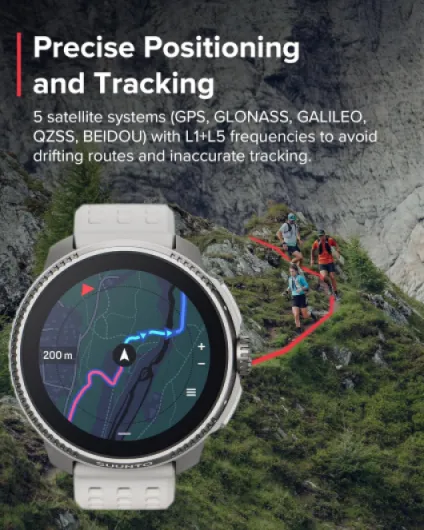
Performance-wise, the Suunto Race Birch is clearly tuned for people who care about accurate tracking and detailed training data. The dual-band GNSS is the highlight here. On my runs through city streets with tall buildings and in wooded areas, the GPS tracks were very clean. Corners were actually tracked as corners, not weird diagonals across buildings. Compared to my older single-band Garmin, the difference is clear on the map. Pace and distance also felt reliable, with no wild jumps. For long hikes, the watch kept a good lock even in valleys and under trees.
The sport modes are pretty complete. Running, trail running, cycling, hiking, swimming, triathlon, skiing – there’s more than enough for most people. You can customize data screens a fair bit, so if you want to see pace, heart rate, lap time, and elevation on the same screen, you can. The Suunto app then shows summaries with pace, power (if you have a sensor), heart rate zones, and recovery estimates. I liked that the AI coach gives you a rough idea of whether you’re pushing too hard or not enough, based on weekly training load and HRV. It’s not magic, but it gives a simple “you’re doing too much” or “you can do more” feel.
Now, the weaker side: wrist-based heart rate. It’s okay for steady running and walking, but during intervals or sudden changes in intensity, it tends to lag or smooth things out too much. That’s similar to what I had on my Garmin, so it’s not unique to Suunto, but if you really care about accurate HR data, I’d pair a chest strap. Several times I saw the watch underestimating my heart rate at the start of a hard interval, then overshooting a bit after I slowed down. For casual use, it’s fine. For serious training zones, chest strap is better.
Software speed is acceptable but not lightning fast. Switching between widgets or opening some menus can take a second or two, and sometimes it feels like the watch is thinking. It’s not unusable, but if you’re used to a super responsive Apple Watch, this will feel slower. During workouts, though, the screens and buttons respond well enough, and I didn’t have crashes or freezes. Overall, in terms of pure sports performance – GPS, tracking, and metrics – it’s pretty solid. Just don’t expect perfect optical heart rate or ultra-slick software.
What this watch actually offers in real life
On paper, the Suunto Race Birch looks loaded. You get a 1.43-inch AMOLED screen, stainless steel case, silicone strap, dual-band GNSS (GPS, GLONASS, GALILEO, QZSS, BEIDOU), offline maps, 16 GB of storage, and a claimed battery life of up to 26 days in daily mode and up to 40 hours with full GPS. It also tracks heart rate, HRV, sleep, steps, calories, blood oxygen, and has over 95 sport modes. There’s an AI coach feature that’s supposed to help plan training and recovery, plus a digital crown and touchscreen combo for navigation.
In daily use, here’s how that translates. The watch shows notifications from your phone, tracks basic activity, and gives you a quick view of your training load and recovery. The Suunto app is clearly built around sports: you get detailed workout summaries, routes, and analysis over time. Compared to a full smartwatch like an Apple Watch, this feels more limited in smart features but stronger on endurance sport metrics and mapping. There’s Bluetooth for syncing and connecting sensors, but no Wi-Fi syncing from the watch itself in my case, so you depend on your phone more.
What I liked is that the sport profiles are quite detailed. For running, you can see pace, distance, heart rate zones, elevation, and so on. For hiking, the offline maps and breadcrumb trail are useful when you’re in the middle of nowhere. You can load GPX routes through the app and follow them on the watch. It’s not as fancy as some Garmin maps, but it gets the job done. The dual-band GNSS really helps in forests or around tall buildings: my tracks stayed pretty close to reality, even where my older watch used to cut corners.
On the downside, the watch still feels like a niche training device. There’s no real app store vibe here, no contactless payments, and phone integration is fairly basic: notifications, calls, and that’s about it. If you’re someone who wants one device to handle music storage, payments, and full smartwatch life, this might feel a bit barebones. But if you’re fine with a focused sports watch that does tracking and navigation well, the feature set is pretty solid for the price.
Pros
- Very accurate dual-band GPS and reliable tracking, even in forests and city canyons
- Strong battery life with 10–12 days of real mixed use and plenty of hours of GPS
- Bright AMOLED screen with offline maps that are actually useful for hiking and trail
Cons
- Heavier and bulkier than many alternatives, not ideal for small wrists or sleep wear
- Customer support and quality control feedback from users is weak and slow
- Software can feel a bit sluggish and wrist-based heart-rate is only moderately accurate
Conclusion
Editor's rating
After using the Suunto Race Birch for a while, my feeling is pretty clear: this is a solid sports watch for people who actually train and care about GPS accuracy, maps, and battery, not for those who want a flashy smartwatch on their wrist. The dual-band GPS, offline maps, and long battery life are the main reasons to buy it. For running, hiking, and cycling, it gets the job done well. The AMOLED screen is easy to read in the sun, the digital crown is practical, and the build feels tough enough for outdoor use.
On the other hand, it’s not perfect. The watch is a bit heavy for 24/7 wear, the wrist heart-rate is just okay, the software can feel a bit slow, and the customer support stories from some users are honestly not great. If something goes wrong, you might have to be patient. It’s also not the best choice if you want strong smartwatch features like payments, a big app store, or deep integration with your phone. This is much more of a training device than a lifestyle gadget.
If you’re a runner, trail runner, or hiker who wants accurate GPS, good battery life, and proper offline maps at a fair price compared to some competitors, this watch makes sense. If you’re the kind of person who wants a watch that doubles as a polished smartwatch with top-notch support and lots of extras, I’d look at Garmin or Apple instead. Overall, I’d give it a solid score: good for serious sports use, but with enough rough edges that it’s not for everyone.