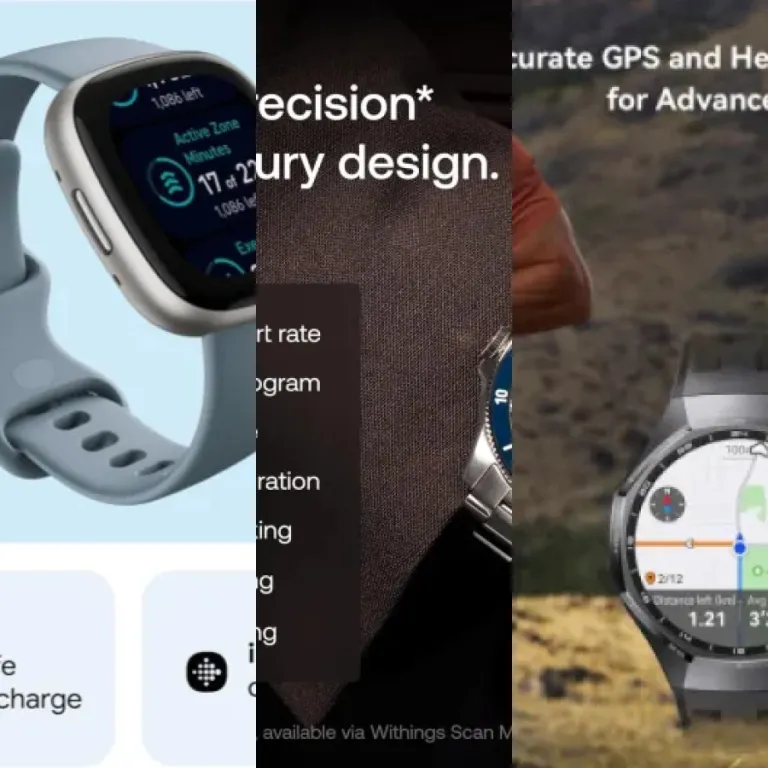
Apple Watch, Galaxy Watch, Pixel Watch and OnePlus Watch for mixed ecosystems
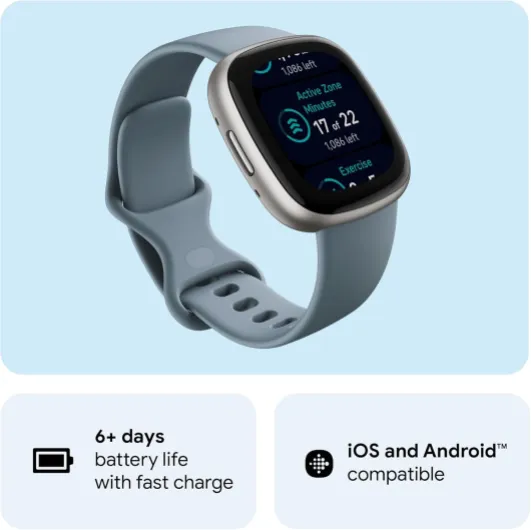
When people talk about the best smartwatches compatible with iOS and Android, they often start with the big names: Apple, Samsung Galaxy, Google and OnePlus. The Apple Watch remains the reference for iPhone users, but it does not pair with Android phones, so anyone who might switch platforms needs to look at alternatives. That is where the Galaxy Watch, Pixel Watch and OnePlus Watch families step in, each offering a different balance of battery life, health tracking and smart features.
Samsung’s Galaxy Watch line runs Wear OS and works with both Android and iOS, although some advanced functions are limited on iPhone. A recent Galaxy Watch model offers a bright circular display, robust fitness tracking and a heart rate sensor that also supports blood oxygen measurements, giving you a strong health tracking package on your wrist. If you want more context on how ecosystems shape these devices, an in-depth analysis of the real divide between Apple Watch and Galaxy Watch on Smartwatch Guru explains why the story goes deeper than iOS versus Android alone.
Google’s Pixel Watch focuses on tight integration with Android and Fitbit health services, yet it can still connect to iOS for basic notifications. The watch excels at intuitive software, a compact design and detailed sleep tracking, but its battery life usually lasts about one day, which some people see as one of the main cons. For readers who want to understand how on-device intelligence is reshaping this category, Smartwatch Guru’s article about the AI smartwatch and on-device intelligence shows how future Pixel Watch and Galaxy Watch models may process more health data directly on the watch.
The OnePlus Watch and newer OnePlus Watch series target Android owners first, but they also offer limited support for iPhone. A OnePlus Watch typically delivers long battery life, a large display and basic health tracking, making it attractive for people who value endurance over deep app ecosystems. If you are considering several OnePlus Watch models, pay attention to which features work fully with Android and which ones remain restricted when paired with an iPhone.
Apple’s own Watch Ultra and mainstream Watch Series models deserve a brief mention, even though they are not compatible with Android. For households where one person uses an iPhone and another uses Android, this limitation can complicate shared charging accessories and app ecosystems, so a more open smartwatch may still be the best choice. When you compare the Apple Watch with a Galaxy Watch or Pixel Watch, remember that the best smartwatch for you is the one that fits your devices, not just the one with the loudest marketing.
Across these brands, the key is to read full specifications and watch review summaries before you commit. Check whether the watch supports notifications, calls, contactless payments and health tracking equally on both platforms, or whether iPhone users lose features compared with Android owners. A careful read of compatibility notes will save you from buying a watch that looks perfect on paper but fails to work as a truly cross-platform smartwatch in real life.
Garmin, Huawei and fitness focused smartwatches that work across phones
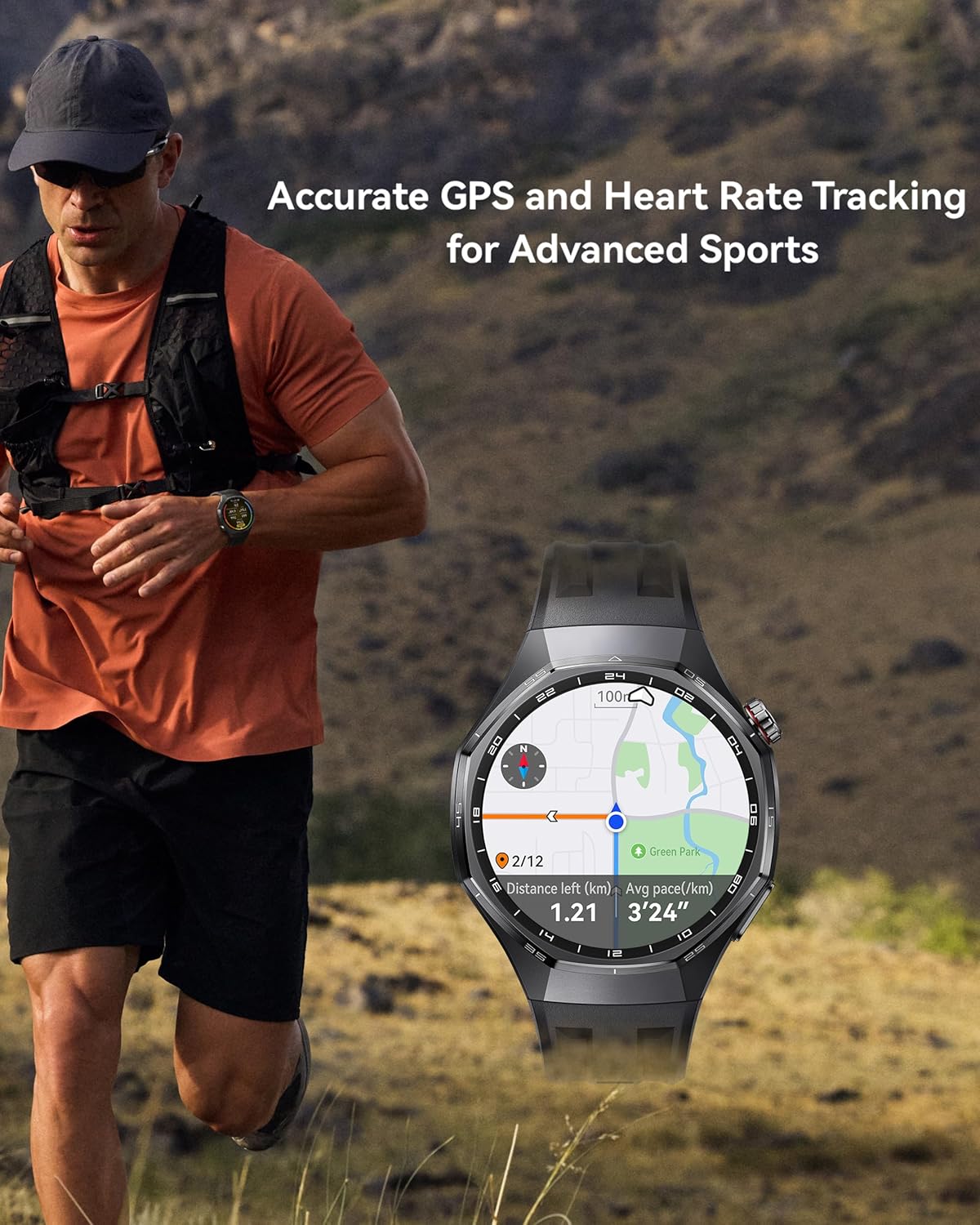
For people who care more about training than apps, Garmin and Huawei offer some of the best smartwatches compatible with iOS and Android. These brands design smartwatches that prioritise fitness tracking accuracy, long battery life and robust hardware, which makes them ideal for runners, cyclists and hikers. If you want a watch that feels like a serious fitness tool rather than a tiny phone on your wrist, this category deserves close attention.
Garmin Venu models combine a vivid AMOLED display with the company’s proven GPS and heart rate algorithms, giving you detailed workout data that remains easy to read mid-run. The watch syncs with both iPhone and Android, so you can change phones without losing your training history or health tracking trends. Many athletes appreciate that Garmin smartwatches often last several days on a single battery charge, even with frequent workouts and all-day heart rate monitor features enabled.
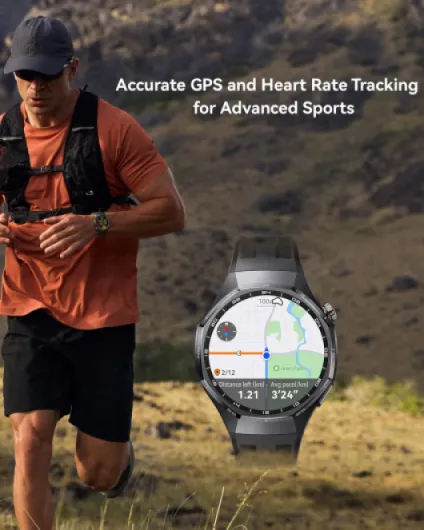
Huawei Watch devices follow a similar philosophy, offering strong fitness tracking and long battery life in a stylish package. A typical Huawei Watch can run for several days between charges, even when you enable continuous heart rate and blood oxygen monitoring, which makes it convenient for travel or busy weeks. Huawei smartwatches pair with iOS and Android, although some advanced functions may require Huawei’s own apps, so always read the cons and limitations before you buy.
When reviewers perform a watch review of Garmin Venu or Huawei Watch models, they often highlight the depth of health tracking metrics. You can see training load, recovery time, sleep scores and stress indicators, all presented in a way that helps you adjust your daily life rather than just admire numbers. Smartwatch Guru describes its six-week wear test methodology in detail, showing how long-term testing reveals whether a watch remains comfortable and accurate once the novelty fades.
These fitness-focused smartwatches may not run as many third-party apps as a Galaxy Watch or Pixel Watch, but they excel at the essentials. If your priority is to track runs, rides and gym sessions with reliable GPS and a responsive heart rate monitor, a Garmin or Huawei device often becomes the best smartwatch for your needs. The best smartwatches compatible with iOS and Android in this segment feel like training partners that happen to handle notifications, not the other way around.
Before you choose, think about how you plan to use the watch during a typical week. Someone who trains five times and sleeps with the watch every night will value comfort, strap quality and battery life more than a person who wears the device only at the office. Reading at least one detailed watch review for each candidate model will help you understand both the strengths and the subtle cons that only appear after extended use.
Health tracking, sensors and what they really mean for your life
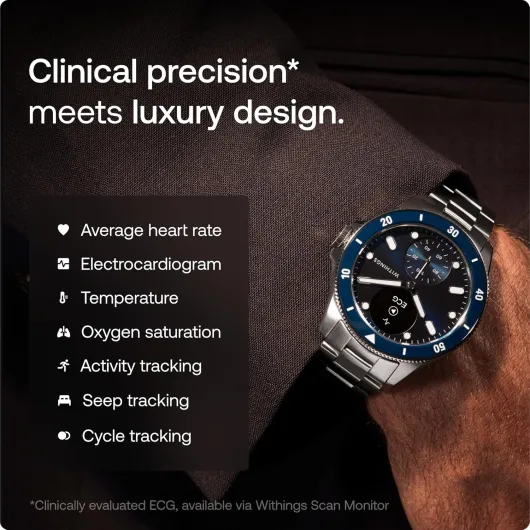
Modern wearables promise advanced health tracking, but not every smartwatch delivers the same depth or accuracy. The best smartwatches compatible with iOS and Android usually combine several sensors, including an optical heart rate monitor, accelerometer, gyroscope and sometimes a skin temperature sensor. Understanding what each sensor does helps you decide whether a watch truly supports your health goals or simply adds marketing buzzwords.
The heart rate sensor sits at the centre of most health features, powering everything from basic fitness tracking to stress estimates and sleep stages. A good heart-rate monitor reads your pulse multiple times per second, then uses algorithms to filter noise from movement or tattoos, which is why some smartwatches perform better on certain wrists. When you compare smartwatches, look for devices that allow manual calibration and offer clear explanations of how they handle heart rate data during intense workouts.
Blood oxygen measurements, often labelled SpO2, have become common in the best smartwatch models from Apple, Samsung Galaxy, Garmin and Huawei. These readings estimate how much oxygen your blood carries, which can highlight breathing issues during sleep or at altitude, although they are not medical diagnoses. If you plan to rely on blood oxygen data, choose a watch with clear guidance about measurement conditions and always read full safety notes from the manufacturer.
Sleep and stress tracking rely on a mix of motion data, heart rate variability and sometimes temperature trends. A smartwatch with strong health tracking can show how late-night screen time or heavy training affects your recovery, helping you adjust bedtime or workout intensity. Over several weeks, patterns in your data become more valuable than any single reading, so consistency matters more than chasing the absolute best sensor on paper.
Battery life directly influences how much health data your watch can collect. A device that needs daily charging may spend hours on a bedside table instead of on your wrist, leaving gaps in sleep tracking and resting heart rate trends. In contrast, a Garmin Venu or Huawei Watch with multi-day battery life encourages continuous wear, which leads to richer insights into your overall health and life rhythms.
Remember that every smartwatch, whether an Apple Watch, Galaxy Watch, Pixel Watch or OnePlus Watch, has limits and cons in its health features. None of these devices replaces professional medical equipment, and manufacturers usually state this clearly in their documentation, so always read those disclaimers carefully. Use the data as a guide to better habits, not as a diagnostic tool, and you will get the most value from the best smartwatches compatible with iOS and Android.
Battery life, display quality and everyday watch wear experience
Living with a smartwatch every day quickly reveals that battery life and display quality matter as much as raw features. The best smartwatches compatible with iOS and Android strike a balance between a bright, responsive display and a battery that does not force constant charging. If you choose a watch only for its specifications sheet, you may overlook how it actually feels to wear from morning to night.
Always-on displays make a smartwatch look more like a traditional watch, because you can glance at the time without raising your wrist. This convenience comes with a cost, since an always-on display usually shortens battery life, especially on compact models like the Pixel Watch or smaller Galaxy Watch versions. Some smartwatches let you fine-tune brightness and timeout settings, which can extend battery life without sacrificing readability in bright daylight.
Screen size and shape also influence comfort and usability during daily watch wear. A large rectangular Apple Watch or a big round Watch Ultra offers more room for complications and text, but it may feel bulky on smaller wrists or under tight sleeves. Slimmer smartwatches from Garmin or Huawei often sit flatter, making them easier to forget during sleep tracking or long office days.
Charging habits differ widely between brands and models, so think about your routine before you buy. If you already charge your phone overnight, a smartwatch that needs a nightly top-up may fit naturally into your life, especially if it offers rich apps and a vivid display. People who travel frequently or dislike cables may prefer a Garmin Venu, Huawei Watch or OnePlus Watch series device that can last several days between charges.
Battery health over time is another factor that rarely appears in marketing but matters in real use. A watch that starts with excellent battery life but degrades quickly will feel frustrating after a year, especially for iPhone users or Android owners who rely on it for health tracking. Reading long-term watch review reports can reveal whether a particular smartwatch maintains its endurance or shows early signs of wear.
Comfort, weight and strap design complete the everyday experience of the best smartwatches compatible with iOS and Android. A soft silicone or fabric band often suits fitness and sleep, while leather or metal straps look elegant for work but may feel heavier during workouts. Try to imagine how the watch will feel during your longest days, not just how it looks in product photos, because that is what turns a good watch into the one best suited to your lifestyle.
Reading reviews, weighing pros and cons and finding your watch best fit
Once you have narrowed your shortlist of the best smartwatches compatible with iOS and Android, the next step is to read reviews carefully. A thorough watch review does more than list specifications, because it explains how the watch behaves in real situations such as commuting, workouts and sleep. Pay attention to both the praise and the cons, since small annoyances can grow over time while headline features sometimes fade into the background.
Look for reviewers who test a smartwatch with both an iPhone and an Android phone, especially when assessing models like Galaxy Watch, Pixel Watch, OnePlus Watch or Huawei Watch. Some features, such as replying to messages or syncing health tracking data, may work better on Android than for iPhone users, even when the watch is officially compatible with both. When you read full reviews, note any comments about missing features on iOS, because these details can change your experience dramatically.
Comparisons between different watch series within the same brand can also be revealing. For example, an Apple Watch Series model might offer more advanced health tracking than an older Apple Watch, while a newer Galaxy Watch or Garmin Venu could improve battery life and display brightness over previous smartwatches. Evaluating these generational changes helps you decide whether paying more for the latest series brings meaningful benefits for your life.
Price and value should always enter the conversation, especially when several smartwatches seem similar on paper. A premium Watch Ultra or top-tier Garmin may cost significantly more than a mid-range OnePlus Watch or Huawei Watch, yet the cheaper device might still cover your essential fitness and health needs. Think about how long you plan to keep the watch and whether its features will remain useful as your habits evolve.
Finally, remember that no single model wins every category, even among the best smartwatches compatible with iOS and Android. One smartwatch might offer the best battery life, another the most polished display and a third the most detailed health tracking, so your priorities decide which one becomes your personal best smartwatch. Take your time, read several perspectives and choose the watch that aligns with your devices, your activities and the way you want technology to support your daily life.
Key figures about smartwatches and cross platform usage
- Market research from Counterpoint Research reported that global smartwatch shipments grew by around 12% year over year in a recent quarter, showing sustained demand for devices that blend fitness tracking and notifications.
- Data from Statista indicates that Apple held roughly one third of the global smartwatch market share, while Samsung, Huawei and Garmin together accounted for a significant portion of the remaining market, underlining the importance of cross-platform options.
- Surveys from wearable industry analysts suggest that more than 40% of smartwatch owners use their device primarily for health tracking features such as heart rate and sleep monitoring, rather than for apps or calls.
- Battery life remains a key differentiator, with many lifestyle-focused smartwatches offering about 1 to 2 days of use per charge, while fitness-oriented models from Garmin and Huawei often reach 5 to 10 days under typical conditions.
- Consumer reports have found that a majority of buyers keep their smartwatch for at least three years, which makes long-term software support and compatibility with both iOS and Android crucial factors in purchase decisions.