
Summary
Editor's rating
Value for money: solid if you accept its limits
Design: light, simple, and looks fine on the wrist
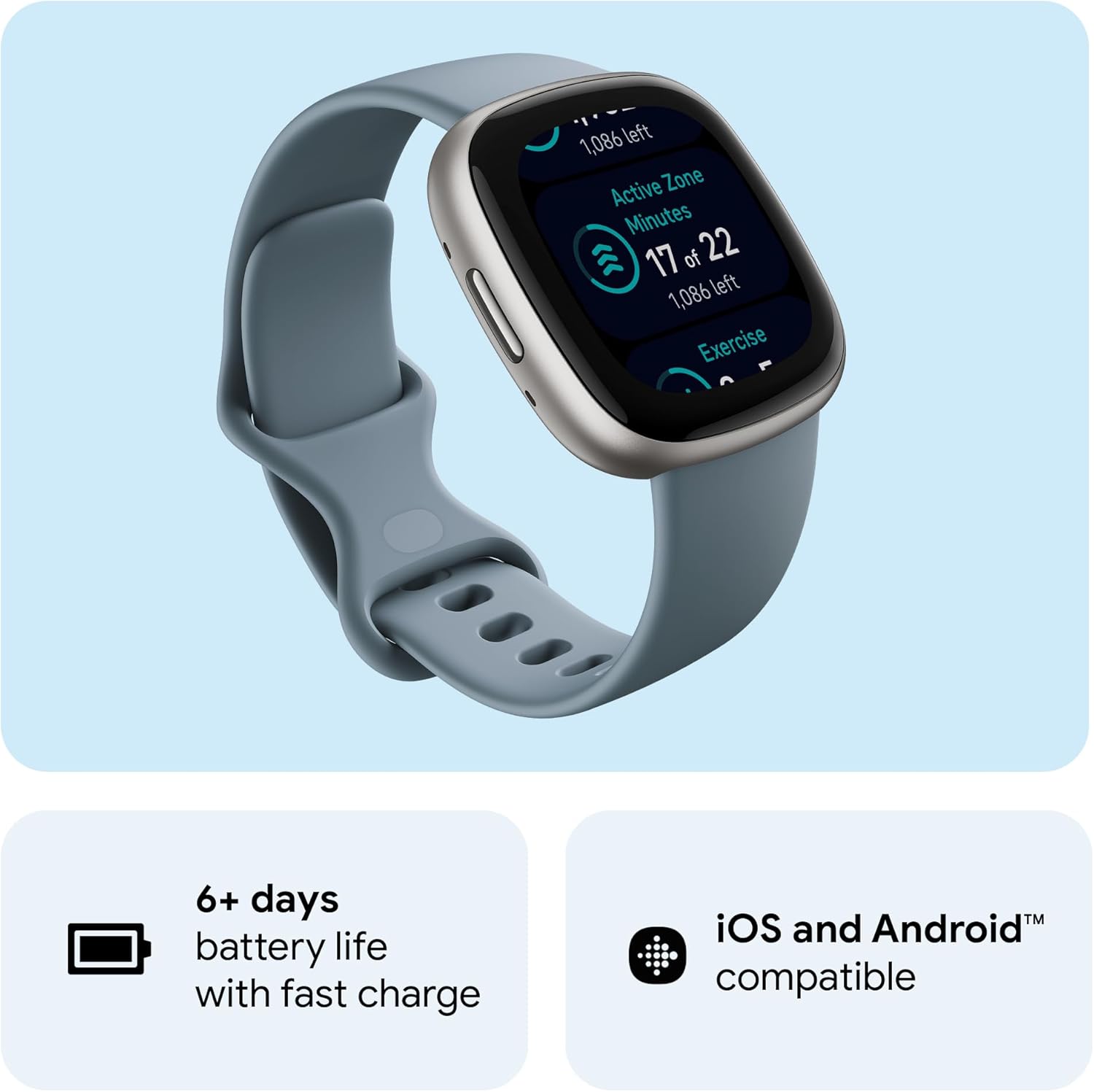
Battery life: good if you’re realistic, not the 6+ days dream
Comfort: you can actually sleep with it on
Durability and water resistance: holds up fine so far
Tracking performance: good enough, but not perfect
What this watch actually offers in real life
Pros
- Very light and comfortable for 24/7 wear, including sleep
- Built-in GPS and clear fitness/sleep tracking with an easy-to-use app
- Battery life of around 4–5 days in real use with fast charging
Cons
- No third-party apps, no Google Assistant, and no music control (e.g. Spotify)
- Heart rate accuracy drops during high-intensity or interval workouts
- Some of the better insights require a paid Fitbit Premium subscription after 6 months

Specifications
View full product page →| Brand | Fitbit |
A fitness watch for people who just want it to work
I’ve been using the Google Fitbit Versa 4 for a few weeks now, mainly for steps, sleep, and runs with GPS. I’m not a hardcore athlete, but I run a few times a week and I like to keep an eye on my sleep and heart rate. I came from an older Fitbit and a basic Garmin, so I had a pretty clear idea of what I wanted: something light, decent battery life, and simple to use without digging into menus every two minutes.
First impression: it’s a clean, no-drama smartwatch. Setup with the Fitbit app took around 10–15 minutes with updates, nothing painful. Once it was paired, it synced data reliably to my Android phone. I also tried it quickly with an iPhone just to see, and it connected fine there too. Nothing fancy in the process, but it got the job done.
From day one I used it for sleep tracking, steps, heart rate, and GPS runs. I didn’t really care about Alexa before, but I tried it just to see if it was useful. I also played with the watch faces and checked how often I actually use things like notifications and calls from the wrist. Spoiler: some features are handy, others feel like filler.
Overall, the Versa 4 feels like a fitness tracker that’s trying to be a smartwatch, not the other way around. If you’re expecting a full app ecosystem or music controls like on some bigger-name smartwatches, you’ll probably be disappointed. If you mainly care about fitness stats, sleep, and a light watch you can forget you’re wearing, it’s much closer to the target. It’s not perfect, but it’s solid enough for everyday use.
Value for money: solid if you accept its limits
In terms of value, the Versa 4 sits in an interesting spot. It’s usually cheaper than an Apple Watch or high-end Garmin, but not as cheap as very basic fitness bands. For what you pay, you get built‑in GPS, a bright screen, decent battery life, and a fairly complete set of health and sleep features. For someone who mainly wants a fitness tracker with a smartwatch look, it’s pretty good value.
Where it loses points is on the software side: no third‑party apps, no Google Assistant, no music controls like Spotify. If you were hoping to control your music on a run or install extra apps, you might feel short-changed. Fitbit also pushes its Premium subscription quite a bit. You get 6 months free, which is nice to test it, but after that you have to decide if those extra insights are worth a recurring fee. For some people, yes; for others, the free stats are enough and Premium just feels like upselling.
Compared to a Garmin in the same price bracket, the Versa 4 is usually nicer to wear and easier to understand, but Garmin often wins on battery and detailed workout metrics. Compared to cheaper Chinese brands, Fitbit’s app is cleaner and the ecosystem feels more stable, but you pay more and you’re a bit locked into their subscription model if you want the full experience.
If you can grab the Versa 4 on sale or refurbished in good condition, like one Amazon reviewer did, it becomes a much more attractive deal. At full price, I’d say it’s good value if you care about sleep tracking and day‑to‑day health stats, and you’re not obsessed with music control or advanced training tools. If you want a real smartwatch with apps and deep integration with your phone, you might be better off spending a bit more elsewhere.
Design: light, simple, and looks fine on the wrist
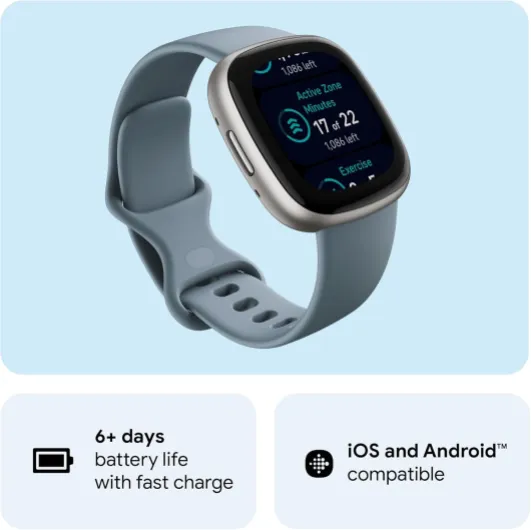
The Versa 4 goes for a rectangular, rounded design that’s pretty low-key. The Waterfall Blue/Platinum version I tried looks more grey-blue in real life than flashy blue, which I actually prefer. It doesn’t scream “sports watch”, so you can wear it at work or out to dinner without it looking out of place. The aluminium case keeps it light, and you do feel the difference compared to chunkier metal watches.
The screen is a bright, rectangular AMOLED-style display (320 x 386) that’s easy to read indoors and still decent outside. In direct sunlight, if you’re running, you sometimes have to tilt your wrist a bit, but it’s still readable. The bezels aren’t tiny, but honestly, after a day you forget about them. Touch response is quick enough, and swiping through menus feels smooth, not laggy.
There’s a side button that’s more of a haptic-style button, not a big physical one. It works fine for going back or opening your main workout menu. I never felt lost in the interface, which is a plus. It’s more straightforward than some Android-based watches with tons of icons. You swipe up for stats, down for quick settings, left/right for widgets like weather, sleep, or exercise shortcuts.
Design-wise, I’d describe it as clean and practical. It’s not a fashion object, but it doesn’t look cheap either. If you want a flashy, metal-heavy watch with a lot of visual presence, this is probably too discreet. But for daily wear – office, gym, sleep – it hits a nice middle ground. The only downside visually is that it still looks very “Fitbit”, so if you wanted something that looks like a classic watch with hands, this isn’t it.
Battery life: good if you’re realistic, not the 6+ days dream
Battery is one of the big selling points: Fitbit claims up to 6+ days. In real life, it depends a lot on how you use it. With always-on display off, a few GPS workouts per week, sleep tracking every night, and notifications on, I was getting around 4–5 days before needing a charge. That’s not bad at all, but it’s not a solid 6 days for me. If you hammer GPS daily and keep the screen brightness high, expect less.
One Amazon reviewer said they charge about once a week, another said battery life is shorter than their Garmin. I’m somewhere in between. Compared to a basic Garmin with no fancy smart features, the Versa 4 does drain faster. Compared to full-featured Wear OS or Apple Watch, it lasts longer. So it sits in that middle zone: good enough that you don’t have to think about it every day, but not so good that you can forget the charger on a long trip.
The fast charge is genuinely useful. Around 10–15 minutes on the charger gives enough for a day or at least a long workout. A full charge from low takes about an hour. That makes it easier to charge while showering or working at your desk without planning your whole day around it. The proprietary charging cable is light and snaps on magnetically, but as always, lose it and you’re stuck buying a replacement.
With sleep tracking on every night, you do need to pay a bit of attention. I got into the habit of topping it up during breakfast every couple of days. If you expect true multi‑week battery like some simple fitness bands, you’ll be disappointed. If you’re fine plugging in twice a week, it’s perfectly manageable. I’d call the battery good but slightly overhyped versus the marketing numbers.
Comfort: you can actually sleep with it on
For me, comfort is one of the strong points of the Versa 4. It’s thin and light, and the included silicone band is soft enough that you forget it’s there most of the day. I wore it almost 24/7 for several days in a row – runs, showers, sleep – and I didn’t get any rubbing or irritation. I have fairly average wrists and I used the small strap; there’s also a large strap in the box if you need more length.
The watch sits flat on the wrist, and the heart rate sensor bump on the underside isn’t too aggressive. You do have to wear it a bit higher and slightly snug for accurate heart rate readings, but not tight enough to cut off circulation. During sleep, it didn’t bother me, which is usually where I start hating bulkier watches. Compared to a heavier Garmin I used before, this one is much easier to live with at night.
For workouts, the band stays in place well. The buckle closure is basic but secure, and I never worried about it dropping off during a run. The silicone is easy to rinse after a sweaty session. If you don’t like silicone, there are plenty of third‑party bands available, and the quick-release system makes swapping pretty simple once you get the hang of it.
Only minor downside: if you wear it too loose, the watch can slide around and the heart rate becomes less reliable, especially during intervals or high-intensity workouts. So you need to find that sweet spot between comfort and snugness. Overall, for all‑day and night wear, I’d call the comfort pretty solid, especially for people who care about sleep tracking and don’t want a brick on their wrist.
Durability and water resistance: holds up fine so far
I haven’t had the Versa 4 for years obviously, but in a few weeks of fairly rough daily use, it’s held up well. The aluminium case doesn’t show any obvious scratches yet, and I’ve definitely bumped it on door frames and desks more than once. The screen hasn’t picked up any visible marks either, though I’m not smashing it around on rocks or anything. It feels solid enough for normal life: office, gym, runs, weekend stuff.
The watch is water-resistant up to 50m, and I’ve used it in the shower and in the rain without any issues. I didn’t go full-on pool training with it, but it’s clearly built to handle sweat and splashes without drama. The silicone band dries quickly and doesn’t stay gross after a workout, which matters if you wear it all day. No weird smell or sticky feel after a rinse, which can happen with cheaper bands.
One Amazon user mentioned their Fitbits tend to last around two years before something gives out, and that lines up with what I’ve seen with older Fitbit models too. So I wouldn’t expect this to be a 5‑year tank like some more rugged watches. It’s more of a 2–3 year daily gadget, especially if you’re using it heavily. For the price range, that’s not shocking, but it’s something to keep in mind if you hate replacing wearables regularly.
So far, no issues with buttons, touchscreen, or Bluetooth connection dropping randomly. The strap mechanism feels secure, and the band hasn’t shown any cracks or stretching. Overall, durability seems decent for everyday use, but if you’re into rough outdoor sports or construction work, I’d look at something more rugged. For office workers, casual runners, and gym goers, it should handle the abuse just fine.
Tracking performance: good enough, but not perfect
In terms of fitness and health tracking, the Versa 4 does a decent job, but it’s not flawless. Steps and general daily activity seem accurate enough. Compared to my phone and another watch, the step count was usually within a small margin, nothing that bothered me. For casual users, it’s more than fine. You get reminders to move, Active Zone Minutes, and a clear daily summary directly on the watch.
The heart rate monitor is where things are a bit mixed. At rest and during steady walks or easy runs, it’s pretty close to a chest strap. But once you start doing intervals or anything with sudden intensity changes, it can lag or overshoot. One of the Amazon reviews mentions that the heart rate isn’t particularly accurate, and I agree – it’s okay for trends and general effort, but if you train by strict heart rate zones, you might get annoyed. For casual tracking, it’s acceptable; for serious training, I’d still rely on a chest strap if possible.
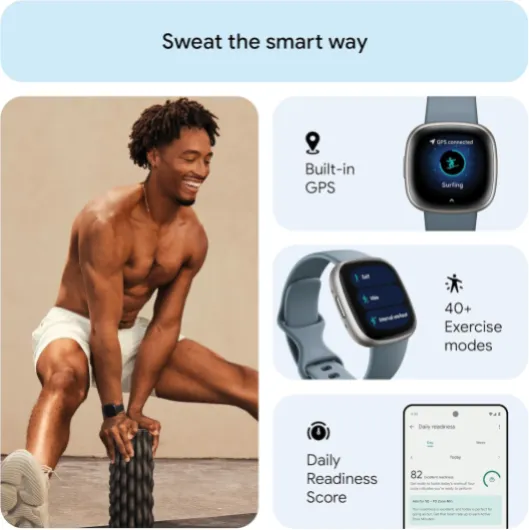
The 40+ exercise modes are mostly overkill. You’ll probably use 4 or 5 regularly: running, walking, cycling, maybe strength training or yoga. The watch does auto-detect some activities like walks and runs, and that actually works fairly well when you forget to start a workout. GPS performance with the built-in chip is fairly solid – lock-on time is reasonable, and distance compared to my phone’s GPS was close enough. You can view an intensity map in the app after your workout, which is a nice touch.
As for the extra stuff – Stress Management Score, Daily Readiness Score, health metrics dashboard – it’s interesting, but you have to be honest: after the first week of checking it every day, you tend to look at it less. Some of the better insights sit behind the Premium paywall, so after the 6‑month trial, you’ll have to decide if it’s worth paying. For someone who just wants basic stats and trends, the free version already gives enough. Overall, performance is good but not top-tier – fine for everyday users, a bit limited for data-obsessed athletes.
What this watch actually offers in real life
On paper, the Fitbit Versa 4 throws a lot at you: built-in GPS, 6+ days of battery, 40+ exercise modes, sleep tracking, stress score, SpO2, Alexa, phone calls, notifications, and a 6‑month Premium trial. In practice, you don’t use everything every day. Most of my time with it was spent checking steps, heart rate, sleep score, and using GPS for runs. The rest is nice to have, but not essential.
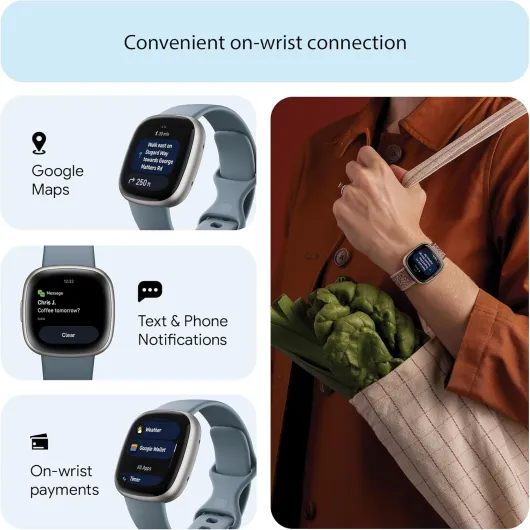
The watch connects by Bluetooth to your phone, and the link is generally stable. Notifications for calls, texts, and apps pop up quickly enough. You can take calls on the watch via Bluetooth, which actually worked decently when my phone was in the next room. It’s not something I use often, but it’s handy when your hands are full or you’re cooking. No full app store anymore though, and that’s a big change if you used older Fitbits with third‑party apps.
The health stuff is where the Versa 4 focuses most: 24/7 heart rate, daily readiness score, sleep score, sleep stages, SpO2, stress management score, guided breathing, menstrual tracking, etc. A lot of the deeper insights, like detailed readiness trends and some extra stats, are tied to Fitbit Premium. The free version is usable, but you always feel like the app is nudging you toward a subscription.
In daily use, I’d say the watch is better as a fitness tracker than as a general smartwatch. No music control for Spotify or offline music, no Google Assistant, and no third‑party apps really limit it compared to something like a Galaxy Watch or Apple Watch. If you just want something that tracks your activity, nudges you to move, and gives you a decent picture of your sleep, it does that pretty well. If you want a wrist extension of your phone with apps and media, this isn’t it.
Pros
- Very light and comfortable for 24/7 wear, including sleep
- Built-in GPS and clear fitness/sleep tracking with an easy-to-use app
- Battery life of around 4–5 days in real use with fast charging
Cons
- No third-party apps, no Google Assistant, and no music control (e.g. Spotify)
- Heart rate accuracy drops during high-intensity or interval workouts
- Some of the better insights require a paid Fitbit Premium subscription after 6 months
Conclusion
Editor's rating
The Google Fitbit Versa 4 is a straightforward fitness-focused smartwatch. It’s light, comfortable, and easy to wear all day and night, which makes it good for sleep tracking and everyday health stats. You get built‑in GPS, plenty of workout modes, and a clear app that keeps things simple. Battery life is decent – better than a lot of full smartwatches, but not quite the 6+ days you see on the box unless you’re really conservative with features.
On the downside, it’s clearly not trying to be a full app platform. No third‑party apps, no Google Assistant, no music controls like Spotify. The heart rate sensor is fine for casual use but not the most accurate for serious interval training. And a chunk of the more interesting insights is hidden behind a Premium subscription after the 6‑month trial. So you need to be honest about what you actually care about.
If you want a comfortable, simple watch mainly for steps, sleep, light-to-moderate workouts, and basic notifications, the Versa 4 is a pretty solid choice, especially if you find it at a discount. It suits people who want to move more, track their nights, and not charge every day. If you’re a data nerd, a heavy runner, or you want a true smartwatch with apps and music control, you’ll probably be happier with a Garmin, Apple Watch, or a more advanced Wear OS watch instead.