
Summary
Editor's rating
Value: good health features for the price, but the subscription angle is real
Design: slim, discreet, but watch faces are pretty limited
Battery: finally something you don’t have to babysit every night
Comfort: one of the few trackers I forget I’m wearing
Durability: handles daily abuse, but don’t expect it to last forever
Performance: health tracking is solid, smart features are basic
What the Fitbit Charge 6 actually offers in real life
Pros
- Battery life of around 5–7 days with normal use, even with sleep tracking
- Comfortable, lightweight design that’s easy to wear 24/7, including at night
- Strong health tracking features (sleep, heart rate, GPS, stress/readiness) with a well-built app, especially with Premium
Cons
- Heavily relies on Fitbit Premium for deeper insights, adding ongoing cost after 6 months
- Limited watch face options and only basic smartwatch features (notifications, limited app control)
- Long-term lifespan seems closer to 2–3 years based on user reports

Specifications
View full product page →| Brand | Fitbit |
A fitness tracker that finally made me stop charging every night
I’ve been using the Fitbit Charge 6 as my daily tracker for a few weeks, coming from a mix of devices: an older Fitbit, a cheap generic band from Amazon, and an Apple Watch SE I borrowed for a while. The main reason I picked the Charge 6 was simple: I wanted good health data without being stuck to a charger every day. I also didn’t want to drop smartwatch money again just to count steps and track sleep.
Right away, the big thing that stood out is the battery life. I easily get around 5–6 days per charge with normal use (notifications on, a couple of workouts with heart rate, no GPS marathons). Compared to the Apple Watch needing a daily charge, it’s a relief. I can finally wear it to bed, track sleep, and not wake up to a dead device.
On the other hand, it’s not perfect. You can feel the Google integration everywhere: Google Maps, Google Wallet, YouTube Music control. If you’re deep in the Google world, that’s fine. If you’re more Apple or just don’t care about those services, some features feel a bit forced and not super useful day to day. Also, the Fitbit app really wants you on Premium, and you feel that quickly once you start poking around the data.
Overall, the Charge 6 is a pretty solid health and fitness band with some quirks. It’s not the fanciest gadget on your wrist, but it covers most health metrics people care about: heart rate, sleep, steps, workouts, basic stress/readiness info. The question is more: are you ok with a subscription later, and are you fine with living in Google’s ecosystem? If yes, it’s worth a serious look. If not, you might find some things a bit annoying over time.
Value: good health features for the price, but the subscription angle is real
From a value for money perspective, the Charge 6 sits in a kind of middle zone. It’s more expensive than super basic trackers, but a lot cheaper than high-end smartwatches from Apple or Garmin. For what you pay, you get solid health tracking, GPS, contactless payments (if supported), and a 6‑month Fitbit Premium trial. If you actually use the Premium features—detailed sleep data, readiness score, breathing and stress tools, workouts, meditations—the first six months feel like a nice bonus.
The catch is what happens after those six months. Premium is around $80/year, which isn’t nothing. The tracker still works without it—you’ll still get steps, basic sleep info, heart rate, workouts—but you do lose some of the deeper analytics and guided content. For some people that’s fine; they just want steps and basic sleep. For others, once you get used to the extra graphs and scores, it’s annoying to lose them unless you pay. So basically, part of the value depends on whether you’re ok turning this into a small yearly expense.
Compared to buying a $300+ smartwatch, the Charge 6 is good value if you mainly care about health data and don’t need full smartwatch functions. One reviewer said they’re buying another Charge 6 after two years because alternatives they like are over $300, and I get that logic. Even if it only lasts 2–3 years, it’s still cheaper than dropping top money on a watch plus maybe still paying for other apps.
I’d say this: if you want a reliable daily tracker with good battery, decent accuracy, and a good app, and you’re fine with maybe paying for Premium after the trial, it’s worth it. If you hate subscriptions on principle and only want basic tracking, you might feel like you’re paying for features you’ll never fully use. There are cheaper, more basic bands out there, but they usually don’t have the same app quality or ecosystem.
Design: slim, discreet, but watch faces are pretty limited
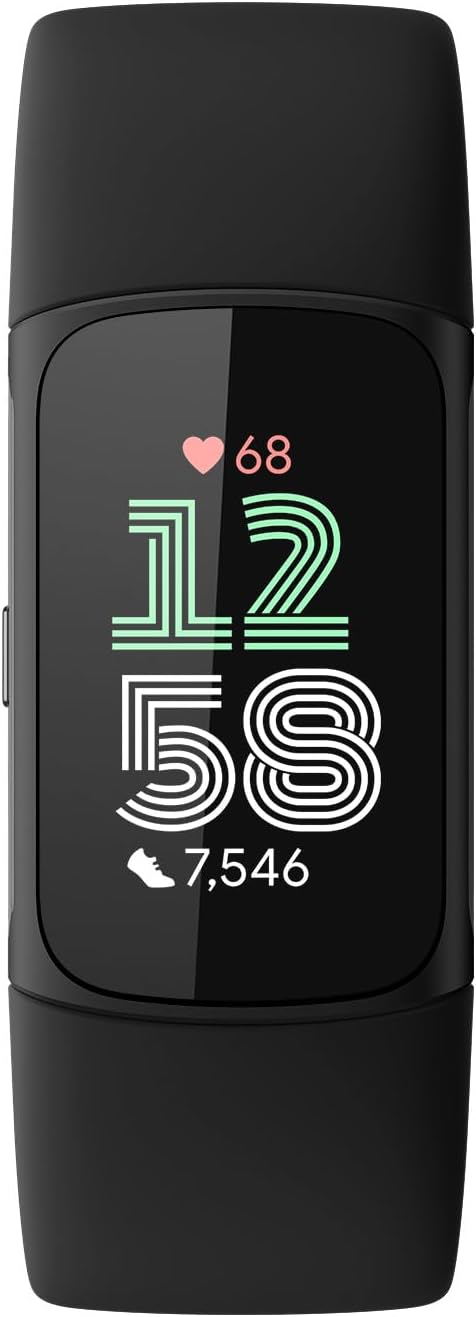
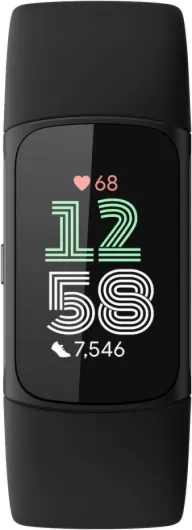
Design-wise, the Charge 6 sits right between a tiny band and a full-on watch. The 1.04-inch rectangular screen is big enough to read without squinting but still slim on the wrist. It doesn’t scream “tech gadget” like some bulky watches. I wore it to the office and with casual clothes and it just looks like a simple fitness band. If you’re used to big round smartwatches, this will feel light and almost minimal.
The case on this Obsidian/Black version is black with a black band, so it’s pretty neutral. It comes with both small and large bands in the box, so you don’t have to worry about sizing too much. The band attaches with a standard pin system; swapping bands is easy enough, and there are plenty of cheap third-party straps online. The display is bright enough outdoors, though in full sun you might have to tilt your wrist a bit. Indoors it’s totally fine. The bezels are not tiny, so you do lose some space to the borders, but for a tracker it’s acceptable.
Where I’m a bit disappointed is the watch face selection. There are only a handful of options, and most of them feel pretty basic. Several users mention this too. The one I ended up using is “good enough” but not exactly what I want. The time takes a big chunk of the screen, and I’d rather see more stats at once: steps, heart rate, battery, maybe the date in a cleaner layout. It’s not a dealbreaker, but it feels like Fitbit could easily offer more variety here.
Navigation is done by swiping and tapping the touchscreen, plus a side button area that acts like a back/home control. Once you learn the menu structure, it’s straightforward, but at first it’s a bit of swiping around to remember where everything lives. Overall, I’d say the design is practical and discreet. It doesn’t look fancy or stylish, but it does the job, stays out of the way, and is easy to wear 24/7, which is kind of the main point for a health tracker.
Battery: finally something you don’t have to babysit every night
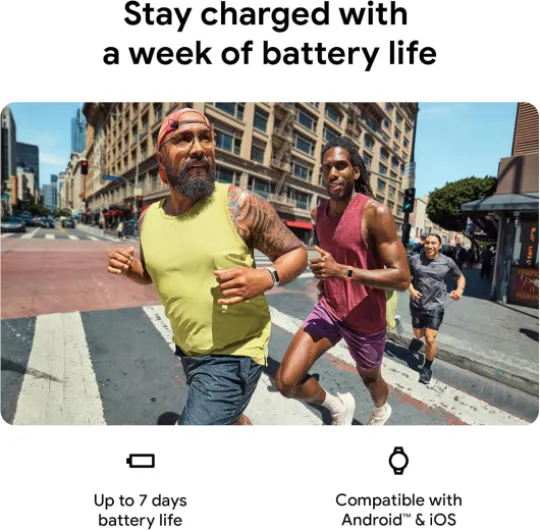
Battery life is one of the main reasons to pick the Charge 6 over a full smartwatch, and it mostly delivers. In my use, with all-day heart rate on, sleep tracking every night, notifications active, and a few short workouts (mostly indoor, some with GPS), I’m getting about 5–7 days per charge. People online reporting similar numbers are not exaggerating. If you go wild with GPS runs and always-on screen, you’ll drain it faster, but for a normal person it easily covers the workweek and more.
Compared to an Apple Watch that basically needs a daily charge, this feels like a different category. You can set it and forget it. I usually plug it in when I’m at my desk once a week, or while I’m showering if it’s getting low. The actual charging time is acceptable: from low battery to near full takes roughly an hour-ish in my experience. It’s not blazing fast, but since you’re not charging it every day, it doesn’t feel like a big deal.
One thing to note: GPS uses a lot more battery. If you do long outdoor workouts with GPS tracking several times a week, expect the battery life to drop closer to 3–4 days. If you rarely use GPS and mostly do indoor workouts or step counting, you’ll be closer to the 6–7 day mark. The always-on display option (if enabled) also eats into the battery, so I just keep it off and use raise-to-wake, which is fine.
The only annoyance is the proprietary charger. You have to carry that specific cable; you can’t just use any random USB-C cable lying around. Lose it, and you’re stuck until you buy a replacement. This is standard with wearables, but still annoying. Overall, though, the battery experience is one of the best parts of the Charge 6. It’s not magic, but it finally lets you track sleep and workouts without constantly planning your day around the charger.
Comfort: one of the few trackers I forget I’m wearing
For comfort, the Charge 6 is honestly one of the easiest devices to just leave on all day and night. It’s light, the band is soft, and the footprint on your wrist is small. Compared to an Apple Watch or a big Garmin, I notice it way less, especially when sleeping. I’ve fallen asleep with chunkier watches before and woke up with a sore wrist; with this one, I barely feel it’s there unless I tighten it too much.
The included silicone band is flexible and doesn’t dig into the skin, at least for me. I keep it just tight enough that the sensor stays in place but not so tight that I leave marks. For workouts, I slide it about a finger above the wrist bone like Fitbit suggests, and that seems to give better heart rate readings without sacrificing comfort. I’ve worn it during long workdays, desk work, and some light strength sessions, and it never felt annoying or heavy.
For sleep, this is where it really beats a full smartwatch. You don’t have a big metal case clunking into your wrist bone or pillow. The Charge 6 sits flat and doesn’t catch on blankets or clothes. Also, because the battery lasts several days, you’re not constantly choosing between wearing it at night or charging it. That alone makes the whole sleep tracking feature actually usable, instead of just a nice idea.
If you have sensitive skin, silicone can sometimes cause irritation, especially if you sweat a lot and don’t clean the band. I didn’t have any rash issues, but I do take it off in the shower and rinse the band every couple of days. If silicone isn’t your thing, there are fabric and leather-style bands you can swap in. Overall, comfort is a strong point here. It’s not fancy, but it’s light, soft, and easy to wear 24/7, which is what you need if you want consistent health data.
Durability: handles daily abuse, but don’t expect it to last forever
In terms of short-term durability, the Charge 6 holds up well. The screen hasn’t scratched easily for me so far, even after bumping it into door frames and desks. Another user mentioned 20-hour shifts banging it around with no scratches, which lines up with my experience: the front glass seems reasonably tough for normal use. The band feels solid, the clasp stays shut, and nothing has come loose.
It’s also water-resistant enough for everyday life. You can shower with it or get caught in the rain without drama. It has a water lock mode for swimming, though I personally don’t swim with it much. Still, for handwashing, sweat, and quick rinses, it’s totally fine. Just don’t treat it like a dive watch and you’ll be ok. The casing doesn’t feel cheap, and the whole thing has a sturdy, compact feel on the wrist.
Where durability becomes more of a question is long-term lifespan. One reviewer in the data said theirs lasted about two years before it started barely working. That’s not shocking for a device in this price range, but it’s something to keep in mind. These trackers are basically small computers with batteries that degrade over time. If you expect it to last 5–7 years like a classic watch, you’ll probably be disappointed. Realistically, I’d expect around 2–3 years of good use if you take care of it.
The positive side is that Fitbit bands are easy to replace, and there’s a big ecosystem of cheap third-party straps. So even if the original band wears out or breaks, you don’t have to toss the whole thing. The weak point long-term is more likely to be the battery or internal electronics, not the exterior. So yeah, it’s durable enough for daily life and workouts, but it’s still a modern gadget with a limited lifespan, not a forever watch.
Performance: health tracking is solid, smart features are basic
On the health and fitness side, the Charge 6 does a pretty solid job. Steps and distance are in the same ballpark as my phone and other trackers I’ve used. Is it 100% accurate? No, but no wrist tracker is. For everyday use—steps, general activity, rough calories burned—it’s good enough to spot trends. Sleep tracking is quite detailed with Premium: you get sleep stages (light, deep, REM), a sleep score, and some explanations. It lines up decently with how I feel in the morning; nights where I toss and turn usually get a lower score.
Heart rate is mostly reliable for normal activities and steady cardio. During workouts like jogging, cycling, or brisk walking, the graph looks smooth and reasonable. During high-intensity intervals or anything with a lot of wrist movement, you do sometimes see spikes or dips that don’t match how you feel. This is a known limitation of optical sensors, not just Fitbit. If you’re a pro athlete or very picky about HR accuracy, you’ll probably want a chest strap for serious sessions and use the Charge 6 more for daily tracking and casual workouts.
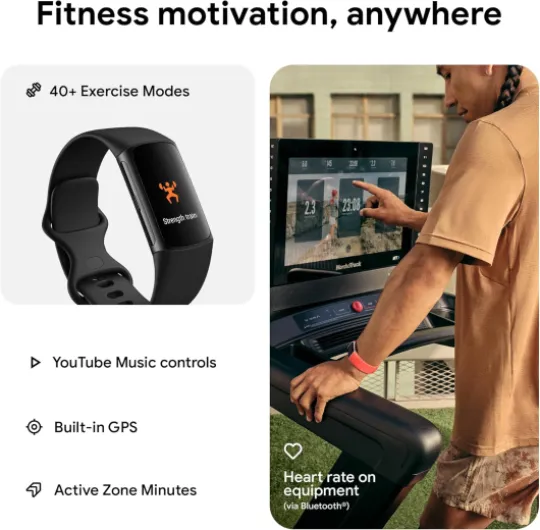
GPS works but hits the battery harder. Using built-in GPS for a couple of runs in a week noticeably cuts overall battery life. Distance tracking is close to what my phone records, within a small margin. It’s good enough for tracking routes and pace, but I wouldn’t obsess over tiny differences. The nice extra is being able to see heart rate zones and pace together in the app after the workout, which helps you understand how hard you were actually working.
On the “smart” side, it’s more limited. Notifications show up fine, but you can’t really respond to messages on iPhone, and even on Android it’s basic. Google Maps directions on your wrist sound cool, but in practice I don’t use it much; I just look at my phone. Google Wallet is nice if your bank supports it, but again, it’s a bonus, not the main reason to buy this. In short: performance is strong for health tracking, just ok for smartwatch features. If you expect it to replace your phone or full smartwatch, you’ll be disappointed. If you just want a solid tracker with some extras, it gets the job done.
What the Fitbit Charge 6 actually offers in real life
On paper, the Charge 6 is stacked: GPS, heart rate, ECG, SpO2, sleep tracking, stress metrics, contactless payments, and a 6‑month Fitbit Premium trial. It’s sold as a fitness tracker, not a full smartwatch, and that’s exactly how it behaves. You get notifications, basic app controls, and some Google features, but the main focus is tracking your body, not being a tiny phone on your wrist.
In daily use, the core stuff works as expected: it counts steps, tracks distance, auto-detects some workouts, and logs heart rate all day. During walks and runs with GPS on, the distance is close to my phone’s tracking (within a few percent, which is fine for me). Heart rate during steady cardio (like a jog or brisk walk) looks consistent. During high-intensity intervals, you can see it lag a bit or spike oddly, but that’s standard for wrist-based sensors. If you want perfect heart rate for serious training, you’ll need a chest strap anyway.
The Fitbit app is where all the data ends up. With Premium active, you get a lot: sleep stages, readiness score, stress management tools, detailed heart rate zones, and guided workouts and meditations. For someone trying to get healthier or lose weight, it’s nice having everything in one place: steps, calories, workouts, weight (if you sync a scale), and sleep. I also like that it gives basic goals like 150 active minutes a week and 250 steps per hour; they’re simple but keep you moving.
Where it feels a bit weaker is the “smartwatch” side. You can see notifications but can’t really interact with them much, especially on iPhone. You get Google Maps navigation and Google Wallet if your country and bank support it, and you can control YouTube Music—but not Apple Music or Spotify directly from the watch. So in practice, I treat it as a health tracker first, notification screen second, and ignore the rest most of the time. If that’s your expectation going in, you’ll probably be fine with it.
Pros
- Battery life of around 5–7 days with normal use, even with sleep tracking
- Comfortable, lightweight design that’s easy to wear 24/7, including at night
- Strong health tracking features (sleep, heart rate, GPS, stress/readiness) with a well-built app, especially with Premium
Cons
- Heavily relies on Fitbit Premium for deeper insights, adding ongoing cost after 6 months
- Limited watch face options and only basic smartwatch features (notifications, limited app control)
- Long-term lifespan seems closer to 2–3 years based on user reports
Conclusion
Editor's rating
The Fitbit Charge 6 is a solid choice if what you want is a health-focused tracker with good battery life and you don’t care about having a full smartwatch on your wrist. It tracks the basics well—steps, heart rate, sleep, workouts—and adds some handy extras like GPS, Google Wallet, and Google Maps integration. The band is comfortable enough to wear 24/7, which is key if you actually want continuous data instead of just daytime steps. Battery life around 5–7 days is a big upgrade over watches that need charging every night.
It’s not perfect, though. The watch faces are limited, the smart features are pretty basic, and long-term durability seems more in the 2–3 year range based on user experience. The heavy push toward Fitbit Premium is another thing to think about: the tracker works without it, but most of the richer insights sit behind that paywall. If you hate subscriptions, that will probably bother you. If you’re ok paying yearly for deeper health data, you’ll get more out of it.
Who is this for? People who want a reliable daily fitness and sleep tracker, decent app, and long battery life, without spending smartwatch money. It’s good for beginners on a health journey and also for more active folks who want data but don’t need full-blown sports watch features. Who should skip it? Anyone who wants a proper smartwatch with rich app support and message replies, anyone allergic to subscriptions, or someone who expects perfect heart rate accuracy for high-level training. For most regular users, though, it’s a pretty good balance of features, comfort, and price.