
Summary
Editor's rating
Value for money: good feature set, but some hidden costs and doubts
Design: discreet, light… and a bit plasticky
Battery life: the 7-day claim is realistic if you don’t abuse the GPS
Comfort and band issues: great to wear, unless your skin hates the strap
Durability and reliability: water is fine, small plastic parts less so
Tracking & smart features: solid for basics, decent for workouts
What the Fitbit Charge 6 actually is (and isn’t)
Pros
- Light, discreet design that’s comfortable to wear all day and night
- Good overall tracking for steps, heart rate, sleep, and casual workouts
- Battery realistically lasts around 5–7 days with normal use
Cons
- Band system and plastic parts feel fragile, with some reports of breakage
- Stock band can cause skin irritation for some users, pushing you to buy a replacement
- Some advanced insights locked behind Fitbit Premium subscription

Specifications
View full product page →| Brand | Fitbit |
A small tracker that tries to do it all
I’ve been using the Fitbit Charge 6 on my wrist pretty much 24/7 for a few weeks now, mainly for steps, heart rate, and sleep. Before this, I used an older Fitbit Charge and, in between, a basic Garmin band. So I’m not looking at it as some shiny gadget; I just want something that tracks my day without me babysitting it. The Charge 6 is basically Fitbit’s idea of a slim bracelet that still behaves almost like a smartwatch: notifications, Google Wallet, Maps, music controls, the whole lot.
Right away, what struck me is how light it is. You forget it’s there most of the time, which is good for sleep tracking and long days. But the more I used it, the more I noticed there’s a clear trade-off: you get lots of features in a tiny body, but the hardware (band system, plastic bits) doesn’t feel bombproof. Reading other user reviews, I’m clearly not the only one who thinks the build is a bit on the fragile side.
In everyday use, the Charge 6 does the basics well: steps, heart rate, calories, notifications. The app is still one of the better ones on the market in terms of readability and health history. But there are also a few things that annoyed me: band irritation, the usual Fitbit push toward Premium for some metrics, and some trust issues around durability and warranty if you read the horror stories. It’s not a disaster, but it’s not flawless either.
If you’re expecting a rugged sports watch, this isn’t it. If you want a very small, discreet tracker that talks nicely to your phone (Android or iPhone) and gives you a decent overview of your health, then it does the job. The rest of this review is just me going through how it actually behaves day to day: design, comfort, performance, battery, durability and whether I think it’s worth the money compared to other options.
Value for money: good feature set, but some hidden costs and doubts
For the price range the Charge 6 usually sits in, you get quite a lot on paper: built-in GPS, heart rate, SpO2, sleep tracking, stress tracking, notifications, Google Wallet, Google Maps, and a solid app. Compared to cheaper bands from Xiaomi or Amazfit, you’re mostly paying for the Fitbit ecosystem, cleaner app, and extra integrations. If those things matter to you, then the value is pretty solid. If you only want steps and basic sleep, you can save money elsewhere.
There are some hidden costs to consider though. First, the band: a decent number of people (and me to a smaller degree) find the stock strap either irritating or just not breathable enough. That pushes you to buy a third-party band, which is not expensive but still an extra you don’t see on the box. Second, the Fitbit Premium subscription. The device works fine without it, but a chunk of the “in-depth” insights is locked behind a paywall. If you get hooked on the trial and then keep it, that’s another ongoing cost.
Then there’s the durability and warranty side. If everything goes smoothly, you’re getting a capable tracker that can easily last a few years. If you’re unlucky and hit one of the issues people mention (charging failure, broken band mount), the value drops fast, especially if the brand and seller start playing ping-pong with responsibilities. That’s why I’d say the Charge 6 is good value mostly if you buy it from a reliable source and maybe catch it on sale rather than full price.
Overall, I’d rate the value as decent but not mind-blowing. It’s a good package for someone who wants a compact tracker with strong app support and doesn’t mind maybe swapping the band and ignoring the Premium upsell. If you’re looking for the absolute best bang for your buck and don’t care about the Fitbit ecosystem or Google features, there are cheaper trackers that do 70–80% of what this does for less money.
Design: discreet, light… and a bit plasticky
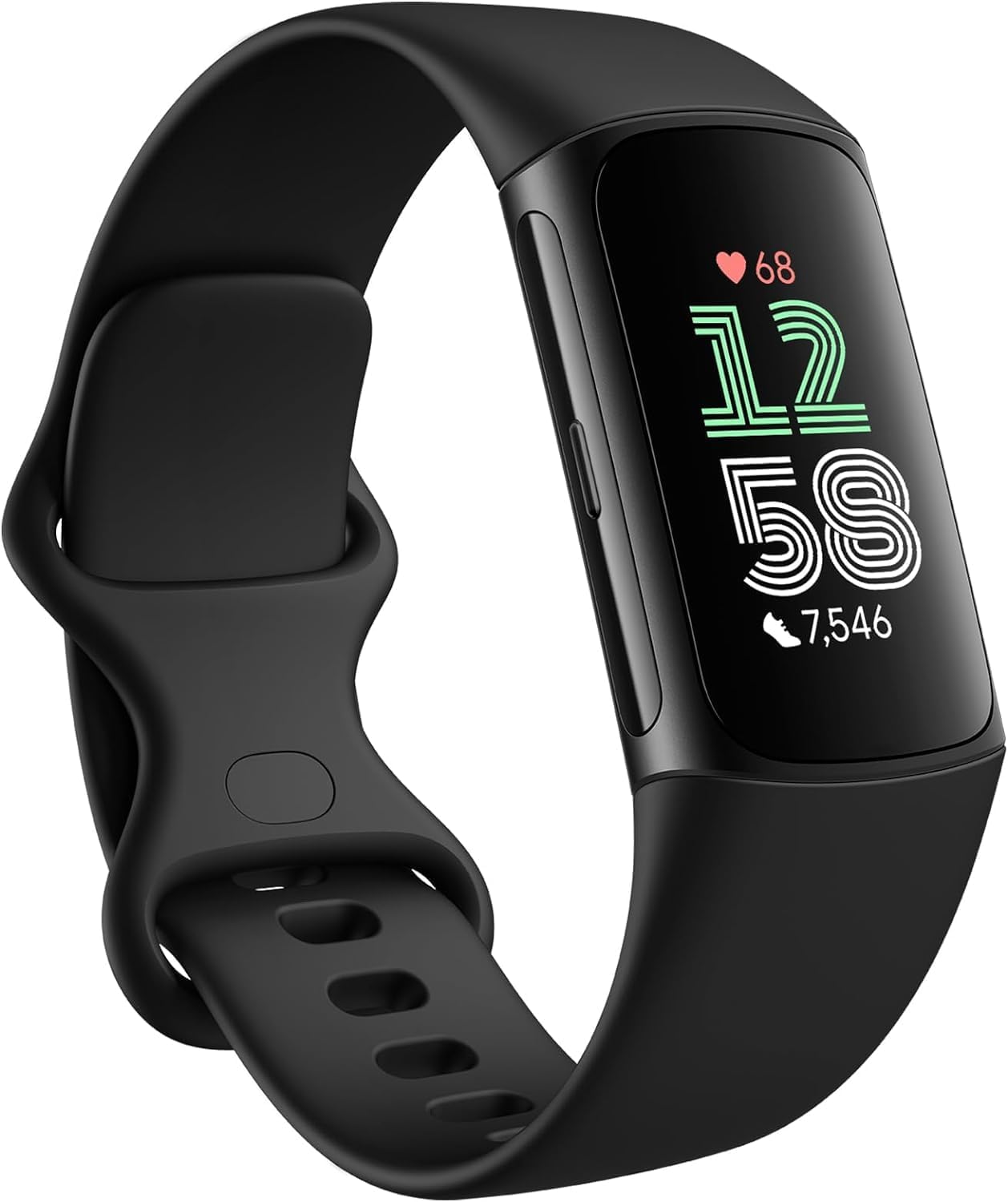
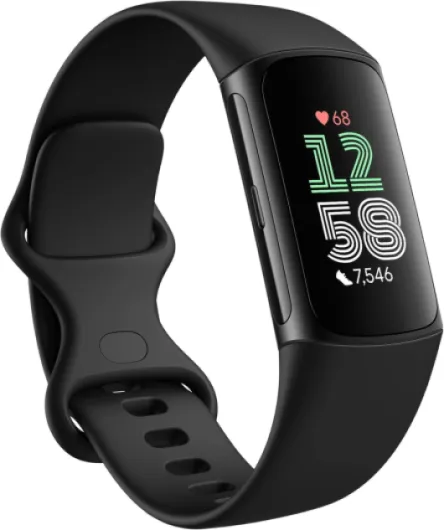
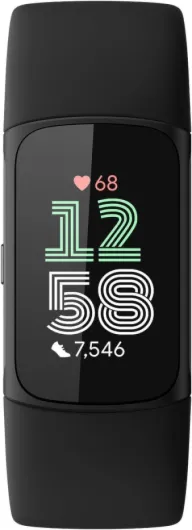
Design-wise, the Charge 6 is very low-profile. The Obsidian/Black version I used is basically a small black pill on a black band. No shine, no big bezel, nothing flashy. I actually like that: it doesn’t scream “tech gadget” and it blends in with normal clothes and at the office. If you hate big chunky smartwatches, you’ll probably appreciate how compact this is. It’s also super light, so after an hour you mostly forget it’s on your wrist.
The screen is narrow but bright enough indoors and outside. It’s not huge, so you’re not going to read long notifications comfortably, but for time, steps, heart rate, and workout stats, it’s fine. Swiping through menus is fairly smooth. The side navigation button is handy: it gives you a quick way to go back or wake the screen without always twisting your wrist. Still, it’s a small display, so there’s a limit to how much info you can see at once.
Now the less positive side: the whole watch body and band mounting system feels a bit fragile. You can see this in some Amazon reviews too: plastic pieces that hold the band can fail, or the band can pop off. I didn’t break mine, but it doesn’t give the same confidence as a solid pin-based system on regular watches. It feels like something that will be fine for most people, but if you’re rough with your gear or often bump your wrist on stuff, I’d be a bit cautious.
Overall, the design is practical and discreet, but also clearly built to be light and cheap to manufacture, not heavy-duty. If you want something that looks like a classic watch, you won’t get that here. If you want a small black tracker you can wear with anything without drawing attention, it does the job. Just be aware that the cost of being slim and light is that it doesn’t feel particularly robust, especially around the band connectors.
Battery life: the 7-day claim is realistic if you don’t abuse the GPS
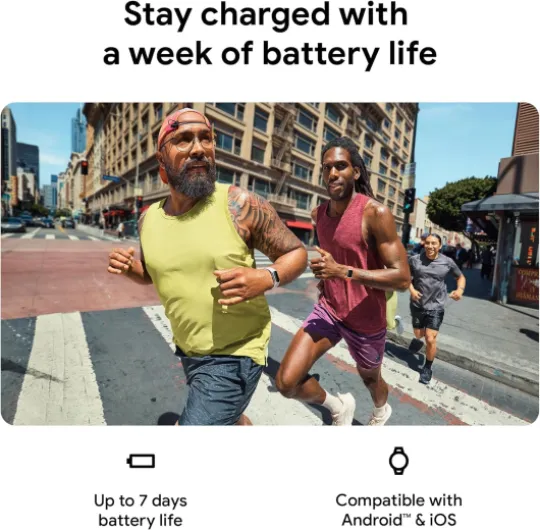
Battery life is one of the main reasons to choose a tracker like this over a full smartwatch, and here the Charge 6 does a decent job. Fitbit claims up to 7 days, and in my use that was actually pretty close. With all-day wear, sleep tracking every night, regular notifications, and a few short GPS workouts per week, I was usually charging it every 5–7 days. So the marketing number isn’t total fantasy, as long as you’re not running the GPS nonstop.
When you start doing longer GPS sessions, you’ll see the battery drop faster. A one-hour run with GPS and heart rate tracking will noticeably eat into the battery, but you’re still not charging it every day like a full smartwatch. I’d say if you’re a casual exerciser (a few workouts a week), you’ll be happy. If you’re using GPS almost daily for long runs or rides, expect more like 3–4 days between charges, which is still acceptable but not mind-blowing.
Charging itself is straightforward but uses yet another proprietary Fitbit cable. It snaps on easily enough, but it’s one more cable you have to keep track of and replace from Fitbit or third parties if you lose it. From low battery to full, you’re looking at about an hour and a half to two hours depending on the starting point. I usually just plugged it in while showering and getting ready once or twice a week, and that was enough.
In day-to-day life, the main advantage is you’re not constantly thinking about the battery. You can actually wear it for days and forget about charging, which is important for sleep tracking and general consistency. It’s not the longest-lasting tracker on earth, but it’s comfortably in the “good enough” zone. If you’re coming from an Apple Watch or similar, it will feel like a big upgrade in freedom. If you’re used to super basic bands that last two weeks or more, it’s more middle of the road.
Comfort and band issues: great to wear, unless your skin hates the strap
On the wrist, the Charge 6 itself is very comfortable. The tracker is light, thin, and doesn’t dig into the skin, even when I’m typing on a laptop all day or sleeping on that side. Compared to a bigger smartwatch, I found it much easier to forget about at night, which is important if you actually want realistic sleep data and not be tempted to take it off. The fact that it’s only about 3 grams is clearly a plus here.
The band, though, is a bit of a mixed bag. It comes with both small and large sizes in the box, which is good, and the classic silicone band is flexible and easy to adjust. For me personally, it felt okay most of the time, but I did notice my skin getting a bit sweaty and slightly irritated on hot days if I wore it tight during workouts. That lines up with some of the Amazon reviews where people mention rashes or even blisters with the stock strap, while their older Fitbits didn’t cause problems.
After a week, I started doing what a lot of people recommend: I take it off after showers, dry my wrist and the device, and I loosen the band when I’m just sitting around. That already helps. But honestly, if you have sensitive skin or you know silicone bands bother you, I’d just budget for a third-party strap right away. There are plenty of more breathable or fabric-style bands online that make a big difference if you wear this 24/7.
So comfort summary: the tracker itself is very comfy, especially for sleep and all-day wear, but the default band is just okay and can be an issue for some skin types. The good news is that swapping the band is easy and cheap. The bad news is that it kind of feels like Fitbit cut corners on the included strap, and you might end up spending extra to make the whole setup truly comfortable for long-term wear.
Durability and reliability: water is fine, small plastic parts less so
On paper, the Charge 6 is rated for 50m water resistance, and that part seems fine. I showered with it, got caught in rain, and did a few swims without any issues. The body doesn’t feel like it’s going to fall apart from normal water exposure. So if you’re worried about sweat, rain, or pool sessions, that aspect is handled. And there are even user reviews saying their older Fitbits survived some pretty rough treatment before finally dying.
Where I get less confident is in the small plastic details, mainly the band attachment system and the general sense that this isn’t built like a tank. Some users report the little plastic piece that locks the band in place breaking or going missing, which basically makes the tracker unwearable unless you tape it or get a replacement. That’s not something you want to worry about on a device meant to be worn every day. I didn’t have a failure myself during my test, but I was more careful than usual after reading those stories.
There are also some worrying reviews about units that stop charging or holding a charge after a short time, and then issues with warranty when bought through certain sellers. That’s not something I can fully verify personally, but it’s common enough in the user feedback to at least be on your radar. If you buy it, I’d make sure to get it from a seller with a clear return policy and keep all documentation in case something goes wrong in the first months.
So in short, durability is okay for normal, careful use, but I wouldn’t call this a rugged piece of gear. It’s a slim plastic tracker with some weak points. If you’re rough on your devices, bump your wrists a lot, or work in an environment where it might get caught or hit, I’d be a bit worried. For office workers, casual gym visits, and everyday life, it should be fine, but the reports about broken bands and charging issues do knock my confidence in the long-term reliability.
Tracking & smart features: solid for basics, decent for workouts
On the tracking side, the Charge 6 does what most people will want. Steps were in the same ballpark as my phone and a Garmin I used for comparison, sometimes a bit generous, but not by a crazy amount. Heart rate during steady walks and runs looked consistent and reacted quickly when I picked up the pace. For everyday use and general fitness, I’d say the accuracy is good enough. It’s not a medical device, but it gives you a clear picture of how active you are and how hard you’re working.
For workouts, you get 40+ exercise modes. Realistically, I used maybe 5: walking, running, cycling, strength, and general workout. GPS is built in, so you don’t have to take your phone to get route maps. It locks onto a signal reasonably fast in open areas; in dense city streets it can take longer or be a bit off, but nothing shocking for this price range. The heart-rate-on-exercise-equipment feature is neat if your gym machines support it, but that’s pretty situational.
On the “smart” side, notifications come through reliably for calls, texts, and apps. You can’t reply in a very advanced way from the band (short responses at best), but for me it’s enough to see if something is urgent. Google Wallet works, but I wouldn’t call it life-changing; you need to set it up properly and remember the passcode, after which tapping to pay is convenient when it works. Google Maps integration is basically turn prompts on the wrist, which is handy if you’re walking or cycling and don’t want to stare at your phone.
Overall, performance is pretty solid for what it is: a fitness tracker first, smart features second. If your main goal is structured training with advanced metrics, you might want something more sports-focused. If you mainly want to track daily activity, sleep, and occasional workouts, plus see notifications and maybe pay with your wrist now and then, the Charge 6 handles that fairly well. It’s not perfect, but it’s not pretending to be a high-end sports computer either.
What the Fitbit Charge 6 actually is (and isn’t)
The Charge 6 sits in that middle zone between a basic step counter and a full smartwatch. On paper you get: a 1.04-inch color screen, built-in GPS, 40+ exercise modes, heart rate tracking, SpO2, stress tracking, sleep analysis, plus Google Wallet and Google Maps integration. It works with iOS and Android, and the battery is advertised at up to 7 days. So if you’re expecting just a simple pedometer, this is way more than that.
In practice, the way I ended up using it was pretty simple: always on my wrist, auto-detecting walks and runs, manual start for workouts, checking notifications, and using the sleep breakdown in the morning. The extras like Google Wallet and Maps are nice, but they’re not life-changing. Wallet works fine once set up, but I didn’t use it every day. Maps is more of a companion for directions than full navigation, and on this small screen it’s more of a nudge than a map replacement.
Fitbit also pushes its Premium subscription if you want the full Daily Readiness Score and deeper breakdowns. You can still use the watch just fine without paying, but some graphs and insights get blurred out or limited. Personally, I think the free level is enough for most people who just want to see sleep, steps, and heart rate trends. If you’re into heavy training, the Premium stuff might interest you, but then I’d also tell you to look at more sports-focused brands.
So overall, the Charge 6 is best described as: a slim band with smartwatch-like features, not a small smartwatch. It’s good if you care about health stats and want something discreet. It’s less ideal if you want a big bright screen, lots of apps, and heavy-duty workout tools. The spec sheet sounds packed, but how much of it you’ll really use depends on your lifestyle. For me, about 60–70% of the features actually saw regular use; the rest are just there if I ever need them.
Pros
- Light, discreet design that’s comfortable to wear all day and night
- Good overall tracking for steps, heart rate, sleep, and casual workouts
- Battery realistically lasts around 5–7 days with normal use
Cons
- Band system and plastic parts feel fragile, with some reports of breakage
- Stock band can cause skin irritation for some users, pushing you to buy a replacement
- Some advanced insights locked behind Fitbit Premium subscription
Conclusion
Editor's rating
The Fitbit Charge 6 is a solid choice if you want a slim, discreet tracker that you can wear all day and night without feeling like you’ve strapped a brick to your wrist. It handles the basics well: steps, heart rate, sleep, and casual workouts. The battery life is genuinely good enough for most people, and the app is still one of the clearer and more user-friendly ones out there. Add Google Wallet and simple Maps integration, and you get a bracelet that plays nicely with your phone and daily routine.
On the flip side, it’s not the toughest device around. The band system and small plastic parts don’t inspire huge confidence, and some user stories about broken connectors and charging issues are hard to ignore. The stock band can also irritate some skin types, and if you want the full depth of health insights they advertise, you’re pushed toward a paid subscription. None of these things are total deal-breakers, but they do make the product feel less straightforward than the spec sheet suggests.
I’d recommend the Charge 6 to people who: want a compact tracker rather than a big smartwatch, care about sleep and daily health trends, and like the Fitbit ecosystem. It’s also a decent fit if you want a week-long battery and simple GPS workouts without going full sports watch. If you’re rough on your gear, hate subscriptions, or want the maximum value per dollar and don’t care about Google or Fitbit specifically, I’d look at alternatives from Garmin, Amazfit, or Xiaomi. For me, it’s a good but imperfect tracker that gets the job done, as long as you go in with realistic expectations.