
Summary
Editor's rating
Value: good on sale, less attractive if you hate subscriptions
Design: simple, light, and not trying too hard
Battery life: the part that actually impressed me
Comfort: easy to wear all day and night
Durability and reliability: decent build, software is the question mark
Performance: tracking is decent, but software can be picky
What the Versa 4 actually is (and isn’t)
Pros
- Light and comfortable enough to wear 24/7, including sleep
- Battery realistically lasts 4–6 days with mixed use
- Built-in GPS, 24/7 heart rate, and sleep tracking are accurate enough for everyday fitness
Cons
- Some key features locked behind Fitbit Premium after the free trial
- Limited smart functions (no music or camera control, can’t start calls)
- Occasional sync and app issues if not kept fully updated

Specifications
View full product page →| Brand | Fitbit |
A fitness watch for people who don’t want a full-blown smartwatch
I’ve been using the Fitbit Versa 4 in Pink Sand/Copper Rose for a few weeks now, coming from an older Fitbit Charge and occasionally an Apple Watch. I bought it mainly for tracking workouts, sleep, and having a simple watch I can wear every day without babysitting the battery. I’m not the type who needs 10,000 apps on my wrist, but I do like data and I want it to sync reliably.
Right away, the Versa 4 feels like a “fitness-first” watch rather than a tiny phone on your wrist. The interface is simple, the screen is easy enough to read, and it focuses on steps, heart rate, workouts, and sleep. It still does notifications, calls, and has Alexa/Google bits, but that’s not really its main strength. If you’re expecting a mini Android or Apple Watch, you’ll probably be a bit underwhelmed.
What I noticed pretty fast is that it hits a good middle ground: more comfortable and capable than the cheap random brand trackers, but lighter and less complicated than full smartwatches. The price usually reflects that too, especially on sale. The flip side is you’re kind of stuck in the Fitbit/Google ecosystem, and some features are locked behind the Premium subscription after the free trial, which is a bit annoying.
Overall, after living with it day and night, I’d say it’s a pretty solid fitness companion with some quirks. It does the job for tracking workouts and sleep quite well, the battery life is good, but the software and ecosystem can be hit or miss depending on your phone and how much you care about advanced features.
Value: good on sale, less attractive if you hate subscriptions
On value, the Versa 4 sits in a weird but mostly positive spot. If you catch it at full price, it’s not cheap, especially once you realize that some of the headline features (Daily Readiness, deeper sleep insights, more guided content) are tied to Fitbit Premium. You do get six months of Premium included, which lets you try everything properly. After that, you either pay monthly or accept that you lose some of the fancy dashboards and coaching. The basic tracking (steps, heart rate, GPS, basic sleep score) still works without paying, so it’s not useless, but you don’t get the full experience.
Where it makes more sense is when it’s discounted, which happens quite often. At a lower price, it’s easier to recommend over random cheap brands because you’re getting a more mature app, better sensors, and generally more reliable tracking. It doesn’t feel luxurious, but it doesn’t feel like a toy either. Compared to an Apple Watch or higher-end Garmin, you’re paying less and getting longer battery life, but you sacrifice app richness and some smart functions.
If you only need basic stuff like step counting, simple heart rate, and notifications, you could honestly get by with a cheaper band. The Versa 4 starts to make sense if you want: built-in GPS, decent sleep tracking, better battery than full smartwatches, and a cleaner app than most budget options. For casual runners, walkers, and gym users, it hits a good middle ground.
So in my view, value is good but not mind-blowing. It’s a solid buy on sale, especially if you’re okay with maybe keeping Premium after the trial. If you absolutely refuse subscriptions and don’t care about the extra analytics, you might want to compare it with some mid-range Garmin or Amazfit models before deciding.
Design: simple, light, and not trying too hard
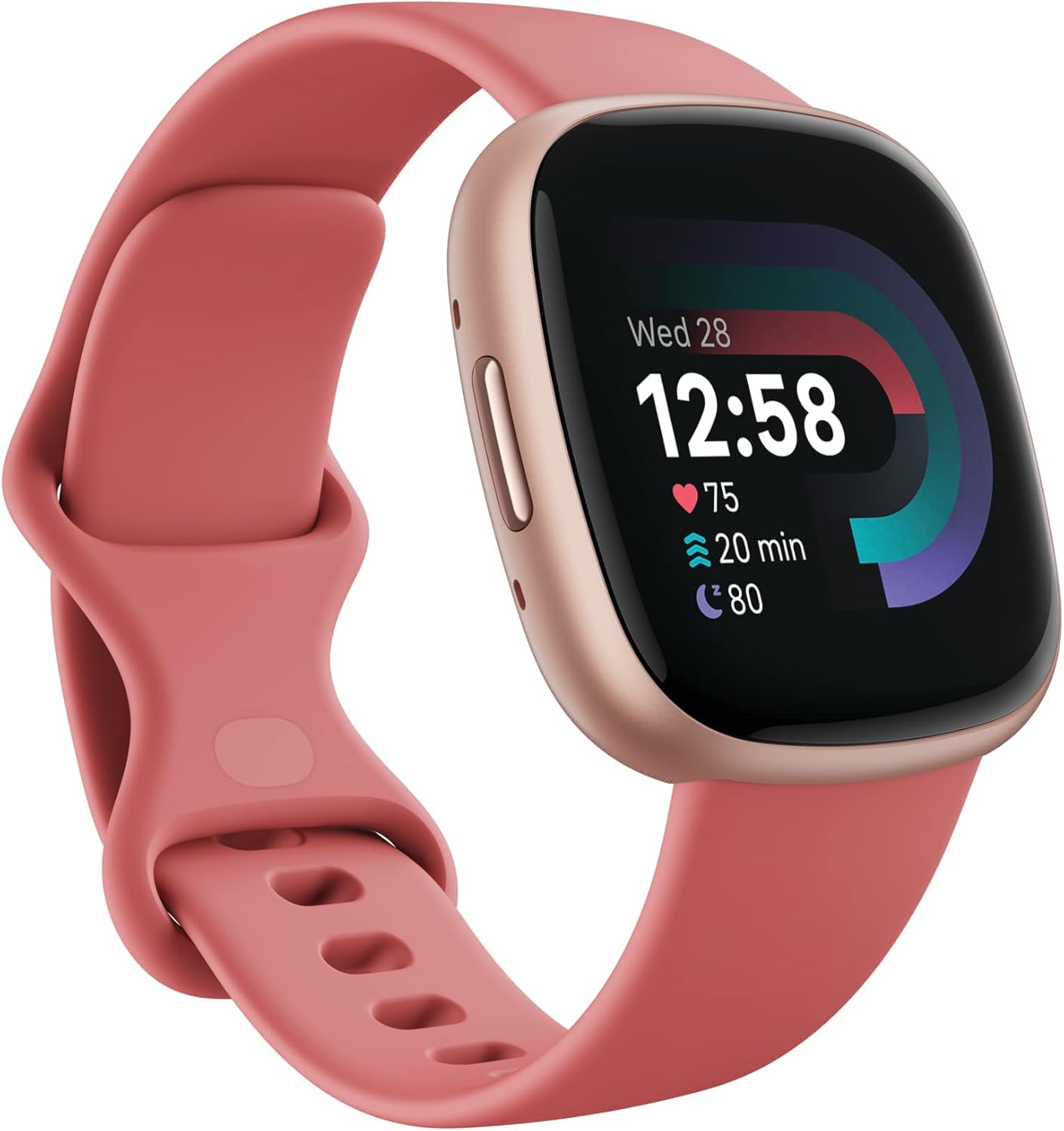
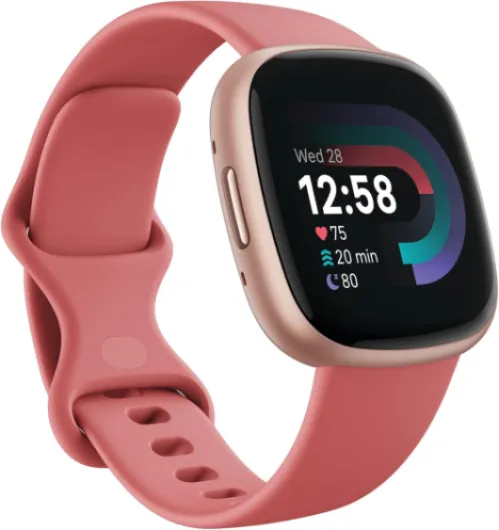
Design-wise, the Versa 4 is pretty low-key. The Pink Sand/Copper Rose combo looks a bit more "soft" and slightly more on the feminine side, but it’s not screaming for attention. The case is a rounded square with a single side button. No rotating crown, no crazy bezels. On the wrist, it just looks like a normal fitness watch, which I prefer over something that screams tech gadget.
The screen is 1.58 inches with a 348 x 442 resolution. It’s not the sharpest or brightest thing on the market, but it’s clear enough indoors and okay outdoors. In direct sun, you sometimes have to tilt your wrist or bump the brightness, but I could still see my pace and heart rate during runs. If you’re used to flagship smartwatch screens, you’ll notice the difference; if you’re coming from a band, it’ll feel like an upgrade.
One thing I appreciated is the thin and light build. It doesn’t feel like a brick on your wrist. It’s comfortable for sleep tracking and doesn’t get caught on sleeves much. The bezels are there but not crazy. The side button feels fine, maybe a bit mushy, but it works. Navigation is mostly swipes and taps, which are responsive enough, though there’s a tiny lag sometimes when opening certain apps or starting GPS.
I’ve knocked it on door frames and gym equipment a few times and the screen has held up so far, no cracks. I’d still suggest a cheap screen protector if you’re clumsy, but out of the box the build feels decent. If you want a flashy, metal-heavy watch, this isn’t it. If you want something light and fairly discreet that you can actually wear 24/7, the design does the job.
Battery life: the part that actually impressed me
Battery life is where the Versa 4 did better than I expected. Fitbit claims 6+ days, and in real life I was getting around 4.5 to 6 days depending on how I used it. With always-on display off, a few GPS workouts per week, notifications on, and sleep tracking every night, I consistently ended up around the 5-day mark before needing a charge. That’s way better than something like an Apple Watch, which usually needs nightly or every-other-day charging.
On weeks where I hammered the GPS more — like 4 runs plus a long walk — the battery dropped faster and I was closer to 4 days. Still, that’s perfectly fine. If you switch off some stuff like always-on heart rate or reduce notifications, you can stretch it even more, but I didn’t feel the need. I prefer to just use it normally and charge when needed. The watch doesn’t show the battery percentage in a super obvious way on the default face, which is a bit dumb, but you can either check the app or install a better clock face that shows it.
Charging itself is quick enough. You snap it onto the proprietary charger (which is still mildly annoying, I’d love USB-C directly but that’s not happening) and in about an hour or so you’re basically full. I usually just drop it on the charger while I shower and make breakfast when it hits around 20%, and that’s enough to get me through another day or two. No need to plan your life around the charger, which is the main point.
If you’re the type who hates daily charging and wants to wear the watch overnight for sleep tracking, the Versa 4’s battery life is a strong argument in its favor. It’s not multi-week like some simpler trackers or basic Garmins, but for a color-screen smartwatch with GPS, it’s pretty solid.
Comfort: easy to wear all day and night
Comfort is one of the stronger points for the Versa 4. The watch is light, and the included bands (you get small and large in the box) are soft enough right away. I’ve worn it basically 24/7 except for quick showers at first, and after the first day I mostly forgot it was there. That’s important if you want real sleep data and continuous heart rate.
The underside of the watch sits pretty flat on the wrist. The sensors don’t dig in unless you crank the band way too tight. I keep it slightly snug for workouts and looser the rest of the time, and I haven’t had skin irritation or pressure marks. Compared to chunkier watches like some Garmin models or older bulky smartwatches, this one is definitely easier to sleep with. I didn’t feel the need to take it off at night, which is usually my issue with heavier devices.
During workouts, especially runs and strength sessions, the watch stayed in place well. It didn’t slide around or twist, which is important for half-decent heart rate readings. The only time it got slightly annoying was when sweat built up under the strap on very hot days, but that’s true for almost any rubber/silicone band. You can swap the band out if you hate the stock one, but I found it acceptable.
One minor thing: the vibration motor is on the weaker side, even set to strong. For alarms and notifications, if you sleep deeply or are busy, you might miss them. As a silent wake-up alarm it worked for me, but I can see some people sleeping right through it. Overall though, in terms of comfort, I’d rate it pretty high. It’s genuinely wearable 24/7, which is kind of the point of a health-focused watch.
Durability and reliability: decent build, software is the question mark
Physically, the Versa 4 feels sturdy enough for normal daily use. I’ve worn it in the shower a few times, sweated all over it in the gym, and it’s been in the rain with no issues. It’s rated water resistant to 50 meters, so pool use and showers are fine. I’ve bumped it into doorframes and metal equipment and so far the screen and body are still in good shape. No major scratches yet, just tiny hairlines you can only see at certain angles.
The band connection feels secure; it hasn’t popped off or loosened on me. The strap itself hasn’t cracked or discolored yet, though long term, like most silicone bands, it’ll probably need replacing after a year or so depending on how rough you are with it. Luckily, bands are easy to swap and not too expensive if you go third-party.
The more questionable part is long-term software reliability. My older Fitbit Charge eventually crashed and refused to reboot, and some other users have had sync or firmware issues with past Fitbit devices. With the Versa 4, I’ve had a few minor hiccups: one random reboot, one day with sync issues until I updated the app, and one short freeze when starting a workout. Nothing catastrophic, but it doesn’t feel bulletproof either. If you keep your Fitbit app updated and don’t ignore firmware updates, it seems to behave better.
So for durability: hardware-wise, I’m not worried. It survives daily life, workouts, and water just fine. Software-wise, it’s okay but not flawless. If you want something you’ll keep for many years without thinking, I’d maybe keep that in mind. For a couple of years of regular use, I think it’ll be fine as long as you’re not abusing it.

Performance: tracking is decent, but software can be picky
On the tracking side, the Versa 4 does a mostly solid job. Steps seem in the right ballpark compared to my phone and a Garmin I used in parallel. Heart rate during steady runs and walks is fine; it follows my effort changes reasonably well. During high-intensity intervals or fast changes, like sprints or heavy lifting, it sometimes lags or underestimates peaks, which is pretty typical for wrist sensors. If you’re a hardcore data nerd, this might bug you. For general fitness and weight loss, it’s good enough.
The built-in GPS is convenient if you don’t want to carry your phone. It locks on within 10–30 seconds in my area, which is acceptable. Distance and pace were close to what I got on my phone and another watch, usually within a few percent. The workout intensity map in the app is actually useful to see where you pushed harder. It’s not pro-level, but it’s more than enough for casual runners and cyclists.
Where things get a bit annoying is sync and app reliability. If you’re not on a recent Fitbit app version, the watch can act weird: lost connection, Alexa not working, delayed sync. I had one day where it just refused to sync properly until I restarted both watch and phone. Once the app was fully updated, it became much more stable, but you need to pay attention to that. Also, the watch itself isn’t super fast; opening some menus has a tiny delay. It’s not painful, but you’ll notice it if you’re used to high-end smartwatches.
For smart features: notifications come through, calls can be answered on the watch, and Alexa works once set up. You can’t start calls from the watch and there’s no music or camera control, which feels a bit cheap when some budget watches do that. If you mainly care about health metrics and basic notifications, performance is fine. If you want to control your phone from your wrist, this will feel limited.
What the Versa 4 actually is (and isn’t)
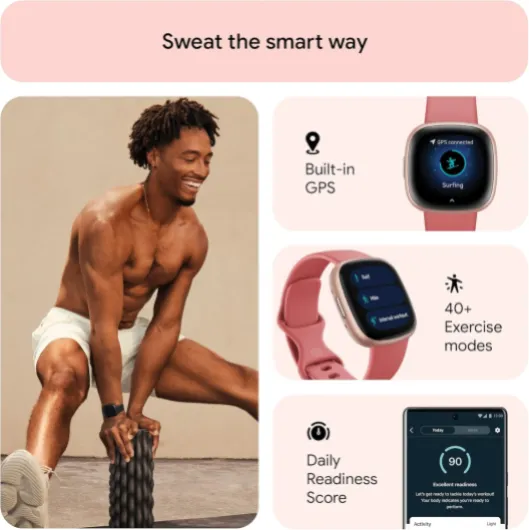
The Versa 4 is basically Fitbit’s mid-range fitness smartwatch. On paper you get: built-in GPS, 24/7 heart rate, 40+ workout modes, sleep tracking, daily readiness score, stress score, SpO2, and a bunch of app features like guided workouts and sleep analysis if you use Premium. It supports both iPhones (iOS 15+) and Android (9+). So it’s meant to sit between a basic band and something like an Apple Watch or Galaxy Watch.
In practice, the watch interface is focused on tiles: you swipe around to see your steps, heart rate, sleep, workouts, etc. There’s no app store circus like on other watches. You get a few built-in apps (exercise, alarms, timers, wallet, Alexa, etc.) and that’s about it. For some people that’s perfect. For others, it’ll feel a bit bare. I personally liked that it wasn’t overloaded, but I did miss little things like direct music controls and camera shutter control, which even some cheap watches have.
One thing you need to know: several “cool” features are tied to Fitbit Premium. The Daily Readiness Score, Sleep Profile, deeper analytics and some guided workouts are only fully usable with a subscription. You get six months free, which is fine for testing, but after that you need to either pay or accept that some of the data screens will be locked or simplified. If you hate subscriptions, factor that in.
So if I had to sum it up: the Versa 4 is a fitness tracker with a watch-style body and a few smart extras, not a full smartwatch. It’s built for people who care more about steps, runs, and sleep than about installing apps or replying to messages from the wrist. If that’s your use case, it lines up pretty well with what it promises.
Pros
- Light and comfortable enough to wear 24/7, including sleep
- Battery realistically lasts 4–6 days with mixed use
- Built-in GPS, 24/7 heart rate, and sleep tracking are accurate enough for everyday fitness
Cons
- Some key features locked behind Fitbit Premium after the free trial
- Limited smart functions (no music or camera control, can’t start calls)
- Occasional sync and app issues if not kept fully updated
Conclusion
Editor's rating
After using the Fitbit Versa 4 day and night, I’d sum it up as a solid fitness-focused watch that gets the basics right and doesn’t try to be a tiny smartphone. The strong points for me are the comfort, the decent tracking for everyday workouts, the very usable sleep tracking, and the battery life that easily lasts several days. It’s light enough to wear 24/7, the GPS is accurate enough for casual running and walking, and the app, while not perfect, presents the data in a way that’s easy to understand.
It’s not perfect. Some smart features are limited: you can answer calls but not start them, no music or camera control, and the vibrations are a bit weak. Sync and reliability are heavily tied to having the latest Fitbit app, and occasional glitches still happen. The subscription side is also something to think about: the watch is fully usable without Premium, but a chunk of the “cool” analytics and coaching is behind that paywall. Hardware durability seems fine so far, but long-term software support is always a bit of a question with Fitbit, based on past experiences.
I’d recommend the Versa 4 to people who mainly care about steps, workouts, heart rate, and sleep, and who want something lighter and simpler than an Apple or Galaxy Watch. It’s good for casual runners, walkers, and gym-goers who want to keep an eye on their health without charging every night. If you’re a power user who wants deep training metrics, lots of apps, or zero subscriptions, you might be happier with a mid-range Garmin or just sticking with your phone and a cheaper band. For everyone else, especially if you grab it on sale, it’s a pretty solid everyday fitness watch.