
Summary
Editor's rating
Value: solid deal if you care about fitness more than smart features
Design: simple, light, and not trying too hard
Battery life: where the Versa 4 actually shines
Comfort: easy to forget you’re wearing it (mostly)
Materials and build: light but a bit plasticky
Durability and water resistance: fine for daily abuse
Performance: fitness tracking good, smart features a bit limited
What the Versa 4 actually offers in real life
Pros
- Very good battery life (around 5–6 days in real use)
- Comfortable and light enough for all‑day and sleep wear
- Solid fitness and sleep tracking with a clear, easy‑to‑use app
Cons
- Limited smart features (weak call mic, no real music control, can’t start calls)
- Default silicone band can be irritating or sweaty for some users
- Some useful insights and features locked behind Fitbit Premium subscription

Specifications
View full product page →| Brand | Fitbit |
A fitness watch for people who don't want a full-on smartwatch
I’ve been using the Fitbit Versa 4 for a while now, and my overall feeling is: it’s a fitness tracker with a watch screen, not a full smartwatch. That’s not a bad thing, as long as you know what you’re getting into. If you’re expecting an Apple Watch on Android, you’ll probably be annoyed. If you mainly want to track workouts, sleep, and steps without babysitting the battery, it makes a lot more sense.
Coming from older Fitbits and a cheap generic watch I tried from Amazon, the Versa 4 feels more polished than the budget stuff, but also more limited than the big-name smartwatches. You get good heart rate tracking, GPS, a clear screen, and strong battery life, but you give up stuff like music control, third‑party apps, and fancy call handling. It’s very much focused on health and daily activity.
During the first few days, most of my time went into wrestling with the app, firmware updates, and getting notifications stable. Once that was done, the watch itself faded into the background, which for me is kind of the point. I don’t want to think about my watch all day. I just want it to log my runs, buzz me for calls and messages, and tell me if I’m sleeping like trash.
So this review is from that angle: regular user, fairly active, not a hardcore data geek. I’ll walk through what it actually does well, where it’s just okay, and where Fitbit (or Google, now) clearly cut corners. It’s not perfect and there are cheaper options, but there are also reasons why a lot of people still end up with a Versa on their wrist.
Value: solid deal if you care about fitness more than smart features
In terms of value, the Versa 4 sits in a middle ground. It’s more expensive than the random no‑name smartwatches on Amazon, but cheaper than full‑blown Apple Watches or Samsung Galaxy Watches. What you’re paying for here is a mix of decent hardware plus the Fitbit ecosystem, which is still one of the more user‑friendly setups for casual fitness tracking.
Compared to the cheaper watches I’ve tried, the Versa 4 feels more reliable day‑to‑day. Notifications are more consistent, the app is cleaner, and things like GPS and heart rate just work more often without weird spikes or dropouts. On the flip side, those budget watches sometimes offer more "fun" features like music control, camera shutter, and even making calls directly, which the Versa 4 oddly lacks or limits. One Amazon reviewer even pointed out that their $50 watch could control music and camera, while the Versa 4 can’t, which is a fair criticism.
The included 6‑month Fitbit Premium trial is nice if you’re into detailed insights, guided programs, and more complex sleep analysis. I played with it, liked some of the workouts and the extra graphs, but I’m not sure I’d keep paying long term unless I was really serious about squeezing every detail from my data. If you ignore Premium and just want the basics, the free features are still enough: steps, workouts, sleep score, heart rate, stress score basics, etc.
Overall, I’d call the value pretty solid but not mind‑blowing. If you mainly want a fitness watch with strong battery, clear stats, and a mature app, it’s a good buy, especially on sale. If you want a true smartwatch with rich apps and full phone replacement features, you’ll probably be happier spending a bit more elsewhere or going with a different ecosystem. It does its job well, but it’s not the best deal for every type of user.
Design: simple, light, and not trying too hard
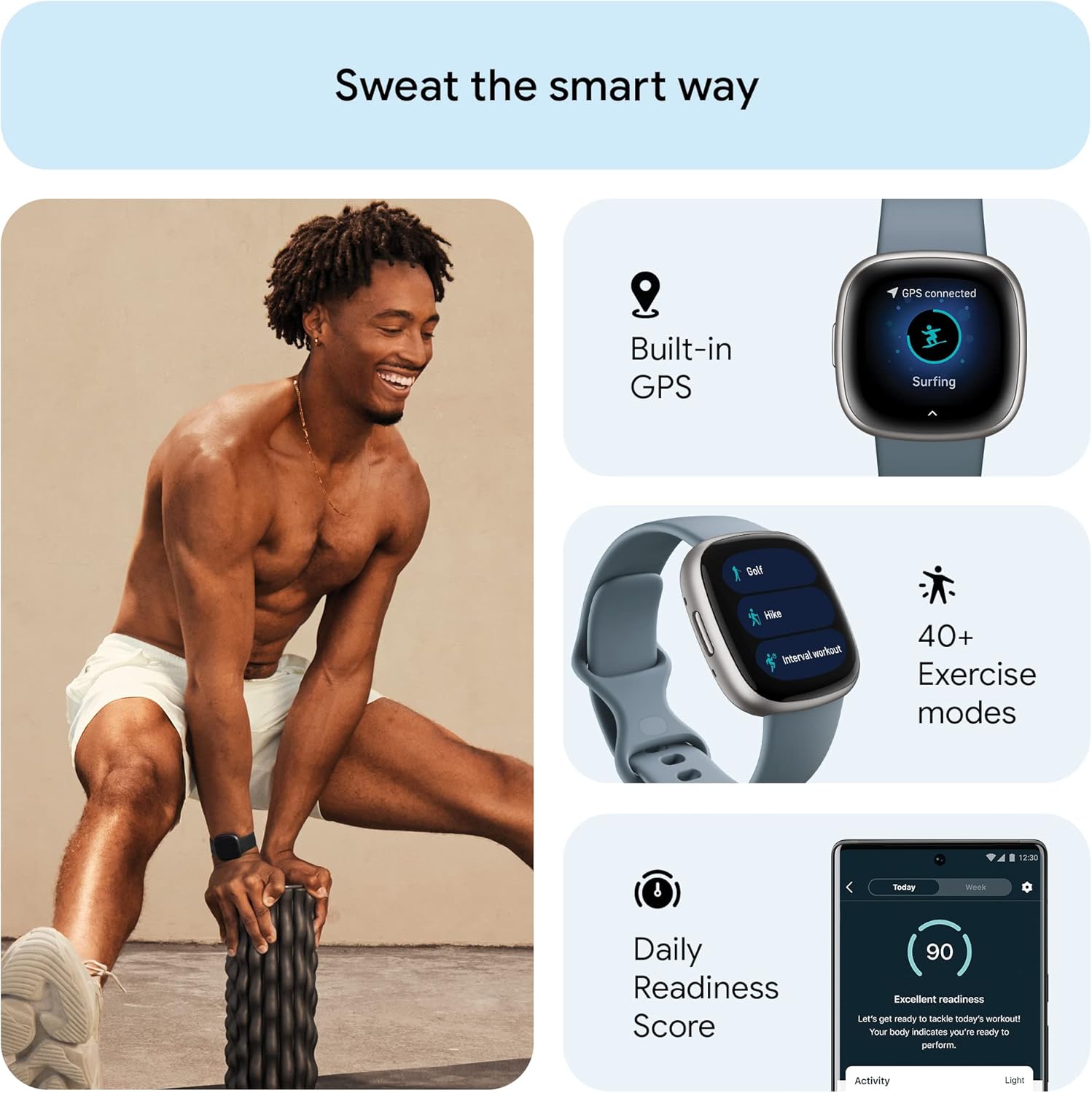
Design‑wise, the Versa 4 is very neutral. The Waterfall Blue/Platinum combo I tried looks clean but not flashy. It’s a small square slab with rounded corners and a single side button. If you’ve seen any recent Fitbit or mid‑range smartwatch, you’ve basically seen this one. It doesn’t scream "premium", but it also doesn’t look cheap or toy‑like when it’s on the wrist.
The watch is lightweight (around 6–7 ounces including the band), and that matters more than it sounds, especially for sleep tracking. I’ve had chunkier watches that I ended up taking off at night because they dug into my wrist or felt like wearing a small brick. The Versa 4 just kind of disappears, which is exactly what you want if you’re going to wear it 24/7. The thickness is reasonable, so it doesn’t catch on sleeves too much.
The screen itself is bright enough outdoors, though in direct sun it can still wash out a bit, like most wearables in this price range. The bezels are there, but because the interface uses dark backgrounds, they don’t bother me. It’s not a "borderless" look, but once you’re using it you stop noticing. The touch controls are fairly accurate; I didn’t get many accidental swipes or ghost touches, even when sweaty.
My only real complaint on design is that it’s a bit bland. If you like watches that double as a style piece, this is pretty generic. It looks fine at the gym and in an office, but no one is going to comment on it. For me that’s totally okay; I just wanted something that doesn’t stand out and goes with anything. But if you’re into more character or metal bodies, this plastic‑and‑aluminum mix will feel a bit basic.
Battery life: where the Versa 4 actually shines
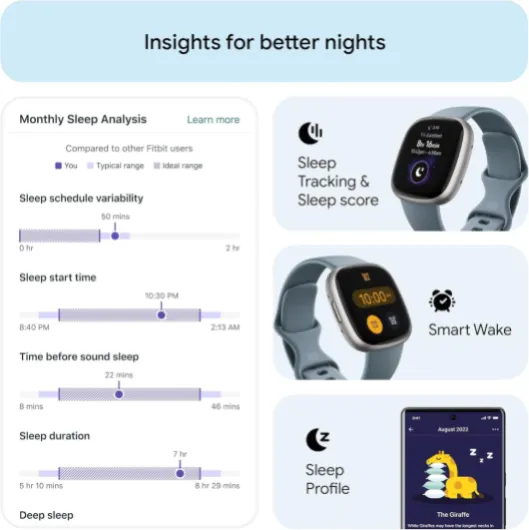
Battery life is one of the main reasons I stuck with the Versa 4. Fitbit claims 6+ days, and in normal use that’s pretty realistic. With 24/7 heart rate, sleep tracking every night, about 30–45 minutes of GPS workouts a few times a week, notifications on, and the screen on auto, I was getting around 5–6 days per charge. That’s much better than the 1–2 days you get on a lot of full smartwatches.
When I pushed it harder with more GPS workouts and playing around with features, it dropped closer to 4 days, but still nothing dramatic. One reviewer mentioned using it for several days and still being around 55%, which matches my experience when I had a lighter week. If you disable always‑on display and don’t hammer the GPS, this thing just keeps going. It’s the kind of watch you charge once or twice a week, not every night.
Charging itself is fairly quick. In about an hour you can go from low to enough for several days, so I usually charge it while showering and getting ready in the morning or while I’m sitting at the desk. The charging cable is a small magnetic puck. It’s fine, but it’s also proprietary, which is annoying if you forget it when traveling. I’d highly recommend buying a spare cable and tossing it in a bag, because you’re not going to find a replacement in a random shop.
What I like is that the watch doesn’t freak out at 20%. You still get a decent amount of life before it dies, so you’re not constantly in battery anxiety mode. Overall, battery life is one of the clearest strengths of the Versa 4. If you’re tired of charging your watch every night but still want decent tracking and a color screen, this hits a good balance.
Comfort: easy to forget you’re wearing it (mostly)
Comfort is honestly one of the Versa 4’s strong points. It’s light, fairly slim, and comes with both small and large bands in the box, so most wrists are covered. I have a medium wrist, and I ended up using the small strap with a couple of holes to spare. It sits flat and doesn’t wobble around if you adjust it correctly. For all‑day wear, I rarely felt the need to take it off aside from showers or charging.
For sleep tracking, which is a big part of why people buy Fitbits, the lightness really helps. I’ve tried sleeping with chunkier smartwatches and always gave up after a night or two. With the Versa 4, I got used to it quickly. The only slight annoyance is the silicone band not being very breathable, so on hot nights I sometimes woke up with a slightly sweaty patch under the band. Not dramatic, but noticeable. Swapping to a more ventilated band with holes fixed that almost completely.
During workouts (running and some gym sessions), the watch stayed in place quite well. Heart rate tracking works best when it’s snug, so you do have to find that sweet spot where it’s tight enough to stay still but not cutting off circulation. Once I dialed it in, I didn’t feel it bouncing around or sliding down the wrist, even when I got sweaty. The watch body doesn’t have sharp edges, so it never dug into my wrist during push‑ups or other movements where the wrist bends.
The only comfort downside I’d flag is for people with very sensitive skin. Between the reviews and my own experience, the material of the default band can cause irritation for some, especially if you wear it 24/7, never clean it, and keep it too tight. If you know you react to silicone or similar straps, just budget for a third‑party band from day one. Once that’s sorted, the Versa 4 is one of the easier watches to wear non‑stop.
Materials and build: light but a bit plasticky
The Versa 4 uses the usual combo at this price: aluminum case with plastic back and a silicone strap. In the hand, the watch feels light and reasonably solid, but definitely more on the "fitness band" side than a classic steel watch. If you’ve used a Sense or older Versa, it’ll feel very familiar. Nothing creaks, the button has a decent click, and the back sensors sit flush and don’t dig into the skin.
The included silicone bands are where you feel some cost cutting. They’re soft enough and flexible, but they have that slightly rubbery feel that doesn’t breathe super well. One user mentioned skin peeling and blistering with a similar band on the Sense 2, and I’ve seen that kind of irritation before on older Fitbits if you wear them too tight or never take them off. Personally, I didn’t get a rash, but I do notice some sweat buildup under the band after workouts, so I usually loosen it or take it off for a few minutes.
The good news is that the bands are swappable, and there are tons of cheap third‑party options. I swapped to a more breathable strap with holes after a week, and that fixed the clammy feeling. If you have sensitive skin, I’d basically plan on buying a different band from day one and treat the included one as a backup. The quick‑release system is easy enough once you’ve done it a couple of times.
As for the screen, Fitbit doesn’t shout about the glass type, so I wouldn’t treat it like it’s indestructible. One user mentioned the screen taking a hit fine, and I’ve bumped mine into door frames and desks without scratching it yet, but I’m still a fan of cheap screen protectors for peace of mind. Overall, the build is decent for the price: not premium, not junk, just practical and light. If you’re used to metal watches, it’ll feel a bit toy‑like at first, but for sports and sleep, the low weight is actually a plus.
Durability and water resistance: fine for daily abuse
Durability so far has been perfectly acceptable for a mid‑range fitness watch. The case hasn’t picked up any major scratches despite a few bumps on door frames and gym equipment. The screen still looks clean; no deep marks yet. One user mentioned the screen surviving a hit, which lines up with my experience. I still wouldn’t treat it like a rugged outdoor watch, but for normal daily wear it seems to hold up.
The watch is rated water resistant to 50 meters, and I’ve worn it in the shower a few times and during sweaty workouts with no issue. Another user said they were worried about frying it in the shower or swimming, but it’s designed to handle that. I wouldn’t press buttons underwater just to test it, but for casual swimming, rain, and quick rinses, it’s clearly fine. Just make sure to dry the band and your skin occasionally to avoid irritation.
The strap pins and quick‑release system feel secure. I haven’t had the band pop off by accident. The biggest "durability" concern isn’t the hardware so much as the software and ecosystem. Fitbit has a history of eventually dropping support for older models and pushing people towards new ones. The Versa 4 is still current enough, but keep in mind you’re tied to the Fitbit app and their servers. If they change features behind the Premium paywall or alter what’s free, you’re stuck with that.
Given the price point, I’d say the Versa 4’s durability is good enough for active daily wear, but if you’re doing hardcore outdoor sports, climbing, or construction work, you might want something more rugged or at least a screen protector and a tougher band. For office, gym, running, and normal life, it handles the abuse without feeling fragile.
Performance: fitness tracking good, smart features a bit limited
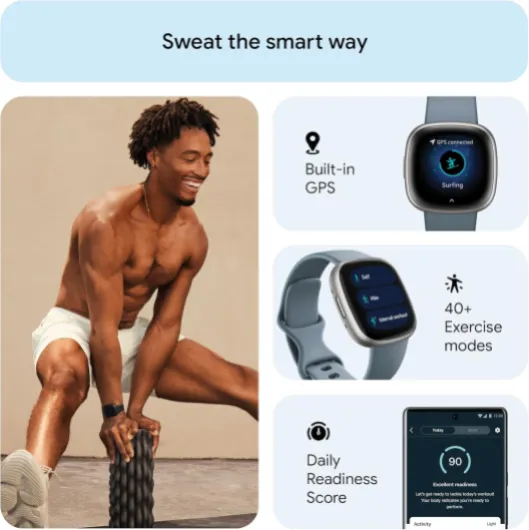
In day‑to‑day use, the Versa 4 performs well for fitness and health tracking, and just okay as a smartwatch. Steps, heart rate, and workouts are its main strengths. Compared to my phone’s GPS and a basic running watch I used before, distance and pace were close enough for casual training. Heart rate during steady runs and walks looked realistic, and I could see the zones in real time thanks to Active Zone Minutes. For interval work, it sometimes lagged a bit when my heart rate spiked, but that’s pretty common on wrist sensors.
The 40+ exercise modes are mostly just labels with slightly different data screens. I mainly used walking, running, cycling, and general workout. The watch starts tracking quickly, and the built‑in GPS means you don’t have to carry your phone to get a map of your route. The post‑workout summary in the app is clear: time, distance, pace, heart rate zones, and an intensity map. Nothing fancy, but it gives you what you need to see if you pushed or just strolled.
On the "smart" side, it’s more basic. You can answer calls on your wrist, but you can’t start calls, and several users (and me) found the microphone quality pretty weak. People on the other end sometimes struggled to hear clearly unless I held my wrist close to my mouth, which feels a bit silly. Text and app notifications come through reliably once you’ve sorted permissions, but you can’t do much beyond quick replies on Android. No music control from the watch is a weird limitation compared to cheaper devices that can at least pause/skip tracks.
Alexa and Google Maps / Wallet are nice add‑ons, but they depend heavily on the app being updated and your phone connection being stable. One user had major sync issues until they manually installed a newer Fitbit app version; after that, everything worked fine. I had one or two days where Alexa said "connection lost" randomly. So performance is good for tracking and decent for notifications, but if you want rich apps, full call control, and reliable voice assistant use all the time, this might feel a bit half‑baked.
What the Versa 4 actually offers in real life
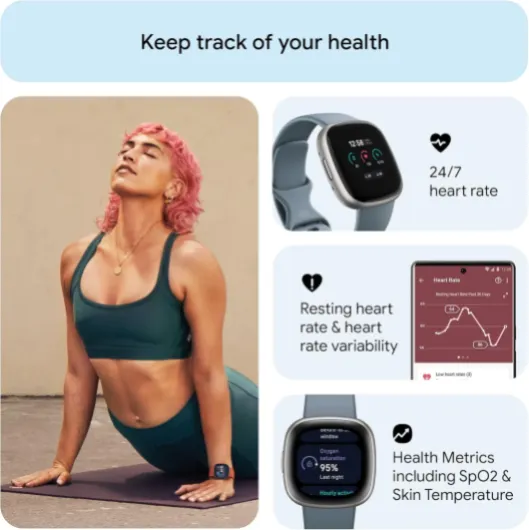
On paper, the Versa 4 spec list looks long: 40+ exercise modes, built‑in GPS, 24/7 heart rate, sleep tracking, stress score, SpO2, Alexa, calls, notifications, Fitbit Pay / Google Wallet, 6+ day battery, and a 6‑month Premium trial. In practice, you won’t use half of this every day, but the core stuff (steps, heart rate, workouts, sleep) is solid and easy to access from the watch and the app.
The watch face is a 1.58" square AMOLED‑style screen that’s bright and sharp enough. The default watch faces are pretty basic, so I quickly switched to a third‑party one that shows more stats (steps, heart rate, battery, weather, etc.) on the main screen. That’s one nice point: there are a lot of community watch faces, and some are genuinely useful, not just pretty. Just expect to spend a bit of time testing a few until you find one that isn’t cluttered or buggy.
Most people will interact with it in three ways: glancing at the time + steps, starting workouts, and checking notifications. For those three, it does the job. Swipes and taps are responsive, and the menu layout is simple: swipe left for apps, up for notifications, down for quick settings. No big learning curve. I didn’t really need the manual, which is good because what’s in the box is minimal anyway.
Where the watch feels a bit oversold is the extra features: Alexa is handy but sometimes loses connection if the app is outdated, the SpO2 and skin temperature are more "nice to see" than genuinely useful, and the whole Premium thing is only worth it if you’re really into guided workouts and detailed sleep breakdowns. Otherwise it just feels like extra paywalled graphs. So, as a package, it’s a pretty solid fitness‑first watch with some smart extras, not a full smart device that replaces your phone.
Pros
- Very good battery life (around 5–6 days in real use)
- Comfortable and light enough for all‑day and sleep wear
- Solid fitness and sleep tracking with a clear, easy‑to‑use app
Cons
- Limited smart features (weak call mic, no real music control, can’t start calls)
- Default silicone band can be irritating or sweaty for some users
- Some useful insights and features locked behind Fitbit Premium subscription
Conclusion
Editor's rating
The Fitbit Versa 4 is a solid fitness‑first smartwatch that gets the basics right: good battery life, reliable activity and sleep tracking, a comfortable design, and a mature app that makes the data easy to understand. It’s light enough to wear 24/7, the GPS and heart rate are accurate enough for most casual to moderately serious users, and the 6+ day battery means you’re not tied to a charger every night. For people who mainly want to track steps, workouts, and sleep, and occasionally glance at notifications, it fits the brief.
Where it falls short is on the "smart" side and some odd feature gaps. Call handling is limited and the mic quality isn’t great, there’s no proper music control, and some of the more advanced health metrics and coaching sit behind a Premium subscription that not everyone will want to pay for. The default band may also bother people with sensitive skin, so a third‑party strap is almost a must. Add to that the usual Fitbit dependence on the app and firmware updates (as seen with the sync issues some users had until they updated the app), and you can see the trade‑offs.
So, who is it for? It’s good for people who prioritize fitness tracking and battery life over fancy apps: walkers, casual runners, gym‑goers, and anyone who wants a simple way to keep an eye on their health without a thick, heavy watch. Who should skip it? Folks who want full smartwatch features, very strong call quality from the wrist, or deep integration with music and third‑party apps. If you go in with realistic expectations, the Versa 4 is a dependable daily companion, not a high‑end gadget that tries to do everything.