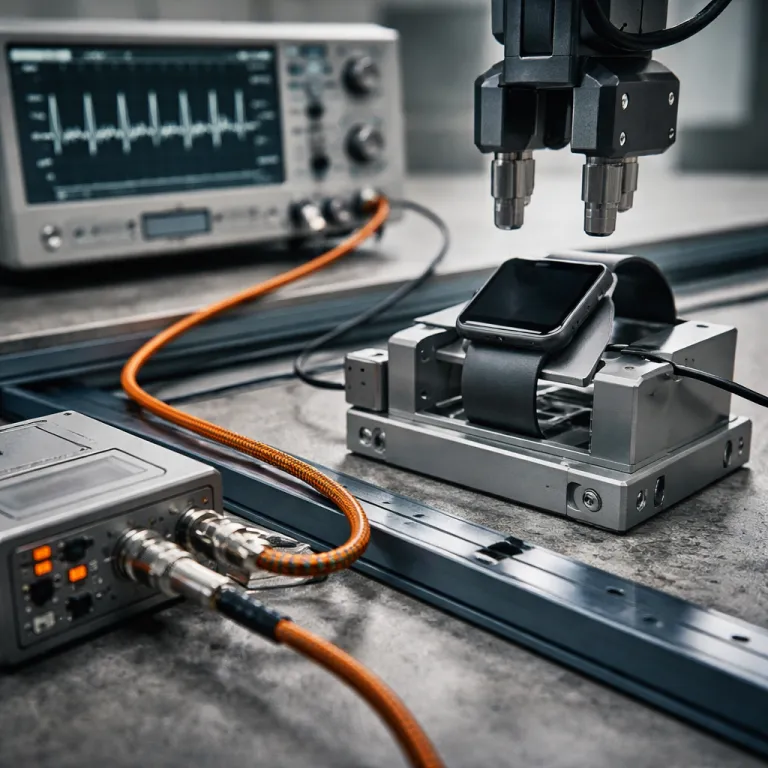

HRV on a smartwatch: quick summary
TL;DR: Heart rate variability (HRV) on a smartwatch is the tiny, millisecond-level change in time between heartbeats. Modern watches estimate HRV mainly during sleep or quiet rest and turn it into a single number that reflects how your autonomic nervous system is balancing stress and recovery. Overnight HRV trends are usually accurate enough to guide training load, sleep habits and daily pacing, but they are not a medical diagnosis or a replacement for an ECG.
What is HRV on a smartwatch and why should you care
Heart rate variability on a smartwatch is the tiny change in time between one heartbeat and the next. When people ask what is HRV on smartwatch screens, they are really asking what this millisecond level variation says about their heart and overall health. Your watch turns those invisible gaps into a single number that reflects how your autonomic nervous system is coping with the day.
Instead of showing only heart rate in beats per minute, HRV shows how much that rate varies from beat to beat. This rate variability is controlled by the autonomic nervous system, the automatic control system that balances the fight or flight response with the rest and digest mode in your body. A smartwatch uses optical sensors to estimate this variability HRV during sleep or quiet rest, then labels it as a sign of current health status and stress load.
When your nervous system is flexible, the time between beats changes more, and HRV tends to be higher. When stress, poor sleep, illness or heavy exercise strain the body, HRV often falls and the pattern of rate variability becomes more rigid. That is why people see a low HRV value after a hard day and wonder what HRV really tells them about heart health and daily resilience.
How your smartwatch actually measures HRV and how accurate it is
Most smartwatches measure heart rate and HRV using a green or infrared light sensor called PPG on the underside of the case. The watch shines light into the skin, reads how blood volume changes with each heart beat, then calculates the time between peaks to estimate rate variability in milliseconds. During sleep or quiet time, the signal is cleaner, so HRV tracking is usually more reliable at night than during exercise or busy daytime movement.
In independent validation research, several consumer wearables such as the Apple Watch, Oura Ring and WHOOP Strap have shown strong agreement with medical grade ECG for overnight HRV, often with concordance correlation coefficients above 0.9, which indicates very close tracking of variability patterns. RMSSD HRV, a common time domain measure that reflects short term beat to beat variation, typically differs by only a few milliseconds on average in these controlled settings, which is good enough for trends in health status but not for clinical decisions. SDNN, another time domain index that captures overall variability across a longer window, can show slightly larger differences but still follows the same pattern when conditions are stable. Other wrist based devices can show lower concordance, so their HRV tracking is best treated as a relative guide to stress and recovery rather than an absolute heart health measurement.
If you pair a Garmin watch with a dedicated chest strap such as the Garmin HRM Dual heart rate monitor, you can improve HRV data quality during exercise and structured breathing sessions. A chest strap reads the electrical signal of each heart beat directly, so the autonomic nervous system patterns behind low HRV or higher HRV are captured more precisely. Even then, what heart rate variability shows is still a proxy for nervous system balance, not a diagnosis of atrial fibrillation or any other specific heart rhythm problem.
What a higher or lower HRV really means for your body
For most healthy adults, a higher HRV relative to their own baseline suggests a more adaptable nervous system and better short term heart health. When the parasympathetic branch of the autonomic nervous system is active, the body is in a calmer state, the fight or flight response is dialled down, and the time between beats shows more variability. On your smartwatch, that usually appears as a good HRV night after quality sleep, light evening exercise and low late night stress.
By contrast, a lower HRV compared with your usual pattern often signals that the body is under strain, even if resting heart rate looks normal. The sympathetic branch of the nervous system, which drives the fight flight reaction, becomes more dominant, and the pattern of rate variability flattens as the system prepares for perceived threats. People then wake up, see a low HRV score on their watch, and worry about what heart rhythm changes might be happening inside their chest.
In practice, a single low HRV reading mainly tells you that your health status for that day is slightly compromised and that you should treat exercise and stress exposure with more care. If low HRV repeats for many days, especially with poor sleep, rising resting heart rate or symptoms such as chest pain or palpitations, that pattern becomes more meaningful. At that point, HRV tracking is a useful prompt to speak with a clinician and, if needed, use a medical device such as an arm blood pressure monitor to check blood pressure alongside heart rate and rhythm.
The real world habits that move your HRV up or down
When people first ask what is HRV on smartwatch graphs, they often assume that work stress or a single bad meeting will dominate the number. In reality, the biggest overnight swings in heart rate variability usually come from four things you can feel and measure quite clearly. Alcohol close to bedtime, a heavy late meal, poor sleep quality and very intense exercise are the main drivers of lower HRV the next morning.
Alcohol and late food force the body to keep working when it should be in deep sleep, so the autonomic nervous system stays in a mild fight or flight mode for much of the night. That keeps heart rate elevated, reduces the natural variability between beats and leaves people with both low HRV and a groggy feeling on waking. Several nights of this pattern can push health status in the wrong direction, especially in people already managing heart health issues or high blood pressure.
On the other hand, some things that feel stressful do not always move HRV as much as people expect. A busy workday, a morning coffee or a short walk can raise heart rate for a while without causing a major change in overnight rate variability, as long as you still get enough quality sleep. Smartwatch HRV tracking is therefore most useful when you look at the whole day and night system of habits, not just a single stressful event or one low HRV reading after a late evening.
How to use HRV on your smartwatch without panicking
The most helpful way to use HRV tracking is to treat it as a daily check on how your body is coping, not as a pass or fail test. When you see a low HRV morning compared with your usual range, plan a lighter exercise session, more breaks and an earlier bedtime rather than worrying about what heart rhythm might be doing. Over time, this calmer response to variability HRV data will reduce unnecessary stress and make the metric more useful.
Many watches now combine heart rate, HRV, sleep and activity into a single readiness or health status score, which can simplify decisions for people who do not want to analyse raw numbers. If that score is low, it usually means the autonomic nervous system is under strain from poor sleep, illness or heavy training, so the fight flight response is still elevated. On those days, you will get more benefit from gentle movement, breathing exercises and time outdoors than from chasing a personal best in high intensity exercise.
When the score is high and HRV is higher relative to your baseline, the body is generally ready for more demanding things, whether that is a long walk, a run or a strength session. If you enjoy more detailed data, you can also pair your watch with accessories such as a running pod to enhance your smartwatch experience and see how changes in pace and form affect heart rate and HRV. Used this way, HRV tracking becomes a practical guide to pacing your day rather than a mysterious number that fuels anxiety.
When HRV is a red flag and when it is just noise
HRV on a smartwatch is not a diagnostic tool for atrial fibrillation or other serious rhythm problems, even when the number looks very low. The device is sampling heart rate intermittently through the night, not recording every beat continuously like a medical ECG system would. That means some variability patterns are missed, and what HRV you see on screen is a smoothed estimate of autonomic nervous system balance, not a full map of electrical activity in the heart.
You should talk to a doctor promptly if HRV trends downward for weeks while resting heart rate climbs, exercise tolerance drops and symptoms such as chest pain, dizziness or palpitations appear. In that situation, the combination of low HRV, poor sleep and reduced capacity suggests a broader health status change that deserves proper testing. A clinician may use tools such as a 24 hour ECG, blood tests and a validated arm blood pressure monitor with accurate systolic and diastolic measurements to understand what is happening in the cardiovascular system.
By contrast, a single night of low HRV after a late dinner, alcohol or travel is usually just a sign that the body had a harder time recovering. In that case, the best response is to prioritise quality sleep, hydration and lighter exercise for a day or two until HRV tracking returns to your normal range. The key is to look at patterns over time, not isolated numbers, and to remember that what HRV reflects is how your nervous system is adapting, not whether your heart is structurally healthy or diseased.
Simple ways to improve HRV using your smartwatch as a coach
Raising HRV is less about chasing a specific number and more about building habits that support the autonomic nervous system. The most reliable way to improve HRV is to protect sleep, because quality sleep is when the body repairs tissues, balances hormones and restores heart rate variability. Your smartwatch can help by tracking sleep stages, flagging poor sleep nights and nudging you toward a more consistent bedtime and wake time.
Regular moderate exercise, such as brisk walking or cycling, also supports heart health and gradually increases HRV over months, especially in people who were previously inactive. Here, heart rate zones on the watch are more useful than the HRV number itself, because they keep effort in a range that stresses the system enough to adapt without pushing it into constant fight or flight mode. Over time, people often notice that the same easy pace produces a lower heart rate, higher HRV and a better overall health status score.
Finally, short daily breathing or mindfulness sessions can shift the autonomic nervous system toward a calmer state and raise HRV in the short term. Many watches now include guided breathing exercises that sync inhale and exhale with gentle haptic cues, which can be a simple way to train the flight response to settle. Used alongside sensible exercise, regular daylight exposure and attention to what and when you eat, these tools turn HRV tracking from a confusing metric into a quiet background coach that helps you make better choices each day.
Key HRV and smartwatch statistics to know
- In validation studies, consumer wearables that track HRV overnight, including devices such as the Apple Watch, Oura Ring and WHOOP Strap, have shown concordance correlation coefficients often above 0.9 when compared with medical grade ECG measurements, which means they follow the same variability pattern closely even if individual readings differ slightly.
- Research on wrist based devices suggests a typical overnight RMSSD HRV error of roughly 5 to 10 milliseconds compared with ECG, which is small enough for trend monitoring but not precise enough for clinical diagnosis or treatment decisions.
- Studies comparing wrist based PPG sensors with chest strap ECG during exercise show that HRV accuracy drops significantly with high intensity movement, which is why most manufacturers calculate HRV primarily during sleep or quiet rest periods.
- Population data indicate that regular aerobic exercise can increase average HRV by around 10 to 20 percent over several months in previously sedentary adults, highlighting the link between daily activity, heart health and autonomic nervous system flexibility.
- Large cohort analyses have found that consistently low HRV is associated with a higher risk of cardiovascular events over time, but the predictive power improves when HRV is combined with resting heart rate, blood pressure and lifestyle factors rather than used alone.
FAQ about HRV on smartwatches

What is HRV on a smartwatch in simple terms
HRV on a smartwatch is the measurement of how much the time between your heartbeats changes from one beat to the next, usually expressed in milliseconds. It reflects how your autonomic nervous system is balancing stress and recovery, rather than how fast your heart is beating overall. A higher HRV relative to your own baseline usually means your body is better recovered and more adaptable that day.
Is a higher HRV always better for everyone
Higher HRV is generally linked with better cardiovascular fitness and resilience, but only when compared with your own long term average. Two people can have very different absolute HRV values and still both be healthy, so the key is whether your HRV is stable or improving over weeks. A sudden drop from your normal range is more informative than whether your number looks high or low compared with someone else.
Can my smartwatch detect atrial fibrillation using HRV
Standard HRV metrics on a smartwatch are not designed to diagnose atrial fibrillation or other specific arrhythmias. Some watches include separate ECG style features that can flag possible irregular rhythms, but those tools are distinct from the HRV score and still require medical confirmation. If you notice frequent palpitations, dizziness or irregular pulse, you should see a doctor regardless of what your HRV number shows.
Why does my HRV drop after drinking alcohol or sleeping badly
Alcohol and poor sleep keep your sympathetic nervous system more active at night, which raises resting heart rate and reduces the natural variation between beats. Your body spends more time in a mild fight or flight state instead of deep recovery, so HRV falls for that night or even several nights. Once you return to earlier bedtimes, lighter evening meals and lower alcohol intake, HRV usually climbs back toward your normal range.
How long does it take to improve HRV with lifestyle changes
Short term changes such as a single good night of sleep or a relaxing day can raise HRV within 24 hours, but lasting improvements usually take weeks or months. Consistent habits such as regular moderate exercise, a stable sleep schedule and stress management gradually strengthen the autonomic nervous system. Your smartwatch helps by tracking trends over time so you can see whether those changes are shifting both HRV and resting heart rate in a healthier direction.