
Summary
Editor's rating
Value: worth it if you actually use the extra data
Design: familiar Garmin strap with a few modern tweaks
Battery: nice to recharge, but don’t expect coin-cell longevity
Comfort: you forget it’s there… most of the time
Durability: the big question mark with Garmin straps
Performance: heart-rate accuracy and running metrics in practice
What the Garmin HRM 600 actually does in real life
Pros
- Consistently accurate heart-rate data, especially better than wrist sensors during intense workouts
- Advanced running metrics and treadmill pace/distance support for compatible Garmin watches
- Comfortable, lightweight, machine-washable strap with detachable module and good Garmin ecosystem integration
Cons
- Rechargeable battery needs more frequent attention than a coin cell and the open charge port is a potential weak point
- Price is high if you only need basic heart-rate tracking and don’t care about advanced metrics
- Garmin chest straps historically don’t last many years under heavy use, so long-term durability is uncertain

Specifications
View full product page →| Brand | Garmin |
A chest strap for people who are sick of flaky wrist HR
I’ve been using Garmin watches for years, and like a lot of people, I got tired of wrist heart-rate going crazy every time I did intervals, hit the heavy bag, or went out in the cold. So I picked up the Garmin HRM 600 M-XL to see if a newer strap with a rechargeable battery was actually worth the extra money over the usual coin-cell models. I’ve used it mainly for running (road and treadmill), some indoor cycling, and a few gym sessions where I left the watch in my bag.
Right away, the thing that stood out is how it slots into the Garmin ecosystem. It pairs quickly with a Garmin watch, shows up in Garmin Connect, and just quietly feeds data in the background. No weird setup, no messing around with settings for basic use. If you already live in Garmin’s world, it feels pretty natural. If you don’t, you can still use it with phones and apps, but clearly it’s built with Garmin users in mind.
After a couple of weeks, I mainly wanted to know three things: Is the heart-rate data cleaner than the watch? Does the rechargeable battery actually make life easier? And is the strap comfortable enough that I don’t dread putting it on every time? On all three, it does a pretty solid job, even if there are some quirks that you should know before dropping this kind of cash on a heart-rate strap.
It’s not perfect, and it’s not cheap, but if you’re the kind of person who cares about pace, distance on treadmills, running dynamics, and more accurate HR for training zones, the HRM 600 starts to make sense. If you just want a rough idea of your heart rate for casual workouts, this is probably overkill. I’ll break down where it shines and where it’s just “meh but it works”.
Value: worth it if you actually use the extra data
From a value point of view, the HRM 600 sits on the expensive side of chest straps. You’re paying for the Garmin name, the integration with their ecosystem, and the extra features like running dynamics, treadmill pace/distance, swim HR storage, and workout recording without a watch. If you’re just casually tracking heart rate and don’t care about advanced metrics, there are cheaper chest straps that will give you accurate HR without all the extra bells and whistles.
Where the price starts to make sense is if you’re already deep into Garmin gear and you actually use the data. For runners doing structured training, the running dynamics and step speed loss stuff is genuinely interesting, especially if you’re trying to tweak form. For people who do a lot of treadmill or indoor track work, the better pace/distance estimates are nice. And if you play sports or do workouts where a watch is annoying or risky, being able to record everything on the strap and sync later is pretty handy.
The rechargeable battery is a bit of a double-edged sword in the value equation. On one hand, no more buying coin cells and messing with tiny screws. On the other hand, you’re trading yearly battery swaps for more frequent charging and a port that might be a weak point long-term. If it holds up for 2–3 years of steady use, I’d call the overall value decent. If it starts acting up earlier, it’s going to feel like you overpaid for a fancy strap that doesn’t last.
Overall, I’d rate the value as good for serious Garmin users, average for everyone else. If you’re into training plans, data analysis, and already have a compatible Garmin watch, it fits nicely into your setup. If you just want something cheap and reliable to get heart rate into your phone or watch, you can spend less and be just as happy.
Design: familiar Garmin strap with a few modern tweaks
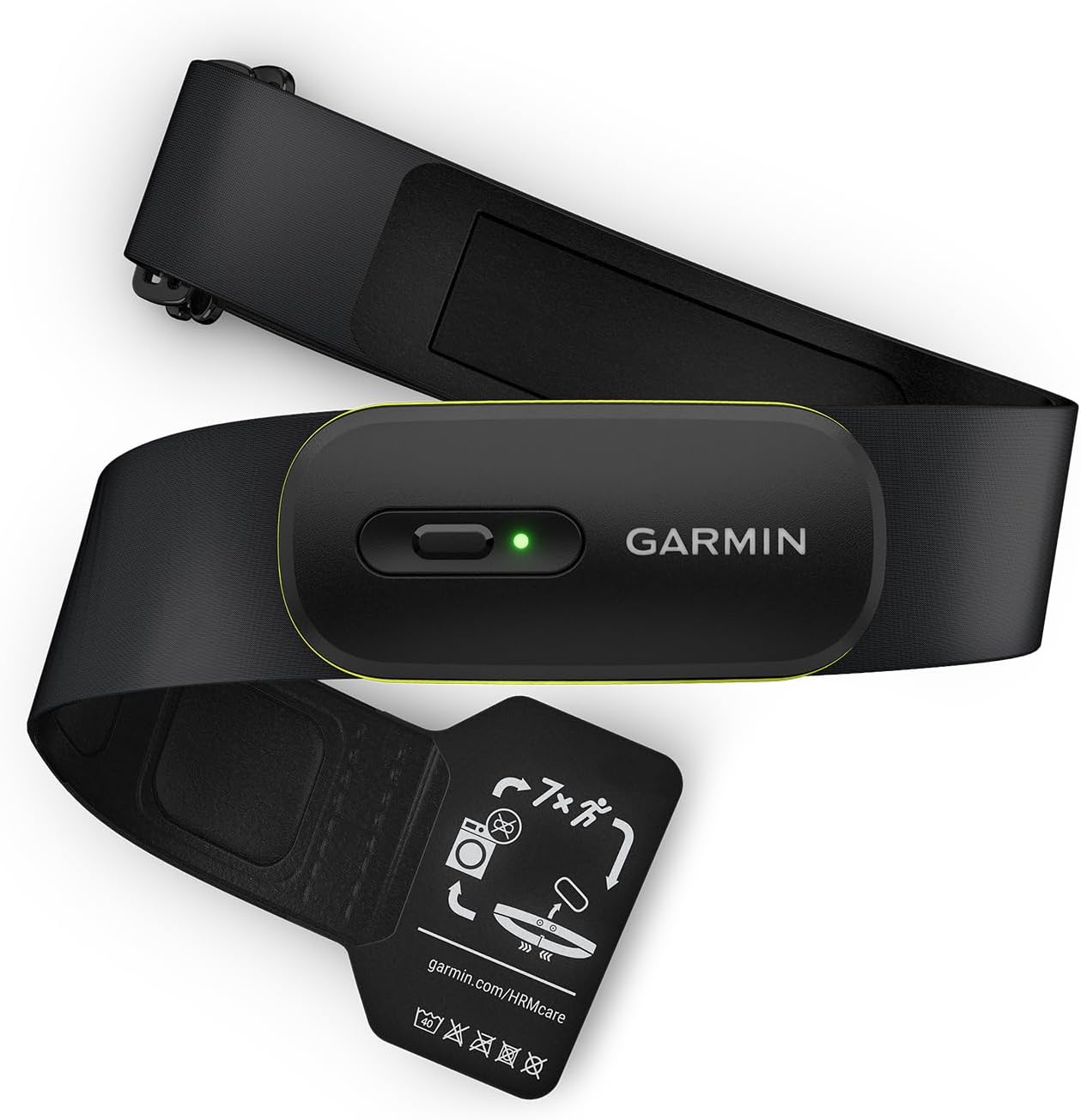
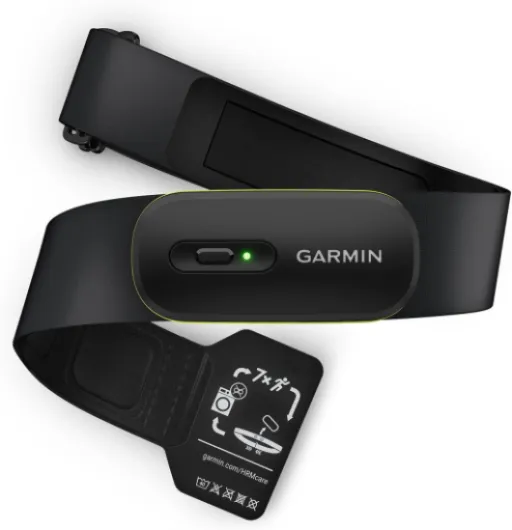
Design-wise, the HRM 600 is pretty straightforward: a black plastic pod clipped into an adjustable elastic strap. If you’ve used a Garmin chest strap before, this will look very familiar. The pod is small (about 2.7" wide) and light (around 2.2 oz for the whole thing), and it sits flat enough that it doesn’t dig into the chest, even under a tighter shirt. It doesn’t scream “tech gadget” when you wear it; it just looks like a normal HR strap.
The big change compared to older models is the rechargeable battery with a charge/data port. That means no more coin-cell covers or tiny screws to strip. The trade-off is you now have a physical connector that you need to keep clean and dry. One Amazon reviewer mentioned buying a port cover, and I agree that it’s a bit odd Garmin doesn’t include one in the box. If you sweat a lot or run in the rain often, I’d seriously consider getting a cheap rubber plug just for peace of mind.
There’s also a small status LED on the module. By default, it blinks, which is slightly annoying if you’re running in a dark gym or at night in a thin shirt. The good news is you can turn the light off via the app once you pair it with your phone, but you have to dig for that setting the first time. It’s a tiny thing, but it’s the kind of detail you only notice after a few workouts when you’re wondering why your chest is flashing.
In terms of overall layout, the strap uses the usual contact area across the front where it touches your skin, and the pod snaps into the center. The M–XL size has plenty of room for adjustment; I’m average build and sit somewhere in the middle of the range with room to tighten or loosen. Nothing in the design is groundbreaking, but it’s practical and familiar. If you’ve worn any modern Garmin HRM, you’ll feel at home, for better or worse.
Battery: nice to recharge, but don’t expect coin-cell longevity
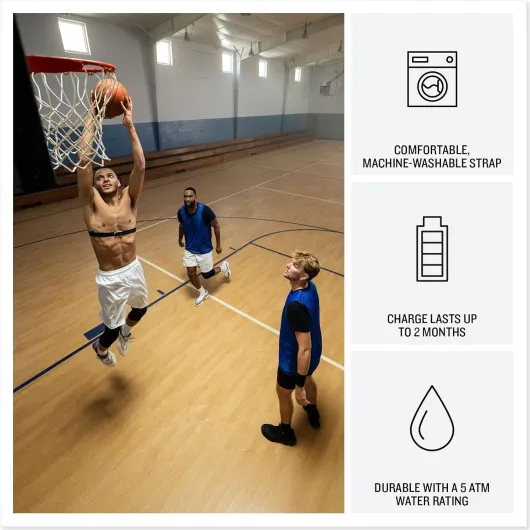
The battery story on the HRM 600 is a mixed bag. On the plus side, no more coin batteries. You charge it with the included cable, and Garmin claims up to 2 months of battery life. In normal use (4–5 workouts per week, plus some idle time), you’re realistically looking at something close to that if you’re not hammering it every single day for hours. The convenience of just topping it up every few weeks is nice, especially if you’ve ever had a strap die right before a race because you forgot to change the CR2032.
On the downside, several users have pointed out that older, coin-battery Garmin straps would often last close to a year on a single battery. One Amazon review said they were at 60% after only a month, which lines up more with a few weeks of heavy use than a full two months. So yes, you’re charging it more often than you used to swap batteries, sometimes by quite a margin. The trade-off is you get a fully sealed unit (aside from the port) instead of a screw-on battery cover that can leak sweat over time.
Charging itself is straightforward: plug in, wait, done. The module is small, so it charges reasonably fast. The annoying bit is the open connector. If you train a lot in sweat and rain, that port is just begging for salt and grime. Garmin really should have thrown in a port cover in the box. I’d recommend buying a cheap silicone plug online and just leaving it in when you’re not charging to avoid long-term corrosion or connection issues.
In daily life, the battery is “good enough” but not impressive. You’re not charging it every few days like a smartwatch, but you also don’t get to forget about it for a year like with coin cells. If you’re ok plugging it in every few weeks and keeping an eye on the percentage in the app, you’ll be fine. If you loved the old-school “swap a coin cell once a year and forget it” approach, this might feel like a step backward.
Comfort: you forget it’s there… most of the time
Comfort is a big deal with chest straps. If it’s annoying, you just stop using it, no matter how good the data is. The HRM 600 M-XL is actually pretty good here. The strap is soft, flexible, and doesn’t feel like sandpaper against the skin. I wore it directly on skin for runs up to 90 minutes and a couple of long indoor bike sessions, and I didn’t get any chafing or hot spots. Obviously, if you’re sensitive or doing 3-hour runs in the heat, you might want a bit of anti-chafe cream, but for normal use it’s fine.
The weight and size help too. At just over 2 ounces, you don’t feel like you’re wearing a stiff belt around your chest. Once you tighten it correctly, it stays in place. I did some faster intervals and a few sets on the heavy bag, and the strap didn’t slide down or ride up, which is usually what annoys me with cheaper straps. The module itself sits flat enough that it doesn’t poke out under a t-shirt or running top.
One thing to keep in mind is sizing. I had the M–XL, which worked well for me, but one Amazon review mentioned that the XS–S strap was almost at max extension for someone wearing small/medium shirts. So if you’re borderline between sizes, don’t size down aggressively. The strap is machine-washable (you remove the pod), which is great because sweaty straps can get gross fast. I washed it a few times on delicate in a laundry bag and it didn’t stretch out or deform.
Overall, in day-to-day use, I mostly forgot I was wearing it once the workout started, and that’s about all I ask from a chest strap. It’s not magic—you still notice it when you first put it on and when you’re really breathing hard—but it doesn’t dig in, doesn’t leave marks, and doesn’t feel cheap. For regular training, I’d call the comfort solid and reliable, which is honestly what matters here.
Durability: the big question mark with Garmin straps
Durability is where I’m a bit cautious with the HRM 600, mostly because of Garmin’s history with chest straps. One long-time user on Amazon mentioned that every one of their Garmin straps over 15 years eventually started misbehaving after 2–3 years: crazy high HR at the start of workouts until they got sweaty, then it settled. I’ve seen the same thing in the past with older Garmin straps. Usually it’s sweat and salt getting into the electronics or the contact area wearing out. The HRM 600 has a detachable strap, which is good because you can at least replace the strap part without replacing the module.
In my short-term use, there’s nothing to complain about. The strap feels solid, the stitching seems decent, and the module doesn’t feel flimsy. It’s rated for swimming, and I did a few wet sessions (rain runs and one pool swim) without any obvious issues afterwards. The fact that the strap is machine-washable is a plus for long-term hygiene and probably helps it last longer, as long as you’re not tossing it in on hot cycles and destroying the elastic.
The worry point for me is that exposed charge port. Any open connector on a sweat-heavy device is a long-term risk. If sweat or pool water dries in there regularly, I wouldn’t be shocked if some people start seeing corrosion or charging issues after a while, especially if they never clean or cover it. Wiping it down after really sweaty sessions and using a port cover should help, but it’s still a potential weak spot compared to a fully sealed, no-port design.
So in terms of durability, I’d say: short-term, it feels fine and trustworthy; long-term, Garmin’s track record with straps makes me a bit skeptical. If you’re ok with the idea that you might be buying a new strap every few years, it’s probably not a dealbreaker. But if you expect a strap to last 5–7 years with heavy use, I wouldn’t bet on it based on past experience.
Performance: heart-rate accuracy and running metrics in practice
This is the main reason to buy the HRM 600: cleaner, more stable heart-rate data than a watch alone. In my runs and rides, the readings matched what I’d expect based on effort much better than the wrist sensor. No random 190 bpm spikes during warm-up, no big drops when gripping handlebars, and no laggy response during intervals. This lines up with several Amazon reviews saying the strap produced much more reliable data, especially for high-intensity stuff like OCR, running intervals, and hitting the heavy bag.
Where it gets interesting is the extra metrics. With a compatible Garmin watch, you get running dynamics like stride length, vertical oscillation, ground contact time, and a newer one called step speed loss, which tells you how much you slow down when your foot hits the ground. If you’re into form work or trying to squeeze out a bit more efficiency, these are genuinely useful. I used the data to compare easy runs vs intervals and could clearly see differences in ground contact balance and stride length. Is it life-changing? No. But if you like digging into stats, it gives you more to work with.
For indoor track and treadmill, the HRM 600 sends pace and distance. I tested this on a treadmill run of about 8 km. The watch alone was off by a few hundred meters, while the HRM-based distance was noticeably closer to what the treadmill showed. Not perfect, but clearly better. For people who do a lot of treadmill speedwork, that’s a nice upgrade over just using the wrist. Swimming is another area: it can store heart-rate data during swims and sync to the watch after. I did a short pool session and the sync worked fine; HR curves looked reasonable.
The only performance hiccup I saw wasn’t really data-related but connection-related. One Amazon user with a Fenix 7X Pro mentioned a weird pairing bug where the watch said it was paired but then wouldn’t connect until a reboot. I had one similar moment where my watch didn’t see the strap right away, but turning Bluetooth off/on fixed it. Not a dealbreaker, but if it happens regularly it’s annoying. Overall, though, the data quality is solid, and that’s what matters: stable HR, useful running metrics, and decent indoor distance estimates.
What the Garmin HRM 600 actually does in real life
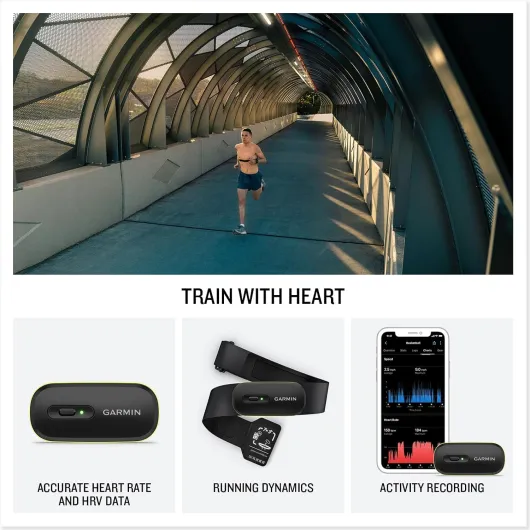
On paper, the HRM 600 is packed: chest strap with optical sensor, rechargeable battery (up to 2 months), advanced running dynamics, swim HR storage, and the ability to record workouts when you’re not wearing a watch. In practice, the main thing you notice is that it gives you consistent heart-rate data across pretty much any workout. Compared to my Fenix’s wrist sensor, spikes and random drops are way less common, especially during intervals or when I’m gripping handlebars hard on the bike.
Garmin also sells this as a kind of mini tracker. It can track daily metrics like estimated steps, calories, and heart rate and sync to Garmin Connect. I’ll be honest: I didn’t buy it for that and I barely used that part. If you already wear a Garmin watch, that feature is kind of redundant. Where it makes more sense is for people who can’t wear a watch at work or during some sports but can wear a strap under clothes; then the ability to record a full workout on the strap and sync later is actually useful.
One thing that’s actually handy: for indoor track and treadmill, the HRM 600 can send pace and distance to your compatible watch. I tested it on a treadmill, and the distance was closer to what the treadmill showed than the watch’s internal estimate. It’s not perfect to the meter, but for structured workouts, it’s good enough. Same story for running dynamics like stride length, vertical oscillation, and ground contact time balance: if you’re into fine-tuning form, the data is there; if you’re not, it’s just a pile of graphs you’ll never open.
Overall, the presentation from Garmin is “all-in-one chest strap plus mini tracker”, but in daily use I’d say it’s mainly a reliable heart-rate strap with some nerdy extras. The headline features that actually matter are: better HR accuracy than the wrist, treadmill/indoor pace and distance, and the ability to log sessions when you leave the watch behind. Everything else is nice to have but not life-changing.
Pros
- Consistently accurate heart-rate data, especially better than wrist sensors during intense workouts
- Advanced running metrics and treadmill pace/distance support for compatible Garmin watches
- Comfortable, lightweight, machine-washable strap with detachable module and good Garmin ecosystem integration
Cons
- Rechargeable battery needs more frequent attention than a coin cell and the open charge port is a potential weak point
- Price is high if you only need basic heart-rate tracking and don’t care about advanced metrics
- Garmin chest straps historically don’t last many years under heavy use, so long-term durability is uncertain
Conclusion
Editor's rating
The Garmin HRM 600 M-XL is a solid chest strap for people who care about clean data and are already invested in Garmin gear. The heart-rate readings are stable and consistent, especially compared to wrist sensors during intense or bouncy workouts. Add in running dynamics, treadmill pace/distance, swim HR storage, and the ability to record workouts without a watch, and you’ve got a strap that does more than just spit out a BPM number. Comfort is good, the strap is washable, and once it’s on, you mostly forget it’s there.
It’s not perfect, though. The rechargeable battery is convenient but doesn’t match the set-and-forget life of old coin-cell straps, and that exposed charge port is something you’ll want to protect if you sweat a lot. Garmin’s history with strap longevity also hangs over it a bit; it’ll probably be fine for a few years, but I wouldn’t expect it to last forever under heavy use. And if you’re not into advanced metrics or already wearing a Garmin watch 24/7, some of the extra features are just overkill.
So who is this for? It’s a good fit for runners, triathletes, and data-minded athletes who want reliable HR plus extra metrics and already use a compatible Garmin watch. It’s also useful if you do sports where wearing a watch sucks but a strap is fine. Who should skip it? Casual gym-goers, people who just want basic HR, or anyone who doesn’t care about running dynamics will probably be happier with a cheaper, simpler chest strap. In short: great if you’ll use the features, overkill if you won’t.