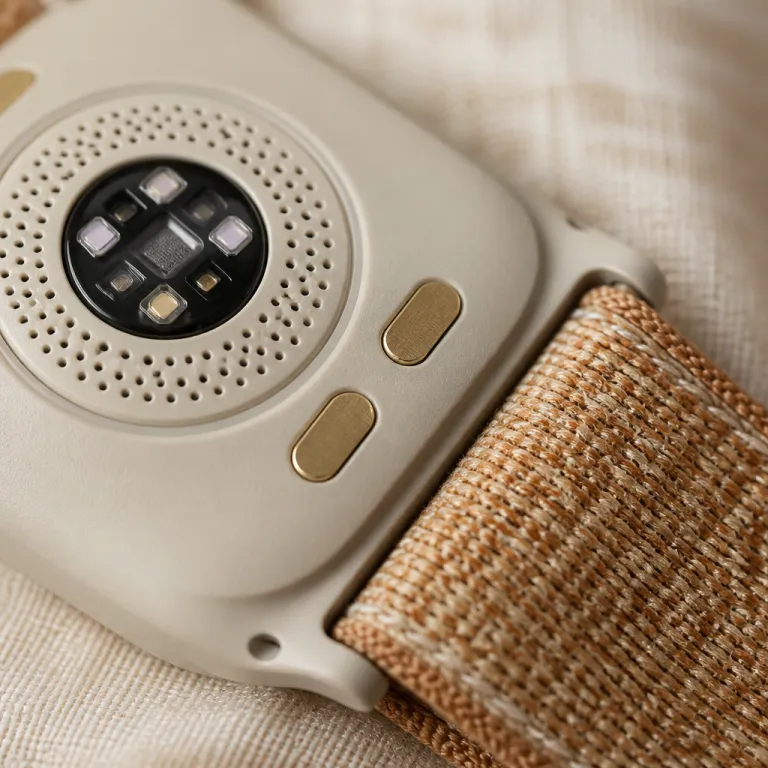
Smartwatch glucose monitoring versus medical reality
Smartwatch glucose monitoring sounds like the perfect blend of convenience and control. Many people with diabetes imagine a smartwatch that can track blood sugar through the skin in real time, with no fingersticks, no adhesive patches, and no sensor piercing the skin. The gap between that dream and today’s approved devices is still wide.
Every smartwatch and smart ring that claims to monitor blood glucose without a sensor under the skin currently sits outside United States Food and Drug Administration authorization. In March 2024, the FDA issued a safety communication stating that it has not cleared, authorized, or approved any smartwatch or smart ring for noninvasive blood glucose measurement, which means any such product is not a medical device you should rely on for diabetes treatment decisions (FDA Safety Communication, March 2024). For people with diabetes who depend on accurate blood sugar readings to adjust insulin or other medication, that regulatory line is not a detail; it is the whole story.
Medical standards for glucose monitors are strict because the impact on health of wrong numbers can be immediate. For example, ISO 15197:2013 for self-monitoring blood glucose meters requires most readings to fall within ±15 milligrams per decilitre (mg/dL) or ±15% of a laboratory reference, and FDA expectations for continuous glucose monitoring (CGM) systems use similar accuracy metrics such as mean absolute relative difference (MARD) across a wide range of glucose levels and conditions. Modern CGMs such as Dexcom G7 and Abbott FreeStyle Libre 3 typically report MARD values in the roughly 8–9% range under clinical study conditions, which is far tighter than most experimental noninvasive wrist devices can achieve. Hitting that threshold without piercing the skin, while the watch or ring sits on moving, sweating, temperature-shifting wrists or fingers, is what keeps noninvasive smartwatch glucose monitoring in the research lab rather than on the list of devices sold in pharmacies.
Why non invasive blood glucose is so hard for a watch
On paper, using light or radio waves to estimate blood glucose through the wrist looks smart and elegant. In practice, the wearable must separate the optical or radio signal from layers of skin, fat, bone, hair, tattoos, and even watch strap pressure before it can infer glucose levels. That messy path is why optical and radiofrequency devices struggle to reach medical-grade accuracy for continuous glucose monitoring.
Glucose molecules do not sit alone waiting for a smartwatch sensor to read them. They are dissolved in blood and interstitial fluid, and the signal that carries glucose information is easily distorted by changes in temperature, hydration, and blood flow during exercise or stress, which already cause issues for heart rate monitoring. When you add darker skin tones, calloused wrists, or swelling, the same noninvasive device can become dangerously inaccurate for some users while appearing fine for others; research on wearable photoplethysmography has documented performance disparities across skin pigmentation, and similar concerns apply to optical glucose experiments.
Regulators do not care if a smartwatch or smart ring looks futuristic when the numbers drift. They care whether a person with diabetes can safely use blood sugar readings to dose insulin at any time glucose is changing quickly, such as after meals or during sport. That is why health experts warn that relying on unapproved rings that claim to measure glucose or watches that advertise blood sugar monitoring without a sensor can undermine diabetes care rather than support it, and why some people develop health data anxiety when wearables overpromise and underdeliver, as highlighted in research on the psychological impact of constant biometric tracking.
Current bridge: pairing Dexcom and other CGM devices with a watch
Right now, the most reliable way to get glucose data on your wrist is straightforward. You wear an approved continuous glucose monitoring device on your arm or abdomen, then send its readings to a compatible smartwatch or smart ring. The watch becomes a display for blood glucose, not the device that actually measures blood sugar.
Dexcom G7 is a clear example of this bridge between medical sensors and consumer wearables. The G7 sensor still works by piercing the skin with a tiny filament that sits in the fluid between cells, but it streams glucose levels every few minutes to a phone and, on some platforms, directly to a watch in near real time. In 2023–2024, Dexcom announced expanded direct-to-watch support that allows certain watches to receive readings without a nearby phone, depending on region and operating system. For many people with diabetes who want to glance at sugar levels during a meeting or workout, that combination of a CGM device and a smartwatch is already life changing.
On Apple Watch, Dexcom G7 can now send blood glucose readings without the iPhone being nearby, while on Android phones the watch usually mirrors the phone app through compatible devices from Samsung, Google, and others. Other glucose monitoring systems, such as Abbott FreeStyle Libre sensors, also use phone apps and watch complications to show time-in-range summaries, glucose trends, alarms, and a history list of readings. This approach keeps the medical-grade CGM hardware on the body where it can accurately measure glucose while letting the watch handle notifications, vibration alerts, and even guidance when a sudden heart rate variability drop or stress spike coincides with falling sugar, a pattern explored in depth in clinical discussions of health data lags between different sensors.
Technology landscape: from microneedles to optical and RF experiments
Behind the scenes, dozens of teams are trying to shrink glucose monitoring into something that feels as effortless as a watch. Some focus on minimally invasive devices that still pierce the skin but far less than a traditional CGM, while others chase fully noninvasive methods that read glucose-related signals from sweat, breath, or light absorption. Each path trades comfort, accuracy, and battery life in different ways.
Microneedle patches, such as the Biolinq Shine sensor, use tiny needles to sit just under the skin and sense glucose without a bulky transmitter. As of 2024, Biolinq Shine has received FDA clearance as an adjunctive device for adults with type 2 diabetes to indicate whether glucose is in range or out of range, without providing precise numeric blood sugar values or detailed time-in-range trends, which limits its role in tight insulin dosing but still helps some people with diabetes understand the health impact of meals. Public FDA summaries describe this clearance as limited to trend and in-range or out-of-range indications rather than full replacement of standard meters, so it is best viewed as a complementary tool. These patches hint at a future where CGM technology becomes thinner, cheaper, and easier to wear under a watch band or even integrated into compatible devices that talk directly to a smartwatch.
Optical projects from companies like Apple and Samsung aim to estimate blood glucose by shining specific wavelengths of light into tissue and analysing the returning signal, while firms such as Know Labs explore radiofrequency and impedance-based devices that read glucose-related data from how radio waves interact with blood and fluid. Breath and sweat sensors try to infer blood sugar levels from chemical markers, but translating those into reliable glucose monitors has proved difficult across different bodies and climates. Even smart rings measure related signals such as heart rate and skin temperature, yet none of these devices sold today can replace an approved CGM device for precise glucose monitoring, and Samsung itself has suggested that at least several more years of development and clinical validation are needed before any noninvasive watch-based system might approach medical accuracy.
What to do now if you want glucose data on your wrist
If you live with diabetes and want smartwatch glucose monitoring today, start by separating medical needs from convenience wishes. For safety, your primary glucose tools should be an approved CGM device or a blood glucose meter, with fingerstick checks to confirm readings when numbers look odd or when symptoms and data do not match. The watch, whether it is an Apple Watch, a Samsung Galaxy Watch, a Google Pixel Watch, or another smartwatch, should be treated as a companion screen for glucose data rather than the source of truth.
When you choose a smartwatch, check which CGM systems it supports and how that support works in daily life. Some compatible devices show only a simple complication with current blood sugar, while others provide graphs, trend arrows, and alerts that tap your wrist in real time when sugar levels cross thresholds, which can be especially helpful at night or during exercise. If you use Android, look closely at how your phone, watch, and CGM app share data, because some combinations still require the phone to stay nearby for continuous glucose alerts to reach the watch.
For people with diabetes who do not yet use a CGM, talk with your clinician about whether continuous glucose monitoring fits your treatment plan and insurance coverage. Ask specific questions about accuracy, sensor wear time, and how often you still need to measure blood with a fingerstick meter, then weigh those answers against the comfort of wearing a sensor that pierces the skin for several days. Remember that a smart approach to health data is not only about more numbers but also about how you act on them, and that even the best watch-based alerts will not help if constant notifications push you toward burnout, just as automatic workout detection can both help and frustrate users when it misreads daily activity.
Key takeaways for using watches with glucose data
- Use an approved CGM or blood glucose meter as your primary source of data.
- Treat smartwatch or smart ring readings as a convenient display, not a replacement for medical devices.
- Avoid making treatment changes based on unapproved noninvasive wearables.
- Work with your healthcare team to choose a CGM–watch combination that fits your lifestyle and coverage.
Comparison snapshot: CGMs and smartwatch compatibility (2024)
| CGM system | Typical reported MARD | Apple Watch support | Android watch support |
|---|---|---|---|
| Dexcom G7 | ~8–9% in clinical studies | Direct-to-watch on selected models and regions | Via phone app to compatible Wear OS watches |
| Abbott FreeStyle Libre 2/3 | ~9–10% depending on version and study | Watch complications through iPhone app | Watch tiles or complications via Android phone app |
| Biolinq Shine (adjunctive) | Adjunctive trend and in-range information; not for dosing | Future integration expected; details evolving | Future integration expected; details evolving |
FAQ
Can any smartwatch measure blood glucose without a sensor in the skin ?
No mainstream smartwatch can directly measure blood glucose without some form of sensor that interacts with tissue or fluid. Current medical-grade systems use either fingerstick meters or continuous glucose monitoring devices that pierce the skin with a tiny filament. Watches and rings today only display glucose data sent from those external devices; they do not replace them.
Is it safe to use unapproved watches or rings that claim to monitor blood sugar ?
Unapproved devices that claim to monitor blood sugar noninvasively should not be used for treatment decisions. Their readings can be dangerously inaccurate, especially when glucose levels change quickly after meals, exercise, or illness. If you choose to experiment with such devices, always confirm any concerning value with an approved meter or CGM before changing medication, insulin dose, or food.
How close are Apple and Samsung to non invasive glucose monitoring on the wrist ?
Apple and Samsung are both investing heavily in optical and related technologies to estimate glucose through the skin. Prototypes exist in research settings, but they are still larger than a watch and have not met the accuracy and reliability standards required for medical use. Even optimistic timelines suggest that several more years of engineering, clinical trials, and regulatory review are needed before any such feature could appear in consumer devices.
What is the best way to see my CGM readings on a smartwatch ?
The most robust approach is to choose a CGM system such as Dexcom G7 or Abbott FreeStyle Libre that offers official watch apps or complications for your phone platform. Then select a compatible smartwatch, set up the CGM app, and enable wrist alerts and complications for quick glances. This setup keeps the medical device responsible for measuring glucose while the watch focuses on display, alarms, and notifications.
Should everyone with diabetes use continuous glucose monitoring ?
Continuous glucose monitoring offers clear benefits for many people with insulin-treated diabetes, including better awareness of trends and fewer severe lows. However, not everyone needs or wants a CGM, and some people prefer traditional meters because of cost, comfort, or data overload. A conversation with your healthcare team about your treatment goals, lifestyle, and insurance coverage is the best way to decide whether CGM is right for you.