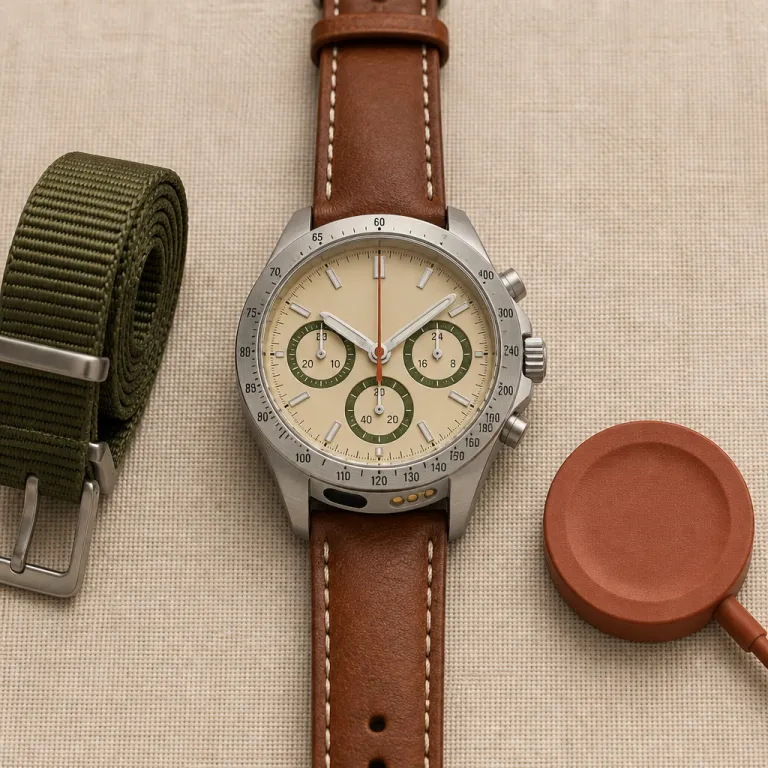
From racetrack chronograph to connected lifestyle icon
The Seiko Speedtimer began as a purpose-built chronograph for timing races, most famously the late-1960s Seiko 6139 used in motorsport and aviation. Today many buyers compare each modern Seiko Speedtimer watch directly with premium smartwatches, expecting similar precision, durability, and everyday versatility. This shift forces every new Speedtimer edition to balance mechanical soul with digital era expectations.
While the original Seiko chronograph models focused on motorsport timing, modern Seiko Prospex Speedtimer references such as the solar SSC813 “Panda” must coexist with phones, fitness trackers, and connected devices. A typical buyer now asks how a Seiko Speedtimer case in stainless steel will feel during daily typing, commuting, and occasional training, not only during competition. Luxury and premium watches therefore compete less with dress pieces and more with discreet wrist computers that track sleep, heart rate, and messages.
Smartwatch users often come from ecosystems where messages arrive silently on the wrist and every movement is logged. When they handle a Seiko Speedtimer chronograph for the first time, they notice the tactile pushers, the reassuring weight of stainless steel, and the smooth sweep of the central seconds hand. That sensory feedback offers a different kind of data, one based on feel and mechanical rhythm rather than notifications and digital dashboards.
Luxury finishing versus smartwatch functionality in the Seiko Speedtimer
High-end smartwatches now feature polished cases, ceramic bezels, and curved sapphire crystals. The Seiko Speedtimer responds with its own domed sapphire glass, refined brushing on the stainless steel case, and carefully applied indices that catch the light like tiny instruments. On models such as the Prospex Speedtimer SSC815, the dial printing, sunburst textures, and recessed subdials give a sense of depth that digital displays can only imitate. This attention to finishing places the Seiko Prospex Speedtimer firmly in the luxury and premium watches segment, even when compared with advanced digital competitors.
Under the dial, many Seiko Speedtimer references use the solar-powered Seiko movement family known as SSC calibres. The SSC813, SSC815, and SSC817, for example, use the V192 solar quartz chronograph, rated by Seiko at approximately ±15 seconds per month with a power reserve of up to six months on a full charge. A solar movement in an SSC Speedtimer chronograph converts light into energy, offering months of autonomy without daily charging, which contrasts sharply with smartwatches that often require overnight charging every one or two days. For a person seeking information about long-term ownership, this difference in energy strategy matters as much as any app store or software feature list.
Some enthusiasts treat their Seiko Speedtimer solar chronograph as a low-maintenance companion for travel, while relying on a dedicated smartwatch for health metrics and GPS navigation. In that scenario the stainless steel Seiko Prospex case becomes the elegant choice for dinners, meetings, and formal events, where a glowing digital screen might feel intrusive. Those who want a fully connected device for sport can explore a detailed review of a modern Wear OS model through this test of a professional Android smartwatch for men, then compare that experience with the calmer presence of a Seiko Speedtimer on the wrist.
Case design, ergonomics, and the feel of stainless steel luxury
When you move from a smartwatch to a Seiko Speedtimer, the first surprise is often the case profile. Smartwatches tend to be thick to accommodate sensors and batteries, with many popular models measuring around 13–14 mm in height, while a Seiko Prospex Speedtimer case in stainless steel such as the SSC813 comes in at approximately 13 mm with a compact 39 mm diameter and about 45.5 mm lug-to-lug. This difference changes how the watch slides under a cuff and how it rests on the wrist during long office hours.
The domed sapphire crystal on many Seiko Speedtimer chronograph models reduces reflections and adds a subtle distortion at the dial edge. That optical effect gives depth to the tachymeter scale and subdials, something digital displays rarely reproduce with the same charm, even when they simulate analog layouts. For a person seeking information about comfort, the combination of moderate case thickness, balanced lug length, and carefully chamfered stainless steel edges often matters more than raw case diameter in millimetres.
Smartwatch buyers used to interchangeable straps will appreciate that Seiko Speedtimer watches also accept a wide range of leather, rubber, and steel bracelets. A stainless steel bracelet on a Seiko Prospex Speedtimer typically brings the total weight to around 160–170 grams, offering a cool, solid feel, while a leather strap can echo the style of a classic quartz stainless steel and leather chronograph watch, such as those examined in this test of a men’s stainless steel and leather chronograph. This flexibility allows one Seiko Speedtimer to shift from business meetings to weekend drives without sacrificing elegance.
Limited editions, collector culture, and the language of online communities
Luxury and premium watches thrive on stories, and the Seiko Speedtimer limited edition models are no exception. A limited edition Seiko Prospex Speedtimer often commemorates motorsport history, a particular circuit, or a colour scheme linked to racing liveries. For example, references like the SRQ035 “Speedtimer Mechanical Chronograph” were produced in restricted numbers to mark Seiko’s role in sports timing. These narratives give each Seiko Speedtimer watch a personality that no generic smartwatch face can fully imitate.
Within enthusiast forums and social media groups, long-term contributors often earn informal titles such as “veteran member” or “resident chronograph expert.” A founding member who posts detailed messages about a new Seiko Speedtimer limited edition can influence how other readers perceive the chronograph, especially when they share macro photographs of the domed sapphire crystal, dial printing, and case finishing. When a member joined recently, their early impressions of a Seiko Prospex Speedtimer solar movement may carry less weight, yet they still enrich the collective understanding of how the watch behaves in daily life.
Some communities even adopt playful nicknames for frequent posters who specialise in Seiko chronograph models, highlighting those who travel extensively or log thousands of wrist shots. A frequent flyer might compare how a Seiko Speedtimer solar SSC movement handles jet lag against the battery drain of a smartwatch on long flights. Others share side-by-side photographs that highlight how the stainless steel bracelet reflects light differently from a smartwatch case made of aluminium or composite materials, reinforcing the sense that a Speedtimer belongs to the world of lasting objects rather than fast-cycling gadgets.
How Seiko Speedtimer owners balance mechanical heritage with digital habits
People who adopt a Seiko Speedtimer rarely abandon digital tools entirely. Instead they reassign roles, letting the Seiko Prospex Speedtimer chronograph handle timekeeping, style, and emotional connection, while a phone or discreet tracker manages health data. This division respects the strengths of each device rather than forcing one tool to do everything.
For example, a professional might wear a Seiko Speedtimer solar SSC watch such as the SSC813 during client meetings, appreciating the quiet authority of a stainless steel case and domed sapphire crystal. During workouts they could switch to a dedicated sports smartwatch, chosen after reading a comparison of top standalone smartwatches on a resource such as this guide to the best standalone smartwatches. In that scenario the Seiko Speedtimer remains the constant daily companion, while the smartwatch becomes a specialised instrument used only when its sensors and apps are truly needed.
Owners also report that wearing a Seiko Speedtimer changes how often they check their phones for messages. Without constant wrist notifications, they tend to batch their messages Seiko style, meaning they consult their phone at chosen intervals instead of reacting instantly. This more deliberate rhythm aligns with the mechanical chronograph tradition, where each press of a pusher is intentional and each lap time recorded by the Seiko Speedtimer carries weight.
Evaluating value, durability, and long term satisfaction in the Seiko Speedtimer
When comparing a Seiko Speedtimer with a premium smartwatch, value must be measured over many years. A Seiko Prospex Speedtimer solar chronograph with an SSC movement such as the V192 can run for decades with occasional servicing and simple light exposure, while most smartwatches become obsolete when software support ends or batteries degrade. This difference explains why collectors often treat a Seiko Speedtimer as a long-term asset rather than a short-term gadget.
The stainless steel construction, precise tolerances, and sapphire crystal of a Seiko Speedtimer watch resist daily wear in ways that plastic or composite smartwatch cases sometimes cannot match. Many Prospex Speedtimer models offer 100 metres of water resistance and solid-link bracelets with secure clasps, making them suitable for travel and everyday use. Even after heavy wear, a Seiko Prospex Speedtimer can be refinished, its movement serviced, and its bracelet adjusted, restoring much of its original appearance and function. By contrast, many smartwatches are replaced rather than repaired, which changes the emotional bond between owner and device.
Online communities reinforce this perspective through detailed ownership reports and messages. When an experienced collector shares a decade-long experience with a Seiko Speedtimer chronograph, their story carries weight among both new and seasoned members. Side-by-side photographs of a frequent traveller’s Seiko Prospex Speedtimer and their ageing smartwatch often show how the stainless steel case and sapphire crystal of the Seiko still look refined while the digital device shows more obvious wear, underlining the long-term appeal of a traditional chronograph.
Key figures and market signals around Seiko Speedtimer and luxury smartwatches
- According to the Federation of the Swiss Watch Industry (FH), global exports of analog watches priced above 500 Swiss francs have grown steadily in recent years, while lower-priced quartz segments fluctuate more strongly. This supports continued demand for luxury sports chronograph models such as the Seiko Speedtimer, even though Seiko itself is a Japanese manufacturer. Readers can consult the FH’s official export statistics for the latest detailed figures.
- Market research from Counterpoint Research indicates that smartwatch shipments have increased at double-digit annual rates, yet replacement cycles remain around two to three years. This contrasts with mechanical and solar watches like the Seiko Prospex Speedtimer that often stay in collections for a decade or longer before being sold or serviced. Counterpoint’s published smartwatch tracker reports provide the underlying shipment data.
- Surveys by Chrono24 and WatchCharts show that limited edition sports watches from established brands tend to retain a higher percentage of their retail price on the secondary market than mass-produced fashion watches. This helps explain why Seiko Speedtimer limited edition references attract both enthusiasts and value-conscious buyers. Their published market insights and price indices outline the methodology behind these observations.
- Consumer studies from McKinsey on the global luxury market reveal that younger buyers increasingly mix traditional watches with digital devices, with many owning at least one analog or solar-powered chronograph alongside a smartwatch. This pattern aligns closely with how Seiko Speedtimer owners describe their habits in forums and social media polls. McKinsey’s luxury reports provide additional context on these behavioural trends.
FAQ about Seiko Speedtimer and its place beside smartwatches
Is a Seiko Speedtimer a good alternative to a smartwatch for daily wear ?
A Seiko Speedtimer is an excellent daily wear option if you value reliability, legibility, and long-term durability more than constant connectivity. The solar SSC movement, stainless steel case, and robust water resistance make it suitable for office, travel, and casual use. You will still need your phone for notifications, but many owners appreciate the quieter, more focused experience.
How does the solar movement in a Seiko Speedtimer compare with smartwatch batteries ?
The solar movement in a Seiko Prospex Speedtimer converts light into electrical energy stored in a rechargeable cell. Once fully charged, many SSC movements such as the V192 can run for up to six months without additional light, whereas most smartwatches require charging every one or two days. Over time this means less maintenance and no need to replace the watch because of battery fatigue.
Are Seiko Speedtimer limited edition models worth the premium price ?
Seiko Speedtimer limited edition models often feature unique dial colours, case finishes, or commemorative engravings that appeal to collectors. They may command a premium at retail, yet their scarcity and storytelling can support stronger value retention on the secondary market. Buyers who enjoy motorsport heritage and distinctive design usually find the extra cost justified.
Can a Seiko Speedtimer chronograph be used for sports instead of a smartwatch ?
A Seiko Speedtimer chronograph can time laps, intervals, and training sessions accurately, especially with its clear subdials and tactile pushers. However, it does not track heart rate, GPS routes, or advanced metrics that many athletes expect from modern sports watches. Many users therefore pair a Seiko Prospex Speedtimer for everyday wear with a dedicated sports smartwatch for intensive training.
What should I check when buying a Seiko Speedtimer as my first luxury watch ?
When choosing your first Seiko Speedtimer, focus on case size, bracelet comfort, and whether you prefer a solar SSC movement or a mechanical alternative such as the 8R46 calibre used in some Speedtimer mechanical chronographs. Inspect the sapphire crystal, dial finishing, and chronograph pushers to ensure they feel precise and aligned. Finally, consider whether a standard or limited edition Seiko Prospex Speedtimer better matches your style and long-term collecting goals.