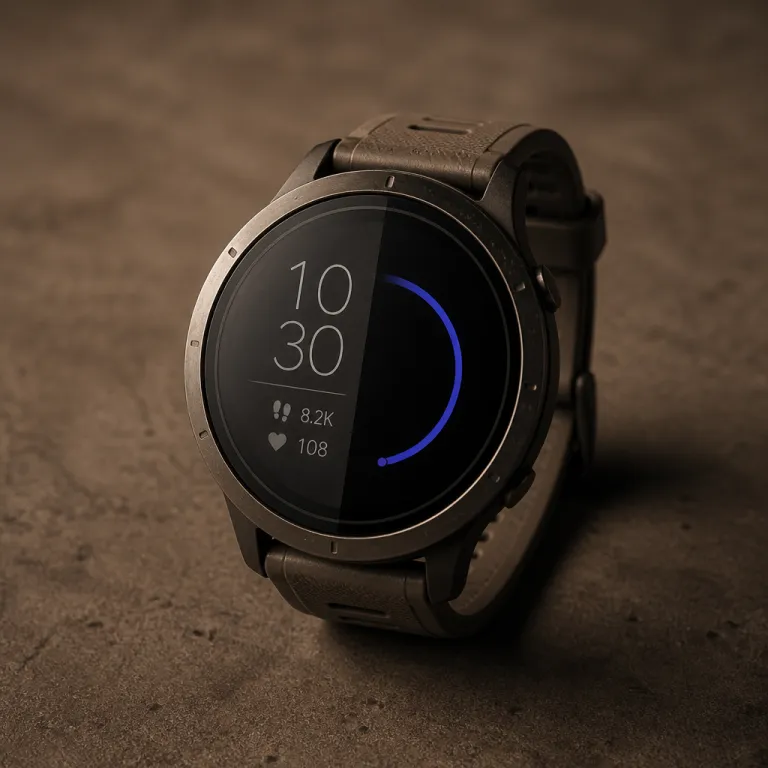
Why smartwatch display AMOLED vs MIP matters more than specs on paper
When you compare a smartwatch display AMOLED vs MIP, you are really choosing how your watch behaves in the worst light of your day. Indoors, an AMOLED display with deep blacks and punchy colors looks like a tiny smartphone on your wrist, while a memory-in-pixel or MIP display can seem muted until you step outside into harsh ambient light. The moment you start a tempo run at midday or ride into a bright valley, the gap between AMOLED screens and MIP screens stops being theoretical and starts deciding whether you can read your pace without slowing down.
AMOLED screens, like the Super AMOLED panel on the Samsung Galaxy Watch 9, are rated by Samsung at up to 3,000 nits of peak brightness in outdoor mode, yet that impressive number still fights the sun instead of using it. By contrast, Garmin uses reflective MIP displays on many sports watches, and these MIP displays become more readable as ambient light increases because the panel reflects light rather than trying to overpower it with raw power. Independent reviewers who have compared a Galaxy Watch 9 to a Garmin Fenix in direct midday sun consistently report that the Fenix’s transflective MIP panel remains clearer at a glance, especially when you lock brightness at a fixed level instead of relying on auto mode.
For an active runner or cyclist comparing smartwatch display AMOLED vs MIP, this trade-off is not academic. If you mostly train indoors, an AMOLED display on a sleek watch will feel more modern, especially when you scroll maps or read long notifications. If you live for long outdoor sessions, a MIP version of a Garmin Fenix or an Instinct Solar with a color MIP panel and always-on visibility will often serve you better than the most glamorous AMOLED screens on lifestyle watches, particularly when you are checking pace or heart rate in full sun without pausing your stride.
How AMOLED and MIP actually work on your wrist
To understand smartwatch display AMOLED vs MIP, it helps to know what is happening under the glass every time you raise your wrist mid run. An AMOLED display, short for active-matrix organic light-emitting diode, lights up each pixel individually, which creates inky blacks, high contrast, and a bright screen that looks fantastic in low light. A MIP display, or memory-in-pixel panel, works more like electronic paper, where each pixel holds its state with almost no power consumption and uses ambient light to stay readable.
On a watch like the Samsung Galaxy Watch 9, the AMOLED screen can dynamically boost brightness in outdoor mode, but that boost drains battery and still relies on emissive pixels fighting the sun. On a Garmin Fenix Pro or Garmin Forerunner Pro style model with a MIP screen, the display becomes clearer as the sun gets stronger, because the reflective layer behind the MIP screens bounces ambient light back through the pixels. This is why many Garmin Fenix and Garmin Instinct sports watches feel almost purpose built for trail running and cycling, where a quick glance at a bright always-on screen matters more than cinematic colors.
Some newer AMOLED watches use LTPO panels, which can lower refresh rates to reduce power consumption in always-on mode, but they still cannot match the frugality of MIP displays that barely sip power once an image is set. If you care about how firmware updates might change brightness curves or always-on behavior over time, it is worth reading a deep dive on the firmware update problem before you buy, because a smartwatch display AMOLED vs MIP can age differently as software tweaks roll out. The core physics do not change though, and a reflective MIP display will always lean on ambient light while an AMOLED display must keep feeding its pixels power to stay visible.
Battery life, always on mode, and real training days
Battery life is where the smartwatch display AMOLED vs MIP debate stops being about taste and starts being about whether your watch survives a long weekend of training. An AMOLED display in always-on mode can easily cut battery life by several days, because every second of that crisp screen costs power, even when you are just sitting at your desk. A MIP display, by design, is always on with almost no extra power consumption, so a Garmin Fenix or Garmin Instinct Solar can show your stats all day without the battery graph free falling.
In practical testing and manufacturer estimates, an AMOLED Garmin Fenix AMOLED style model or a bright Samsung watch with an AMOLED display often lands around two to four days of battery life with always-on mode enabled and regular GPS workouts. For example, reviewers who ran mixed training blocks with 30–60 minutes of GPS tracking per day, heart rate monitoring, and auto-brightness typically saw three days on an AMOLED Fenix versus roughly a week on a comparable MIP Fenix Solar with always-on enabled. The same user pattern on a MIP based Garmin Fenix Solar or a Forerunner with a MIP screen can stretch to a week or more, and that gap widens if you add solar charging on Instinct Solar or Fenix Solar editions that extend life in strong ambient light.
This difference matters if you do multi-day events, travel races, or back-to-back long rides where charging is not guaranteed. For many sports watch buyers, the choice between MIP and AMOLED options is really a choice between charging every other night or once a week, especially when you factor in how often you use bright outdoor mode and continuous GPS sampling. Subscription features and premium metrics can feel less valuable if your watch dies mid run, so it is worth reading about the subscription creep hitting your wrist before you pay for extras that a drained battery cannot deliver.
Outdoor visibility: bright sun, headlamps, and late night intervals
Outdoor visibility is where the smartwatch display AMOLED vs MIP decision becomes brutally clear during real workouts. Under harsh midday sun, even a 3,000 nit AMOLED display can wash out, because the glossy glass and emissive pixels are still trying to overpower direct light. A MIP display flips the script, using that same ambient light to make the screen sharper, so a Garmin Fenix or Instinct Solar often looks better at noon than at dawn.
During testing on exposed trails, a Garmin Fenix Pro with a color MIP panel stayed perfectly legible without needing maximum backlight, while an AMOLED based watch required repeated wrist twists and manual brightness bumps. Cyclists notice this even more, because a watch mounted on the bars sits at a fixed angle, and MIP screens remain readable from odd angles where AMOLED screens can glare. At night, the roles reverse, and an AMOLED display with a gentle always-on mode can feel easier on the eyes than a backlit MIP display that needs a tap or wrist raise to light up.
If you often run intervals under streetlights or in a gym, the rich contrast of AMOLED screens makes pace and heart rate zones pop, especially on compact watches. Trail runners and ultra athletes, on the other hand, tend to favor MIP displays because they stay readable in every kind of ambient light, from foggy mornings to snow glare. When you add solar charging on models like Instinct Solar or Fenix Solar, the same bright conditions that make a MIP screen shine also extend battery life, which is something an AMOLED screen simply cannot match.
Which athletes should pick AMOLED, and who should stay with MIP
Choosing between smartwatch display AMOLED vs MIP is easier when you map each technology to how you actually train. If your watch spends most of its time in an office, gym, or on the couch tracking recovery, an AMOLED display will feel more satisfying, because notifications, maps, and watch faces look closer to a phone than to a calculator. Casual runners, strength athletes, and people who value a stylish watch for daily life often prefer AMOLED screens, even if that means charging more often.
For dedicated endurance athletes, a MIP display still makes more sense on most days, especially on rugged sports watches like the Garmin Fenix line or the Garmin Instinct series. A Garmin Forerunner with a MIP screen offers a good middle ground, pairing lighter cases with always-on readability and strong battery life that can handle back-to-back workouts. When you add features like solar charging on Instinct Solar or Fenix Solar, the combination of MIP screens and ambient light turns into a quiet advantage for long training blocks and stage races.
Health focused buyers who care about long term metrics should also think about how often they want to charge, because more time on the charger means more gaps in data. If you are re-evaluating your priorities as you age or as your training shifts, a guide to the health metrics that matter on your smartwatch can help you decide whether a glamorous AMOLED screen is worth the trade-off. In the end, a smartwatch display AMOLED vs MIP choice should follow your routes and your habits, not just the marketing photos on the product page.
Nit ratings, LTPO tricks, and the limits of clever hardware
Marketing for smartwatch display AMOLED vs MIP often leans hard on nit ratings and buzzwords like LTPO, but those numbers only tell part of the story. A 3,000 nit AMOLED display sounds unbeatable on paper, yet in direct sun a reflective MIP display on a Garmin Fenix or Instinct can still be easier to read because it uses the light instead of fighting it. LTPO, which stands for low-temperature polycrystalline oxide, lets an AMOLED screen drop its refresh rate in always-on mode to cut power consumption, but it does not change the basic physics of emissive pixels versus reflective MIP screens.
In daily use, this means an LTPO AMOLED screen can narrow the battery life gap, especially for people who keep always-on mode enabled but mostly stay indoors. Outdoors, the advantage swings back to MIP displays, because they remain legible at low backlight levels while AMOLED displays must crank brightness to stay visible, which increases power draw. On mixed days with office time, commuting, and an evening run, the difference between MIP and AMOLED choices can feel small, but multi-day hiking or bikepacking quickly exposes which watches are sipping power and which are guzzling it.
When you compare a Garmin Fenix AMOLED style model to a Garmin Fenix Solar with a color MIP panel, you are really choosing between visual richness and ruthless efficiency. The Fenix AMOLED option looks stunning indoors and makes maps easier to read, while the Fenix Solar version leans on solar charging and a MIP version of the display to stretch battery life far beyond most AMOLED watches. For buyers who want one watch for both training and daily wear, it can be worth owning separate watches or at least accepting that the prettiest AMOLED display is not always the one you will trust on day three of a stage race.
Buying guide: best sports watches using AMOLED and MIP today
When you narrow your shortlist around smartwatch display AMOLED vs MIP, a few families of watches stand out for active runners and cyclists. On the AMOLED side, the Samsung Galaxy Watch 9 offers a sharp AMOLED display with high brightness that works well for indoor training, casual runs, and everyday smart features, though its battery life still trails most MIP based sports watches. Garmin has joined this camp with Fenix AMOLED style models and other AMOLED screens in its range, which bring richer maps and data fields but shorten battery life compared with their MIP siblings.
For MIP displays, the Garmin Fenix Solar and Garmin Fenix Pro with color MIP panels remain reference points for serious outdoor athletes who want long battery life, robust navigation, and reliable readability in all ambient light conditions. The Garmin Instinct Solar line uses simpler MIP screens but pairs them with aggressive solar charging, creating some of the longest lasting sports watches you can buy without sacrificing always-on visibility. Garmin Forerunner models with a MIP screen sit in between, offering lighter designs and strong training tools, which makes them ideal for runners who care more about pace and recovery than about a flashy AMOLED screen.
As you compare these watches, pay attention to how each brand balances power consumption, screen technology, and features like always-on mode or solar charging. A smartwatch display AMOLED vs MIP decision should come after you decide how many days of battery life you truly need, how often you train in bright sun, and whether you value a bright cinematic screen over a reliable always-on glance. The right choice is not the one with the highest nit rating, but the one that still shows your heart rate clearly on the tenth morning of a hard training block.
Key figures on smartwatch displays, visibility, and battery life
- Samsung reports that the Galaxy Watch 9 Super AMOLED display can reach a peak brightness of around 3,000 nits in high brightness mode, which improves outdoor visibility but still relies on active backlighting rather than reflective technology.
- Garmin states that its MIP displays on Fenix and Instinct series watches are reflective and become more readable in direct sunlight, because they use ambient light instead of increasing backlight power.
- In typical mixed use with several GPS workouts per week, many AMOLED based smartwatches last around two to four days with always-on mode enabled, while comparable MIP based Garmin Fenix or Forerunner models often reach seven days or more when tested with similar GPS sampling and auto-brightness settings.
- Solar charging on Garmin Instinct Solar and Fenix Solar editions can extend battery life significantly in strong sunlight, sometimes adding several days of use compared with non-solar MIP versions under similar training loads.
- LTPO AMOLED panels can reduce refresh rates down to as low as 1 hertz in always-on mode, which cuts display related power consumption compared with traditional AMOLED, but still does not match the ultra-low draw of MIP screens holding a static image.
FAQ: AMOLED versus MIP on sports watches
Is AMOLED or MIP better for trail running and hiking ?
For trail running and hiking, MIP displays are usually better because they stay readable in strong sun and use ambient light instead of fighting glare with higher brightness. A Garmin Fenix or Instinct Solar with a MIP screen will typically offer longer battery life and clearer mid day visibility than an AMOLED based watch. AMOLED can still work, but you will charge more often and may struggle to read the screen at certain angles.
Do AMOLED watches always have worse battery life than MIP models ?
AMOLED watches generally have shorter battery life than comparable MIP models, especially with always-on mode enabled, because each pixel must be powered to stay lit. LTPO technology and smart power modes can narrow the gap, but a MIP based Garmin Fenix Solar or Forerunner usually lasts several days longer under similar training patterns. The difference becomes more obvious during multi-day trips or heavy GPS use.
Are MIP displays too dim for indoor use or everyday wear ?
MIP displays can look less vibrant indoors compared with an AMOLED display, but they are usually bright enough for everyday wear once you adjust backlight settings. The trade-off is lower saturation and contrast in exchange for excellent outdoor readability and battery life. Many athletes accept the more subdued look because they value always-on visibility during workouts more than vivid colors at the office.
When should I choose an AMOLED smartwatch instead of a MIP model ?
You should choose an AMOLED smartwatch if you prioritize rich visuals, smooth animations, and frequent use of smart features like messaging, apps, and maps in indoor or low light environments. Casual runners, gym users, and people who charge nightly often prefer an AMOLED screen because it feels more like a mini phone on the wrist. If you rarely do multi-day outdoor activities, the shorter battery life may be an acceptable trade-off.
Does solar charging make MIP displays obsolete or more relevant ?
Solar charging actually makes MIP displays more relevant, because the same bright conditions that improve readability also extend battery life on models like Garmin Instinct Solar and Fenix Solar. The combination of reflective MIP screens and solar panels creates a feedback loop where outdoor training both improves visibility and adds power. AMOLED screens cannot use light this way, so they still rely entirely on battery capacity and power management features.