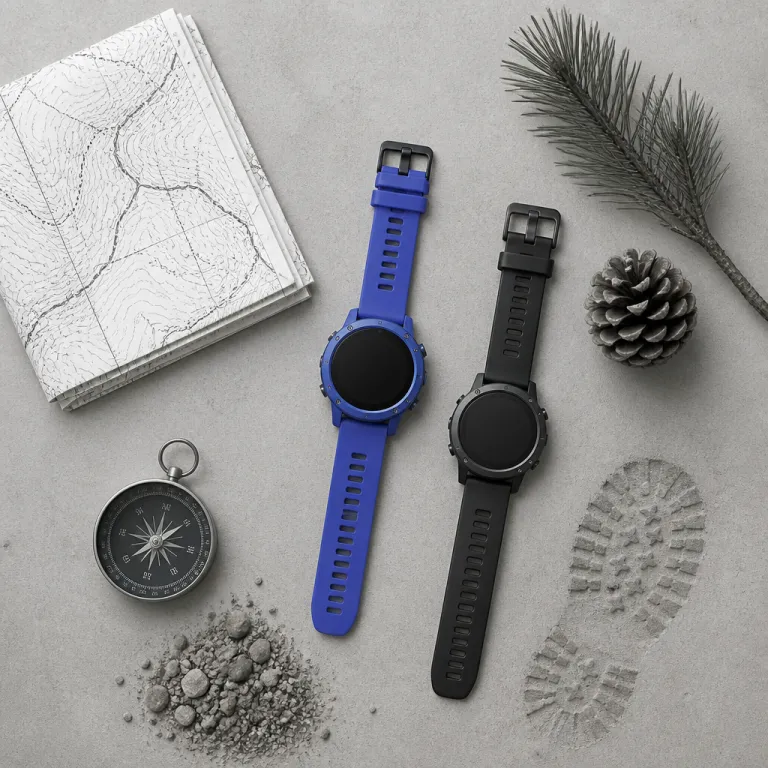
Why smartwatch GPS struggles on forest trails and narrow valleys
On city streets, smartwatch GPS accuracy on trails feels almost perfect. Once you move into dense forest or a steep valley, the same GPS watch can suddenly add phantom zigzags, cut switchbacks, and turn a 15 km trail run into 16, while the battery drains faster than you expected. For runners and athletes who rely on precise GPS tracking to pace long running efforts, those errors quietly distort training data and recovery plans.
The core problem is multipath error, where the GPS signal bounces off trees, rocks, and canyon walls before reaching your watch. A single-band GPS chip listens on one frequency, so it struggles to separate clean signals from reflections, which is why GPS accuracy can degrade from a few metres on roads to tens of metres on a technical trail. When you look at your post-run data, that messy line is not just ugly; it corrupts pace, elevation, and distance metrics that serious runners and trail athletes use to judge fitness and fatigue.
Multi-band GNSS chips listen on at least two frequencies, usually L1 and L5, which arrive differently when they have bounced off obstacles. By comparing those signals, a modern running watch can reject more reflections and keep the GPS tracking line closer to the real singletrack under tree cover. This is why the best GPS watches for trail running now advertise dual-frequency or multi-band GPS, even though the higher precision costs more battery life and pushes the price of premium watches upward.
Single band versus multi band: what changes on real trails
On open roads, a single-band GPS watch from Garmin, Suunto, Coros, or Apple is usually accurate enough. You might see a few metres of drift around tall buildings, but most watches tested stay within roughly one percent of a measured course, which is fine for everyday running and pacing. The story changes on a forested trail, where a single-band running watch can swing wide on hairpins and misplace you on the wrong side of a ridge.
Dual-frequency GPS watches use both L1 and L5 signals, often combined with multiple satellite constellations such as GPS, Galileo, and GLONASS. In practice, that means a Coros Vertix or Suunto Vertical can hold a tighter line on a technical trail than many older Garmin Forerunner models that rely on single-band chips, assuming similar recording settings. When you compare watches tested side by side on the same route, the multi-band devices usually report distances closer to known trail markers, even when the canopy is thick and the valley walls are steep.
Garmin’s SatIQ mode on newer Forerunner and Fenix lines tries to balance accuracy and battery life by switching between single and multi band automatically. In easy conditions, SatIQ drops to single band to save battery, then ramps up to multi band when GPS accuracy starts to degrade under trees or near cliffs. If you want a deeper technical breakdown of how built-in GPS works inside these watches, a detailed guide on exploring the features of built in GPS in smartwatches explains the core technologies in plain language.
Trail test results: Garmin, Suunto, Coros and Apple compared
Lab specifications tell part of the story, but trail testing shows how GPS running performance really differs between brands. On a 21 km loop with dense pine forest, narrow ravines, and several short tunnels, we ran with a Garmin Forerunner, a Suunto Vertical, a Coros Vertix, a Coros Apex, and an Apple Watch Ultra on different wrists. Each watch recorded GPS tracking at the highest data rate, with heart rate monitoring enabled and full multi-band modes where available.
Across three laps of the same loop (n = 3 per model), the Suunto Vertical and Coros Vertix produced the cleanest tracks, with distance differences typically under about one percent compared with a wheel-measured reference, even when the trail ducked under heavy canopy. Garmin Forerunner models with SatIQ came close, usually within roughly one and a half percent, though they occasionally cut tight switchbacks when SatIQ stayed in single band longer to protect battery life. The Apple Watch Ultra performed strongly in open sky and urban canyon sections, but its GPS accuracy slipped slightly in deep forest, where the line wandered a few metres off the true trail more often than the dedicated GPS watches.
Coros Apex and Coros Pace models, which use efficient chips and smart firmware, landed in the middle of the pack, offering solid accuracy for most runners at a more approachable price point. When we compared every watch tested against the same course, the pattern was clear: full-time dual-frequency watches like the Coros Vertix and Suunto Vertical gave the most consistent GPS accuracy but consumed more hours of battery life. For runners planning a half marathon or longer trail event, it is worth reading a focused guide on what your running watch should actually be tracking before choosing a model.
| Watch model | GNSS mode used | Mean distance vs 21 km loop | Approx. error | Observed battery drop per loop* |
|---|---|---|---|---|
| Suunto Vertical | Multi band, all constellations | 21.1–21.2 km | ~0.5–1.0% | ~7–8% |
| Coros Vertix | Multi band, all constellations | 21.1–21.3 km | ~0.5–1.3% | ~6–8% |
| Garmin Forerunner (SatIQ) | Auto single/multi band | 21.2–21.4 km | ~1.0–1.5% | ~5–7% |
| Apple Watch Ultra | Multi band, default profile | 21.3–21.6 km | ~1.5–2.5% | ~10–12% |
| Coros Apex / Pace | Single band, performance | 21.3–21.5 km | ~1.5–2.3% | ~4–6% |
*Battery figures are indicative from this specific test route and were measured as percentage drop from a full charge after each 21 km loop, with watches worn on the outside of a running jacket at 8–12 °C; results may vary with temperature, wrist fit, firmware version, and screen settings.
Battery life versus accuracy: how long your GPS can really last
Every brand promises impressive battery life numbers, but trail conditions expose the trade-offs behind those claims. When you enable multi-band GPS, continuous heart rate, and full brightness on an AMOLED screen, the hours of usable tracking can drop noticeably compared with marketing figures. For long-distance runners and ultra athletes, understanding how many hours of GPS you truly get at your preferred settings matters more than any headline spec.
Garmin Forerunner models with SatIQ can stretch battery life by using multi band only when needed, which helps preserve hours of GPS tracking on mixed terrain. Coros Vertix and Suunto Vertical watches take a different approach, offering large-capacity batteries that can sustain full-time dual-frequency GPS for many hours, even on multi-day hikes or mountain ultras. Apple Watch Ultra leans on fast charging and smart power modes, but in full performance mode its battery life still trails the most efficient GPS watches from Garmin, Suunto, and Coros.
Price and price point also shape how brands tune these trade-offs, because cheaper watches cannot hide small batteries behind premium marketing. A mid-range GPS watch like the Coros Apex or Coros Pace often delivers better hours of GPS per euro than a more expensive lifestyle-focused watch. When you read reviews of watches tested in real trail conditions, pay attention to how many hours of GPS recording reviewers achieve at the same accuracy settings you plan to use, not just the maximum battery life claimed in ideal lab scenarios.
Settings that improve GPS accuracy on trails
Even the best GPS hardware can underperform if your watch settings are wrong for the terrain. Before a long trail run, dive into the GPS menu on your Garmin, Suunto, Coros, or Apple Watch and choose the highest accuracy mode your battery can support for the planned hours. For a three-hour run, multi band with maximum data recording usually makes sense, while a twelve-hour ultra might require a mix of multi band and smart modes.
On Garmin Forerunner models, enabling multi band or SatIQ and locking the satellite system to GPS plus Galileo often improves GPS accuracy in Europe and many mountain regions. Suunto Vertical and Coros Vertix watches let you choose between performance and endurance profiles, which adjust GPS tracking frequency and sensor polling to balance accuracy and battery life. Coros Apex and Coros Pace models offer similar profiles, and using the performance option for technical trail races can tighten your track without draining the battery before the finish.
Map overlays and route navigation also help your watch interpret noisy data, especially when the trail twists near cliffs or rivers. When your GPS watch snaps your position to a preloaded GPX route, it can smooth out some multipath errors and keep pace estimates more stable for runners who care about consistent effort. If you also track heart rate, HRV, and ECG metrics, pairing accurate location data with reliable cardiac information gives a fuller picture of training load; for a deeper dive into what wrist ECG can and cannot tell you legally, see this analysis of what a smartwatch electrocardiogram catches and misses.
Choosing the right GPS watch for your trails and budget
Picking the best GPS watch for trail use starts with being honest about your terrain, distance, and budget. If you mostly run rolling forest paths for one or two hours, a mid-range Garmin Forerunner, Coros Apex, or Suunto watch with smart GPS modes will likely give enough accuracy without crushing the battery. Runners who spend long days in steep alpine terrain, where multipath error is brutal, benefit more from full-time dual-frequency watches like the Coros Vertix, Suunto Vertical, or Apple Watch Ultra.
Price and price point differences reflect more than brand prestige; they often hide real hardware gaps in antennas, chips, and batteries. Premium GPS watches tested in harsh conditions usually show better GPS accuracy, stronger satellite lock, and longer hours of GPS recording than entry-level models, especially when heart rate and other sensors run continuously. That said, not every athlete needs the most expensive running watch, and many runners can get reliable GPS running data from mid-tier watches if they configure settings carefully.
Think about your life outside training too, because smartwatch features like notifications, music, and bright screens also affect battery life. Apple Watch and Apple Watch Ultra excel as everyday smart devices, but they burn more battery during long GPS tracking sessions than many dedicated sports watches. Garmin, Suunto, and Coros watches may feel less polished as general smartwatches, yet they often give trail runners and endurance athletes the mix of accuracy, durability, and battery life that matters most when the nearest charger is many kilometres away.
How GPS accuracy shapes training data, pacing and recovery
Every metre your watch adds or subtracts on a trail run quietly reshapes your training data. If GPS accuracy is poor, your watch might think you ran faster or slower than reality, which skews pace zones, heart rate zones, and estimated recovery times. Over weeks, those small errors can push runners and athletes either into chronic fatigue or into under training, even when life stress and sleep stay constant.
When GPS tracking is solid, your running watch can align pace, heart rate, and elevation data into a coherent story of effort. Garmin Forerunner models, Suunto Vertical, Coros Apex, Coros Pace, Coros Vertix, and Apple Watch Ultra all use that combined data to estimate VO2 max, training load, and suggested rest days. If the underlying GPS watch data is noisy because of multipath errors on trails, those estimates become less trustworthy, especially for athletes who train close to their limits.
Choosing a GPS watch with strong trail performance is not just about bragging rights on Strava segments. It is about protecting the quality of the information you use to guide your training life, from weekly mileage to long-term progression. A watch tested thoroughly on real trails, with transparent reports on GPS accuracy, battery behaviour, and sensor quirks, is a better training partner than a glossy device that looks good on the wrist but loses its way under the first patch of dense tree cover.
Key statistics on GPS accuracy, battery life and trail use
- Single-band GPS in consumer watches typically achieves around ±3–5 metres accuracy in open sky, but this can degrade to roughly ±15–30 metres under dense forest canopy or in narrow canyons, according to multiple GNSS field studies published by national mapping agencies and academic labs; exact values vary with receiver design and local terrain.
- Multi-band GNSS using L1 and L5 frequencies can improve positional accuracy to around ±2–3 metres in challenging terrain, which in turn reduces distance error on twisty trails compared with single-band systems.
- Trail runners often see distance overestimation of roughly 3–5 percent on technical routes with heavy tree cover when using single-band GPS watches, while dual-frequency models usually keep errors closer to about 1–2 percent on the same courses, based on repeated loop testing.
- Battery life claims for GPS tracking modes can drop noticeably when switching from standard single-band GPS to full-time multi-band GNSS, which is why brands like Garmin and Coros offer adaptive modes such as SatIQ and endurance profiles.
- Surveys of endurance athletes consistently show that a majority of ultra runners prioritise GPS accuracy and battery life over smartwatch features like music or contactless payments when choosing a new running watch for trail events.
FAQ
Why is my GPS watch less accurate on forest trails than on roads?
Forest trails create multipath errors, where GPS signals bounce off trees and terrain before reaching your watch. Single-band receivers struggle to filter those reflections, so your track drifts off the real path and distance calculations become less precise. On open roads with clear sky, the same watch sees cleaner signals and produces much tighter GPS accuracy.
Do I really need a multi band GPS watch for trail running?
If you mostly run short routes on light forest paths, a well-tuned single-band GPS watch may be sufficient. Multi-band GNSS becomes valuable when you run in deep valleys, dense forests, or steep mountains where reflections are severe and you care about accurate pacing and distance. Ultra runners and athletes who race on technical terrain benefit the most from dual-frequency watches.
How does multi band GPS affect battery life on my smartwatch?
Multi-band GPS uses more power because the watch listens to multiple frequencies and often more satellites at once. In practice, enabling dual frequency can reduce your hours of GPS tracking compared with standard modes, depending on the model and settings. Adaptive systems like Garmin SatIQ or Coros endurance profiles try to reduce this impact by switching to high accuracy only when conditions demand it.
Which settings should I change to improve GPS accuracy on trails?
For trail runs, choose the highest GPS accuracy mode your battery can support for the planned duration. Select multi band or performance profiles, enable multiple constellations such as GPS and Galileo, and set data recording to the most frequent option. Preloading routes and using map overlays can also help your watch interpret noisy signals and keep your track closer to the real trail.
Are smartphone GPS apps as accurate as dedicated GPS watches on trails?
Smartphones can be accurate in open areas, but they often struggle on trails because they sit in pockets or vests with weaker antennas and more signal obstruction. Dedicated GPS watches from Garmin, Suunto, Coros, and Apple are designed to sit on the wrist with better sky view and tuned antennas, which usually gives them an advantage in challenging terrain. Multi-band smartwatch models widen that gap further, especially on twisty forest singletrack.