Summary
Editor's rating
Value: worth it for heavy users, overkill for casuals
Design: tough outdoors watch that finally doesn’t look like a brick
Battery: finally a bright screen that doesn’t beg for a charger
Comfort: fine for sports, a bit bulky for sleeping
Materials and build: feels premium, but you pay for it
Durability: built to be abused, not babied
Performance and tracking: strong on data, a bit nerdy to use
What this watch actually is (and what it isn’t)
Pros
- Strong GPS and training metrics with long battery life even with AMOLED screen
- Rugged build with titanium case and sapphire glass that resists daily abuse
- Covers a huge range of sports and activities, including diving and advanced multisport
Cons
- High price, especially if you don’t fully use the advanced features
- Bulky on smaller wrists and not the most comfortable for sleep for everyone

Specifications
View full product page →| Brand | Garmin |
A big jump from older Garmins, but not for casual users
I’ve been using the Garmin fēnix 8 (47 mm, AMOLED, sapphire, titanium, orange/graphite band) for a bit over three weeks now. I bought it to replace a Fenix 6 Pro that I’d been wearing daily for years, plus I’ve used an Apple Watch Series 8 on and off. So I’m not coming from zero: I already liked Garmin for serious training, but the screens were dull and very “gear nerd”. This one is the first Fenix I’ve owned that actually feels like a modern smartwatch and not just a rugged tool.
The short version: it’s a serious training and outdoors watch first, with smartwatch stuff bolted on. If you mainly want notifications and pretty watch faces, this is overkill and too expensive. If you actually train several times a week, especially running, cycling, triathlon, hiking or diving, then it starts to make sense. That’s how I use it: runs 4x/week, strength sessions, some pool swims, plus general health tracking.
In daily life, what struck me quickly is the combo of AMOLED screen + big battery. On my Apple Watch, I charged every day. On my old Fenix 6, the screen looked washed out indoors. The Fenix 8 finally feels like a watch you can wear in a meeting without it looking like an old calculator, and at the same time I still only charge it roughly every 10–12 days with my settings.
It’s not perfect though. It’s bulky, the software can feel clunky compared to Apple or Samsung, and you’ll spend time digging in menus to set it up the way you want. If you’re okay with that and you like data, it’s a pretty solid tool. If you just want something simple that “just works” out of the box, this might annoy you.
Value: worth it for heavy users, overkill for casuals
Let’s be blunt: the fēnix 8 Sapphire Titanium is not cheap. You’re paying for top-tier materials (titanium, sapphire), full feature set (AMOLED, dive rating, maps, multi-band GPS, flashlight, mic/speaker), and the Garmin training ecosystem. If you’re only going to count steps and read WhatsApp notifications, this is a bad deal. A midrange Garmin or even a basic fitness band will do that for a fraction of the price.
Where it starts to feel like decent value is if you actually use the advanced stuff regularly: long runs with maps, structured workouts, triathlon mode, strength plans, dive tracking, and serious battery life. In that context, having one device that covers nearly every sport you do, lasts over a week on a charge, and survives rough handling is pretty practical. I no longer have to juggle a separate dive computer, running watch, and casual smartwatch. For me, that consolidation has value.
Compared to an Apple Watch, you give up a lot of app ecosystem and some convenience, but you gain real battery life and training depth. Compared to cheaper Garmins (like Forerunner or non-sapphire Fenix), the question is mainly: do you care about AMOLED, sapphire/titanium, flashlight, and the slightly more premium feel? If not, you can save a good chunk of money and still get 80–90% of the training features.
So in my view, value is good but very user-dependent. For a serious endurance athlete or outdoors person who trains several times a week and likes data, the price can be justified. For someone who just wants a nice smartwatch with some fitness features, it’s overkill and you’re paying extra for features that will sit unused in the menus.
Design: tough outdoors watch that finally doesn’t look like a brick
Visually, this fēnix 8 still looks like an outdoor watch first, not a dress watch. It’s 47 mm wide and around 14 mm thick, so it’s not small. On my 17 cm wrist it looks big but acceptable. On a very slim wrist, it will look chunky. Compared to my old Fenix 6, the case shape is a bit cleaner and the AMOLED screen makes a huge difference. Indoors, the watch face is crisp, colors are clear, and text is much easier to read than on the old transflective screen.
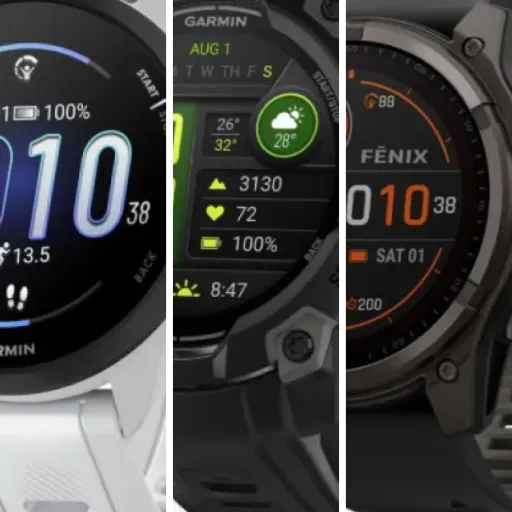
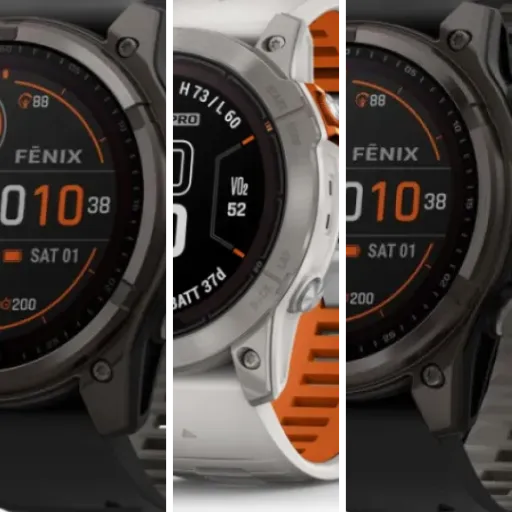
The Spark Orange/Graphite band is more muted than the product photos suggest. It’s a sporty orange, not neon cone-orange, with dark graphite accents. Personally I like it: it looks sporty without screaming for attention. The quick-release system works well; I’ve swapped to a black silicone band for work and it takes a few seconds. The bezel is titanium with a dark finish, which hides scratches a bit better than shiny steel, at least so far.
Button layout is classic Garmin: five buttons (three left, two right) plus the touchscreen. I still use the buttons for workouts and wet conditions, and the touchscreen for scrolling maps and menus. The LED flashlight is built into the top of the case. It adds a bit of visual bulk, but in practice you don’t really notice it until you turn it on. It’s definitely not a fashion detail, more of a functional lump, but it doesn’t ruin the look.
Overall, it’s still a big sporty watch. With a shirt and blazer it looks okay, but it’s not going to pass as a slim dress watch. Compared to an Apple Watch, it’s less clean and more “adventure gear”, but compared to older Fenix models, this is the first one I feel comfortable wearing in normal daily life without it looking like pure hiking kit.

Battery: finally a bright screen that doesn’t beg for a charger
Battery life is one of the main reasons I chose this watch, and it delivers pretty well. Garmin claims up to 16 days in smartwatch mode. With my usage (always-on display OFF, brightness on medium, about 5–6 hours of GPS workouts per week, all-day HR, notifications on, Wi‑Fi sync, and some map use), I’m getting around 10–12 days between charges. That’s not the full 16 days, but still way better than the 1–2 days I got from my Apple Watch.
On heavy training days with long GPS sessions, the battery drop is reasonable. A 90-minute run with multi-band GPS and music streaming to Bluetooth headphones cost me about 8–9%. A 60-minute run without music is more like 4–5%. So if you’re training for marathons or triathlons, you can easily get through long sessions without worrying. For full Ironman use, I haven’t tested a race, but based on these numbers, it should cope fine if you don’t have everything cranked to the max.
The AMOLED screen obviously eats more battery than the old MIP screens, especially if you use always-on display. When I tried AOD on for a few days, my battery life dropped to about 6–7 days, which is still decent, but I preferred the extra life and went back to raise-to-wake. If you’re coming from a Fenix 6 or 7, just know you’re trading some battery for the nicer screen, but not in a dramatic way.
Charging is still via Garmin’s proprietary cable. It’s not my favorite, but it’s the same as other recent Garmins, so if you already own one, you can reuse the cables. A full charge from around 10% to 100% took me roughly 1.5–2 hours plugged into a USB charger. Overall, the battery is one of the strong points: it actually supports real training and daily wear without you building your life around a charger.
Comfort: fine for sports, a bit bulky for sleeping
On the wrist, the fēnix 8 is surprisingly comfortable for its size, but you always feel that you’re wearing a serious watch. The 80 g weight is okay, and the curved lugs help it sit well even on a medium wrist. During runs (10–15 km), it doesn’t bounce around or dig into the skin as long as the strap is snug. In the gym, it stays put for pull-ups and barbell work, though for heavy bench press I sometimes slide it a bit further up the arm to avoid pressing it against the bar.
For all-day use, the silicone band breathes reasonably well. I didn’t get any rashes or irritation, even with sweat and showering with it on. The 47 mm size is where it might bother some people. If you’re coming from a small Apple Watch or a slim analog watch, this will feel big for the first few days. After a week, I got used to it, but I still bump it more easily into door frames than with smaller watches.
For sleep tracking, it’s a bit of a mixed bag. The watch is light enough that I can sleep with it, but the case height means you feel it when your wrist is under your head or pressed against the mattress. It’s not painful, just noticeable. I ended up wearing it for sleep most nights because I like the data, but if you’re very sensitive to wrist bulk when sleeping, this might annoy you. A smaller model (43 mm) would probably be more comfortable in bed.
The touchscreen + buttons combo is good for comfort too: you don’t have to mash buttons constantly to navigate, which reduces the chance of the watch shifting around during sweaty workouts. Overall, comfort is good for a rugged sports watch, but if comfort and thinness are your top priorities, you’ll find slimmer options elsewhere.
Materials and build: feels premium, but you pay for it
This version uses titanium for the case and bezel, a sapphire lens, and a silicone-style band (Garmin calls the color Spark Orange/Graphite). After three weeks of daily wear, including running, gym, showers, and some light DIY, the watch still looks almost new. No visible scratches on the sapphire glass, and only very tiny marks on the bezel if I look closely under strong light. Compared to my older Fenix with regular glass, this feels a lot more scratch-resistant in real life.
The titanium keeps the weight down: around 80 g with the band, which is light for a watch this size. My Fenix 6 steel version felt denser and a bit more tiring on long runs. This one I basically forget about after the first kilometer. The downside of titanium is the price. If you don’t really care about a few grams and ultimate scratch protection, the cheaper steel models might be enough. For me, because I wear it all day and I bump it into door frames, the sapphire/titanium combo feels justified, but it’s not essential.
The band itself is decent. It’s soft enough, doesn’t irritate my skin, and the color has not faded with sweat and showers yet. The buckle is metal and feels solid, not flimsy. That said, it’s still a sport band, not something that feels luxurious. If you want a more premium feel, you’ll probably end up buying an extra leather or titanium bracelet, which obviously adds more cost.
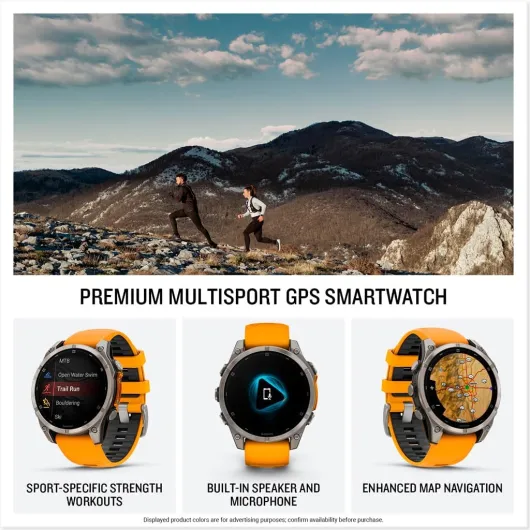
Buttons feel firm with a clear click, and the watch has a leakproof metal button design rated to 40 m diving and 100 m water resistance. I haven’t taken it to 40 m, but I did swim several times and did a few shallow dives in a pool with no issues. Overall, build quality feels very solid and actually matches the price better than older Garmins did, but if you’re just going to wear it at a desk, a cheaper model will probably survive just as long.
Durability: built to be abused, not babied
Durability is where this watch feels clearly aimed at people who actually get outside. The 100 m water resistance and 40 m dive rating are more than enough for me. I used it for pool swims, showers, and some rough weather runs. No fogging, no weird condensation, and the buttons still click like day one. The fact that the buttons are designed to be leakproof and dive-ready gives some confidence that it won’t die after a few sea swims.
The sapphire lens is basically the main shield against everyday abuse. I’ve knocked it on door frames, gym equipment, and a concrete wall once when I misjudged a turn. So far: no visible scratches. With my older non-sapphire Garmin, I managed to get fine scratches after a few months, so this is a clear improvement. The titanium bezel does pick up tiny marks if you really look closely, but nothing that stands out. It still looks like a new watch from normal viewing distance.
As for the band, silicone always wears eventually, but after three weeks of sweat, soap, and sun, there’s no cracking or discoloration. The quick-release pins feel secure; I’ve swapped bands several times and never felt like it was about to pop off. The LED flashlight window hasn’t shown any damage despite being on the edge of the case where it could catch on things.
Obviously I can’t speak for years of use yet, but given my past experience with Fenix models, they tend to age well. If you’re rough on your gear, I’d say this model is well suited for daily abuse. If you baby your watches and barely leave the office, this level of durability is honestly more than you need and you’re paying for toughness you may never use.
Performance and tracking: strong on data, a bit nerdy to use
In terms of sports tracking, this is where the fēnix 8 actually earns its price. GPS performance with multi-band + SatIQ has been very solid in my runs. I tested it side by side with my Fenix 6 and an iPhone 15. The Fenix 8 tracks corners and under-tree sections more cleanly, with less zig-zagging in the map. Distances on my usual 10 km loop are now consistently within about 20–30 m of each other run to run, while the Fenix 6 sometimes drifted by 100–150 m. Lock-on time is also faster; usually I have a GPS fix in under 10 seconds, even in built-up areas.
Heart rate during steady runs and cycling matches fairly well with a chest strap (Garmin HRM-Pro), usually within 1–3 bpm on average. During intervals or short sprints, the wrist sensor still lags a bit, which is normal for optical HR. Strength training tracking is mostly useful for heart rate and time, but the automatic rep counting is hit or miss, especially for anything that isn’t a very clear repetition movement. I mostly ignore rep counting and log sets manually when I care.
The training readiness, stamina, and recovery metrics are actually useful once you get a week or two of data. On days with poor sleep and high stress, the training readiness score is clearly lower, and honestly it matches how I feel. It’s not magic, but it’s a good nudge to either go easier or accept that today won’t be a big performance day. The daily suggested workouts for running are decent; not perfect, but good enough inspiration when you don’t have a plan.
The downside is that there’s a lot of data and menus. You’ll spend time customizing data screens, disabling sports you don’t use, and digging through widgets. The interface is fine once you learn it, but it’s less intuitive than an Apple Watch. If you enjoy tweaking settings and analyzing your training in Garmin Connect, you’ll like it. If you just want to press “start run” and never think about it, it might feel overkill.
What this watch actually is (and what it isn’t)
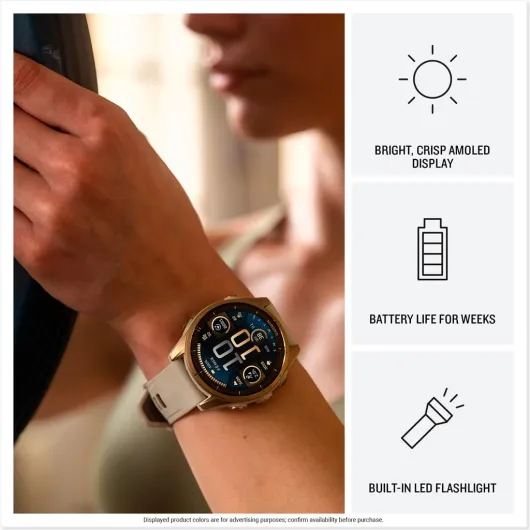
The fēnix 8 in this version is the 47 mm AMOLED Sapphire Titanium model with the Spark Orange/Graphite band. So you’re basically at the higher end of the lineup: sapphire glass, titanium case, built-in LED flashlight, dive rating to 40 m, multi-band GPS, Wi‑Fi, mic and speaker, and around 16 days quoted battery in smartwatch mode. It runs Garmin’s own OS, not WearOS, so no Google Play store, no WhatsApp apps, etc. You’re living in Garmin’s ecosystem, with a few extra widgets and watch faces from Connect IQ.
In everyday use, you get the usual stuff: notifications, call handling from the wrist (when paired to a phone), music control, Garmin Pay, weather, calendar, etc. But the real focus is sports and health: 24/7 heart rate, HRV, training readiness, sleep tracking, VO2 max, stress, respiration, and all the sport profiles (running, cycling, pool and open-water swimming, triathlon, strength, HIIT, hiking, skiing, diving and more). If you’re the type who logs every workout, this watch will happily drown you in metrics.
On the flip side, it’s not a “mini smartphone”. Compared to an Apple Watch, you don’t get tight integration with messaging apps, no on-wrist keyboard, and third‑party apps are basic. You can respond to texts with canned replies on Android, or use your phone’s assistant via the watch mic, but that’s about it. So if you’re expecting a wrist version of your phone, it’ll feel limited. If you mainly care about GPS accuracy, battery life, and training data, it’s more interesting.
Price-wise, it’s clearly in the high-end bracket. There are cheaper Garmins that will track your runs just fine. You’re paying here for the combo of premium materials, AMOLED, long battery, and the full feature stack. Whether that’s worth it depends on how much you actually train and whether you’ll use stuff like maps, dive mode, or advanced training metrics instead of just steps and heart rate.
Pros
- Strong GPS and training metrics with long battery life even with AMOLED screen
- Rugged build with titanium case and sapphire glass that resists daily abuse
- Covers a huge range of sports and activities, including diving and advanced multisport
Cons
- High price, especially if you don’t fully use the advanced features
- Bulky on smaller wrists and not the most comfortable for sleep for everyone
Conclusion
Editor's rating
After a few weeks with the Garmin fēnix 8 Sapphire AMOLED Titanium, my take is pretty clear: it’s a serious tool for people who actually train and get outdoors, not a fashion gadget. The combination of bright AMOLED display, long battery life, strong GPS, and tough materials makes it very practical if you run, cycle, swim, hike, or dive regularly. The training metrics (readiness, stamina, recovery, VO2, etc.) are genuinely useful once you get used to them, and the battery finally matches the promise of a watch you can wear day and night without babysitting the charger.
On the downside, it’s big, not cheap, and the software can feel a bit dense if you’re used to the simplicity of an Apple Watch. As a pure smartwatch, it’s weaker: fewer apps, clunkier notifications, and less polished messaging. As a training and outdoor watch, it’s very strong and feels like a solid evolution over older Fenix models, especially in screen quality and GPS performance.
Who is it for? People who train several times a week, like to see detailed stats, and want one watch that can follow them from desk to trail to pool to a weekend dive. Who should skip it? Casual users, people with very small wrists, or anyone who mainly cares about apps and slick phone integration. For my use (regular running, strength training, some swimming and hiking), I’m happy with it and plan to stick with it long term, but I’d only recommend it to someone who will actually use more than just the step counter.