
Summary
Editor's rating
Value for money: good features for the price, with one big caveat
Chunky plastic brick, but kids don’t mind
Battery life: decent for a kid, just charge it nightly
Comfort and everyday wear: kid-approved, parent mostly happy
Durability and waterproofing: survives normal kid abuse
Calls and GPS tracking: works, but don’t trust it blindly
What this kids’ watch actually does (and doesn’t)
Pros
- Good call and voice chat quality with tight control over who can contact your child
- Comfortable, kid-friendly design with two soft straps and solid water resistance
- Decent price for the amount of features (4G, SOS, school mode, basic GPS, games)
Cons
- GPS tracking can be quite inaccurate at times, causing unnecessary panic if you trust it too much
- Requires a SIM card and a bit of setup hassle with the Setracker2 app
- Battery is only good for about one full day with normal 4G and GPS use

Specifications
View full product page →| Brand | Blackview |
A kids’ smartwatch instead of a first phone
I got this Blackview 4G kids smartwatch as a halfway solution between “no phone” and “full smartphone” for my kid. Main goal: know where they roughly are, be able to call them, and let them message me when they go to school or on trips. I wasn’t expecting premium quality at this price, but I did expect the basics to work without giving me a headache every day.
Setting expectations: this is not an Apple Watch or a Garmin. It’s a small 4G watch for kids, with GPS/LBS/Wi‑Fi tracking, SOS button, video calls, and a couple of games. I used it for around two weeks before writing this, mostly in normal school days plus one school trip. I paired it with an Android phone and used a low-cost SIM on a UK network (one of the ones they say is supported).
The big question for me was: does it actually help keep an eye on your kid, or does it just give you extra things to worry about? I’d say it lands somewhere in the middle. Some parts are pretty solid for the price, other parts are frankly a bit “meh” and you need to know that before buying. Especially the tracking, which is the whole point for a lot of parents.
So I’ll walk through how it went in real use: setup, comfort, how the GPS behaved, calls, battery, and whether I think it’s decent value. No marketing stuff, just what worked, what annoyed me, and what I’d tell a friend who’s thinking of getting one for their 6–10 year old.
Value for money: good features for the price, with one big caveat
Looking at the price bracket this sits in and the feature list, the value for money is generally good. You get 4G connectivity, GPS/LBS/Wi‑Fi tracking, SOS button, video calls, voice chat, school mode, pedometer, sleep monitor, camera, and a couple of games. Plus two straps and a one‑year warranty. Compared to some branded kids’ trackers that cost a lot more and do basically the same core things, this one is quite competitive.
Where the value gets a bit tricky is how much you care about GPS accuracy. If your main reason to buy is to have rough peace of mind – “okay, they’re at school, they’re on the way home” – then it’s fine. If you’re expecting super precise, always‑correct locations, this watch will just stress you out and you’ll feel like you wasted your money. The Amazon review about the watch showing the kid two towns over while it’s actually in the kitchen? I’ve had similar (not always that extreme, but enough to be annoying).
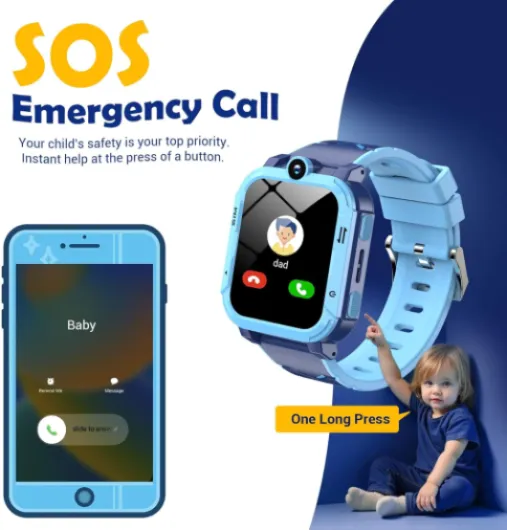
As a first phone alternative, though, it makes sense. You can control contacts, your kid can call you without having a full smartphone, and the SOS function is simple enough for them to use. For that use case alone, I think the price is justified. The extra stuff like pedometer and sleep tracking is just bonus; it works, but I wouldn’t base my health data on it. Step counting is okay-ish, but like most cheap devices, it sometimes counts random arm movements.
If you want something cheap that gets the basic communication job done, this is a decent pick. If you’re very anxious and want bulletproof tracking, I’d say spend more on a higher-end kids’ GPS tracker or accept that this one is more of a “rough idea” tool than a precise locator. So overall: good value, with that one big warning attached.
Chunky plastic brick, but kids don’t mind
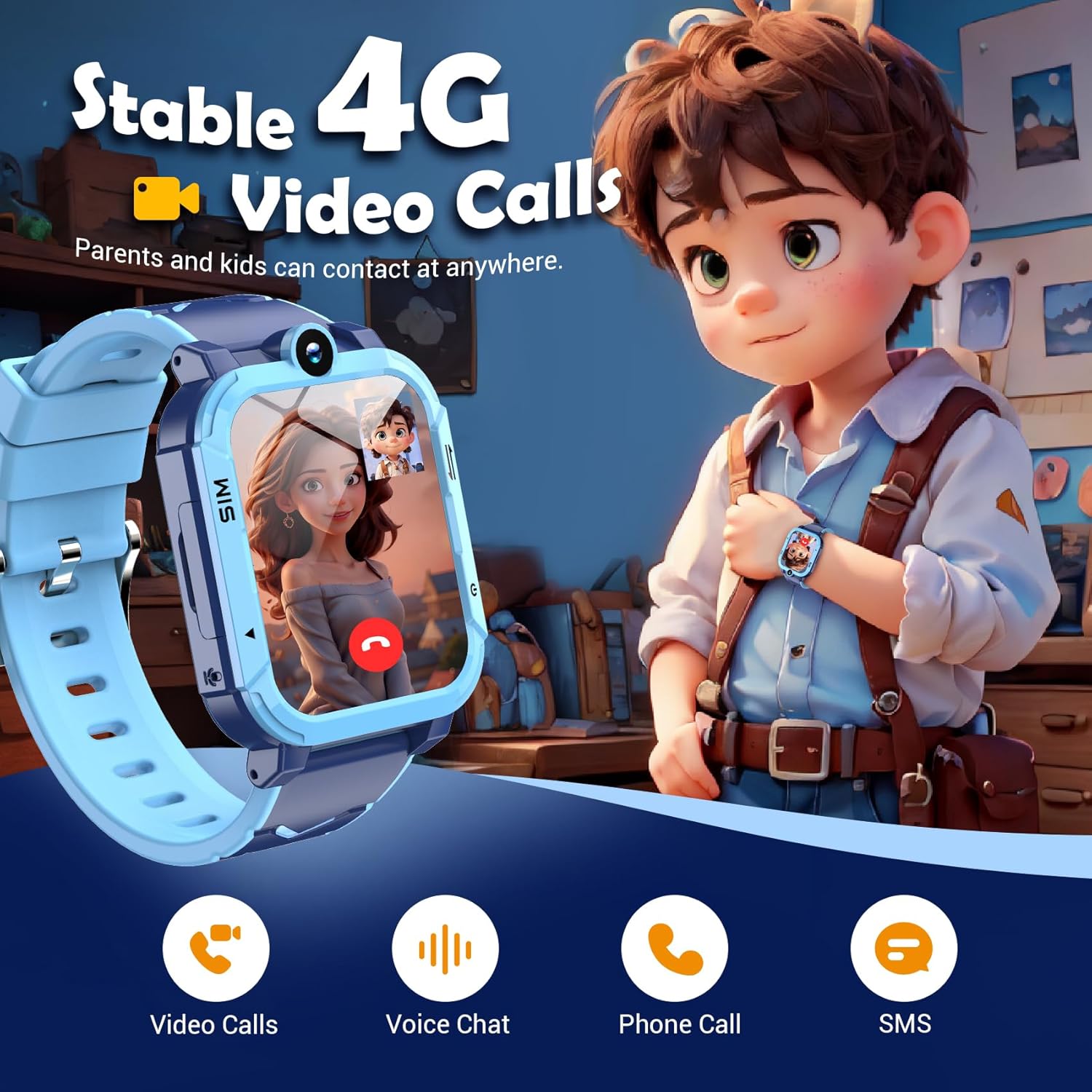
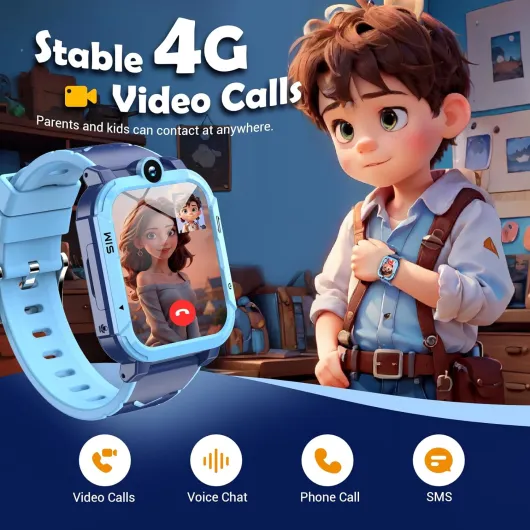
Design-wise, this is clearly a kids’ gadget. It’s a square plastic case with a 1.83‑inch screen, bright colours, and big icons. My kid liked the look straight away – it feels like a “real gadget” to them, even though to an adult it’s obviously on the cheap side. The case is ABS plastic, which is light and takes knocks reasonably well. My kid banged it on a table, scraped it along a wall, and it came away with only minor marks.
The screen is bright enough to see outside on a normal cloudy UK day. In strong sun you have to tilt it a bit, but it’s still readable. It’s not high resolution like an adult smartwatch, you can see the pixels if you look closely, but the icons are big and colourful so kids don’t care. Touch response is okay – not super smooth, but good enough for swiping between menus and tapping on big buttons.
You get two straps in the box, both soft silicone/rubber. Swapping them is easy, and that’s a nice touch because kids destroy straps pretty quickly. The blue version we have looks fine, nothing flashy but obviously “kid-friendly”. The buckle is basic metal, holds well, and hasn’t opened by accident so far. One thing to note: the watch is chunky. On a small wrist (5–7 year old), it looks big and a bit bulky. My kid didn’t care, but if your child is fussy about how things feel, they might notice it more at first.
Buttons and ports: there’s usually one main side button and the charging contacts on the back for the magnetic charger. The magnet is strong enough that you don’t need to fiddle around too much; it just snaps in place if you line it up roughly. No physical rotating crown or anything fancy. Overall, the design is practical and kid-proof enough for the price. It looks like what it is: an affordable plastic smartwatch that’s made to be used, not admired.
Battery life: decent for a kid, just charge it nightly
The watch has an 800 mAh battery, which sounds big for a kids’ watch, but in practice it’s just okay once you use 4G, GPS, and calls regularly. With normal use (a few calls, some GPS checks during the day, occasional video call, and notifications), I was ending most days with around 20–30% battery left. That’s fine for a daily device, but don’t expect it to last a full weekend if you forget to charge it.
Charging is done via a magnetic cable that snaps onto the back. This part is actually pretty convenient – my kid can do it themselves without messing up a tiny port. It charges fairly quickly; from low battery to full took roughly an hour and a half in my case, sometimes less. No fast charging or anything fancy, but you don’t really need that on a kids’ watch. We just made it part of the evening routine: watch off, onto the charger, done.
Battery drain depends heavily on how often the GPS updates and how much you call. If you set the location updates to very frequent in the app and your kid is in a low-signal area, the battery will drop faster. Same if they play with video calls or the camera a lot. If you keep things moderate and use school mode, it’s perfectly manageable. For safety, I’d say plan for one full day of use per charge, not more. Don’t buy it thinking it’ll run for three days straight with heavy GPS on.
In short, battery life is good enough but nothing special. It’s not a pain, but you do need to be disciplined about charging it every night, just like a phone. For a kids’ device that runs 4G and GPS, that’s pretty much what I expected at this price point, so I’m fine with it.
Comfort and everyday wear: kid-approved, parent mostly happy
Comfort was one of my main worries, because if it’s annoying on the wrist, the kid just won’t wear it, and then all the GPS and SOS stuff is pointless. Here, Blackview did a decent job. The included straps are soft and flexible, not the stiff cheap plastic you sometimes get. My kid wore it through full school days plus after‑school club, and only complained once or twice when it was very hot and they were running around – which is kind of normal for any watch.
The watch is not light, but not a brick either. On a smaller wrist you can feel the weight, especially at first, but after a couple of days my kid just forgot it was there. The strap has enough holes to fit thin wrists, and the buckle holds well. No skin irritation so far, and my kid usually reacts quickly to bad materials, so that’s a good sign. The IP67 water resistance also helps with comfort because you don’t have to keep nagging them to take it off every time they wash their hands or get caught in the rain.
In terms of day-to-day usability, the screen size and big icons are good for kids. They can hit the right button most of the time, and the swipe gestures are simple. The vibration for calls and alerts is noticeable but not aggressive. One thing I did notice: when the wrist moves a lot, the screen sometimes wakes up too easily, so at night it can light up if they move around in bed. It’s not dramatic, but if your kid is sensitive to light when sleeping, you might want to turn it off or use the school/quiet mode settings in the app during night hours.
Overall, I’d say comfort is pretty solid for a kids’ watch in this price range. It’s not sleek or thin, but it doesn’t dig into the skin, doesn’t rub too much, and my kid actually kept it on, which is the real test. If your child hates wearing anything on their wrist, this won’t magically fix that, but for a kid who’s okay with a normal watch, this one is fine.
Durability and waterproofing: survives normal kid abuse
Durability was another big factor for me, because kids are not gentle with their stuff. So far, this watch has held up fairly well. The ABS plastic case takes knocks without cracking, and the screen hasn’t shattered or anything, even after a couple of drops from table height onto a hard floor. It does pick up small scratches over time, but nothing that stops it working. Think of it as a normal kids’ toy level of wear.
The IP67 water resistance is a real plus. My kid washed hands with it on, played in the rain, and even got splashed pretty hard, and it kept working fine. I wouldn’t push it with long swims or full underwater games, but for everyday life – sinks, puddles, random spills – it’s totally fine. Just don’t let them press buttons underwater, same as most cheap water‑resistant watches.
The straps are also holding up okay. They get a bit dirty, especially the lighter colours, but you can just wipe them down with a damp cloth. No cracking or tearing after a couple of weeks. The quick‑release system for swapping straps is simple enough that you can replace them easily if one dies later on. The buckle and holes haven’t stretched or broken yet, which is usually the first thing to go on cheap straps.
Overall, I’d say durability is pretty solid for the price. It’s not indestructible, but for a 5–10 year old wearing it daily at school and on the playground, it should last as long as they don’t throw it at walls on purpose. If your kid is extremely rough on things, maybe add a cheap screen protector just in case, but for normal use it seems tough enough.
Calls and GPS tracking: works, but don’t trust it blindly
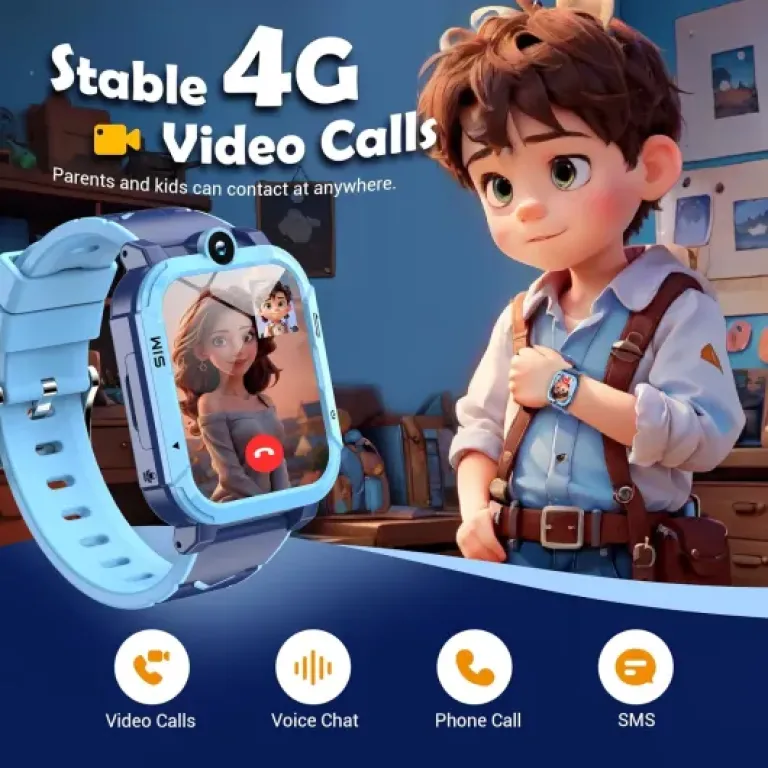
Let’s get into performance, because this is where things matter for parents: calls, messages, and GPS. On the calling side, I was pleasantly surprised. Once the SIM was set up correctly (this part can be a bit fiddly the first time), phone calls and video calls worked reliably. Sound is clear enough for a quick chat, and my kid had no trouble answering or calling from the contact list I set in the app. I really like the fact that you can restrict contacts, so random numbers can’t just ring your kid’s wrist.
Voice messages and chat through the app are actually what we use the most. My kid sends short voice notes like “I finished club, I’m coming home”, and I reply from my phone. That part feels solid and is genuinely useful. There is a slight delay sometimes if the data signal is weak, but nothing crazy. The class mode is also handy: you can lock down most features during school hours so it just shows the time and keeps SOS active. That avoids teachers complaining about kids playing games in lessons.
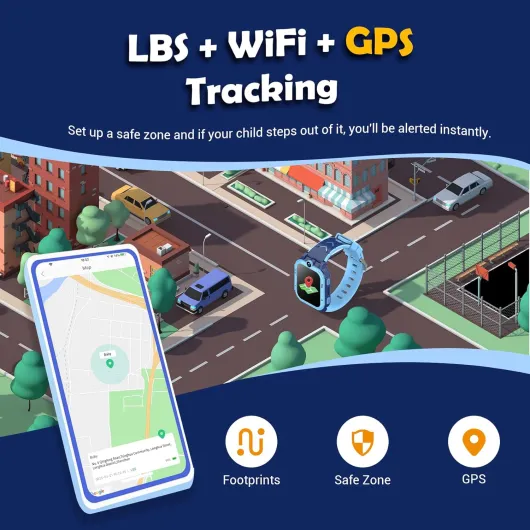
Now, the GPS tracking. This is where I’m less positive. Outdoors, with a decent sky view, the position is often close enough: you see they’re at school, on the way home, or at the park. But quite often, especially indoors or in dense areas, the watch location jumps around or shows them a fair distance away from where they really are. I had a couple of moments where the app said my kid was in a completely different part of town while the watch was actually sitting on the kitchen table. I tried the usual tricks (refresh, restart, position correction) and it helped sometimes, but not always.
Safe zones (geo‑fencing) and alerts technically work, but with this kind of inconsistent accuracy, you can end up with alerts that don’t really mean much. So yes, it gives you a rough idea of where they are, but if you’re expecting the accuracy of a high-end tracker or your phone’s GPS, you’ll be disappointed. My advice: treat the GPS as a general indicator, not something to panic over every time it shows a weird position.
What this kids’ watch actually does (and doesn’t)
On paper, this watch tries to do a lot: 4G connectivity, GPS+LBS+Wi‑Fi tracking, SOS calls, video calls, voice chat, camera, games, sleep tracking, pedometer, school mode, the whole lot. It connects to your phone through the Setracker2 app, which is fairly basic but does the job once you get past the initial setup. You need a nano or micro SIM (check the listing, mine was nano) with data and calls enabled. Important point: you really do need to power the watch off before inserting the SIM, otherwise it can be fussy picking up the network.
In daily use, my kid mostly used it for calling me, sending voice messages, and checking the time. The camera and games were more of a novelty at first. The camera is there, it works, but don’t expect proper photos – it’s just something kids play with for fun. Video calls do work, but the quality depends a lot on signal strength. On decent 4G, it’s fine for a quick check-in, though the tiny screen makes it more of a “nice to have” than something you’ll use all the time.
The GPS part is where expectations and reality don’t fully match. It has triple positioning (GPS/LBS/Wi‑Fi), which sounds fancy, but in practice you can get locations that jump around a fair bit, especially indoors or when the signal is weak. It’s good enough to know if your kid is roughly at school or roughly at home, but if you’re the anxious type who checks the map every 10 minutes, you’ll probably stress yourself out when it shows them a few streets away or even in another area for no reason.
Overall, as a “first phone on the wrist” that lets you control who can call your child and gives you basic location info, it does the job. As a precise tracker that always tells you exactly where they are, not really. The feature list is long, but only a handful of things are genuinely useful day to day; the rest is more filler than anything else.
Pros
- Good call and voice chat quality with tight control over who can contact your child
- Comfortable, kid-friendly design with two soft straps and solid water resistance
- Decent price for the amount of features (4G, SOS, school mode, basic GPS, games)
Cons
- GPS tracking can be quite inaccurate at times, causing unnecessary panic if you trust it too much
- Requires a SIM card and a bit of setup hassle with the Setracker2 app
- Battery is only good for about one full day with normal 4G and GPS use
Conclusion
Editor's rating
After using the Blackview 4G kids smartwatch for a bit, my take is simple: as a kid-friendly communication device, it’s good; as a serious GPS tracker, it’s average. My kid likes wearing it, calls and voice messages work well, and I like being able to control who can contact them. The school mode and SOS button are genuinely useful, and the watch itself is comfortable and tough enough for daily kid life. Battery life is fine as long as you charge it every night.
The weak spot is location accuracy. Sometimes it’s roughly right, sometimes it’s way off, and that can give you mini heart attacks if you take the map too seriously. If you treat the GPS as a rough guide rather than absolute truth, you’ll be less frustrated. For the price, I still think it’s a decent first step between no phone and a proper smartphone, especially if your main goal is simple two-way contact and a bit of extra peace of mind during school trips or walks home.
Who is it for? Parents who want a budget kids’ smartwatch with calls, SOS, and basic tracking, and kids aged roughly 5–10 who like gadgets but don’t need a real phone yet. Who should skip it? Anyone who needs very reliable, precise GPS tracking or hates fiddling with SIM setups and apps. If that’s you, you’ll probably be happier paying more for a higher-end tracker. If you’re okay with a few quirks and want to keep the cost down, this one is a reasonable compromise.