
Summary
Editor's rating
Value: worth it if you actually use the training tools
Design: simple, light, and not trying too hard
Battery: good overall, but not magic
Comfort: you forget it’s there… most of the time
Durability: watch body tough, screen a bit exposed
Performance: GPS, heart rate, and training features in practice
What the Forerunner 165 actually offers in real life
Pros
- Lightweight and comfortable enough for 24/7 wear, including sleep
- Bright AMOLED screen that stays readable outdoors and looks clear
- Solid GPS and training features (training effect, recovery, suggested workouts) that actually help structure runs
Cons
- Screen scratches relatively easily, screen protector strongly recommended
- Battery drops faster with heavy GPS and notifications than the marketing numbers suggest

Specifications
View full product page →| Brand | Garmin |
A running watch that doesn’t feel overkill
I’ve been using the Garmin Forerunner 165 Whitestone as my main watch for a few weeks now, mostly for running, walks, and general health tracking. I’m not a pro athlete, more like “tries to run 3–4 times a week and not destroy their knees.” I came from cheaper generic smartwatches and a basic Fitbit, so I was curious if a dedicated running watch would really change anything or if it was just hype.
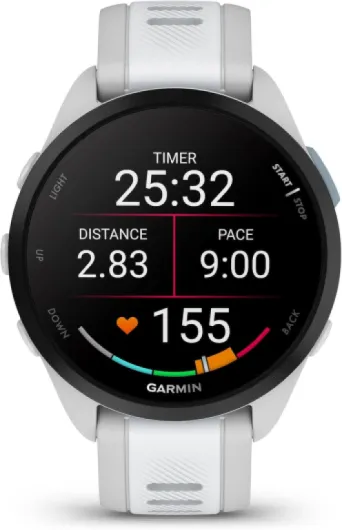
First impression: this feels like a proper sports tool, not a fashion gadget. The interface is centered around workouts, stats, and recovery instead of fancy animations. The AMOLED screen helps a lot; it’s bright, readable outdoors, and doesn’t look cheap. At the same time, the watch stays light and low profile, so it doesn’t scream “I’m training for a marathon” when you’re just going to the office or the supermarket.
What pushed me to try this one instead of the pricier Garmins is that it’s supposed to be an “entry-level” running watch but with the newer screen and the main training features: GPS, heart rate, training effect, recovery time, suggested workouts, and the whole Garmin Coach thing. I wanted something that helps structure my runs, without paying for ultra‑trail features I’ll never use. On paper, the Forerunner 165 ticks that box.
After actually wearing it 24/7, I can say it’s not perfect, but it does make me more consistent and more aware of how I sleep and recover. The watch sometimes exaggerates recovery time and the battery drops faster if you abuse notifications and GPS, but overall it does the job well. It’s clearly oriented toward people who care more about training data than replying to messages from their wrist.
Value: worth it if you actually use the training tools
In terms of price, the Forerunner 165 sits in that mid‑range where you start to wonder if you should just stretch to an Apple Watch or a higher‑end Garmin. For me, the value depends on what you really want from a watch. If you’re mainly after phone features on your wrist, calls, big app ecosystem, and fancy animations, then this isn’t the best deal. A smartwatch from Apple or Samsung does that better. But if your priority is training metrics, structured workouts, and solid battery life, this starts to make more sense.
Compared to cheaper generic watches I tried before, the difference is clear in the quality of data and the ecosystem. Garmin Connect is more complete, the GPS is more reliable, and the training guidance actually pushes you toward a plan, not just random step goals. Also, the watch integrates nicely with Strava and MyFitnessPal, which is a big plus if you already live in those apps. You don’t have to pay a subscription to use the core features either, which is nice given how many things are going subscription‑only these days.
On the downside, you do pay for some things you might not fully use, like all the different activity profiles or the training effect details. If you’re just counting steps and occasionally checking your heart rate, this is probably overkill. There are cheaper trackers that will do that just fine. The glass being pretty easy to scratch also makes the value slightly less attractive, because you almost have to budget for a screen protector from day one.
Overall, I’d call the value pretty solid for regular runners and health‑focused users who want more than a basic band but don’t need pro‑level outdoor features. If you stick to your training, the watch helps you stay organized and consistent, which is where it justifies its price. If you think it’ll end up as a glorified step counter after two weeks, I’d save the money and get something simpler.
Design: simple, light, and not trying too hard
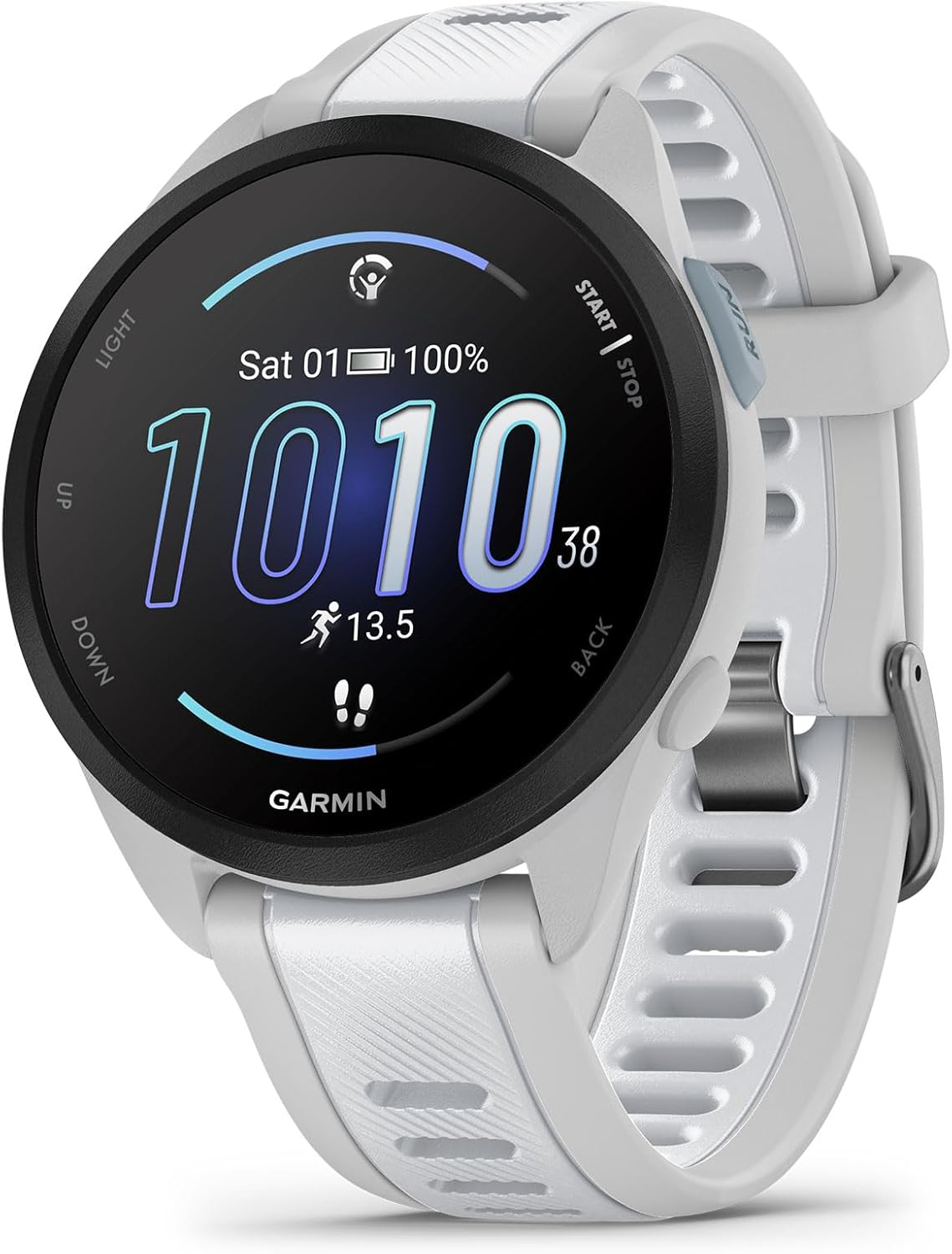
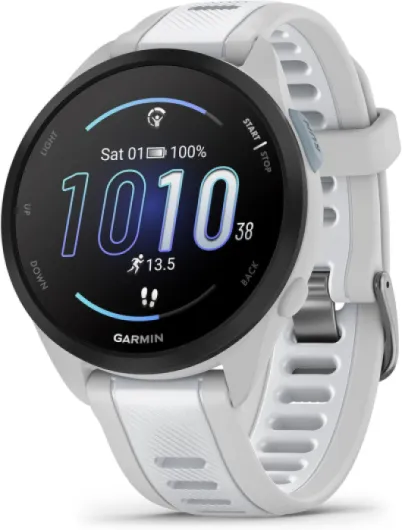
The Whitestone version I tested is basically a light beige/white case with a matching band. It’s pretty neutral, so you can wear it with sports clothes or casual outfits without it looking weird. The case is 43 mm, which on my average wrist feels right in the middle: not tiny, not a brick. If you’re used to giant rugged watches, this will feel compact. If you have a very small wrist, it might still look a bit big but the weight is low enough that it doesn’t bother you.
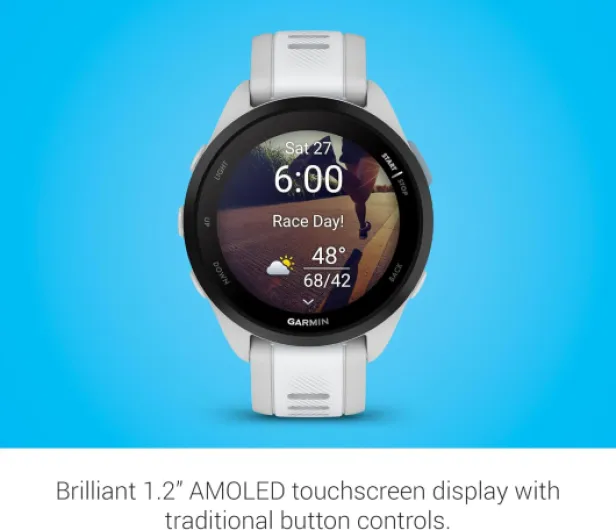
The AMOLED screen is really the big design win here. Coming from cheaper LCD‑style trackers, the contrast is a big step up. Black looks actually black, colors pop enough to read charts and heart‑rate zones at a glance, and everything stays readable under sunlight, especially if you bump the brightness. Indoors, I’ve kept it around medium brightness and it’s more than enough. You can use both touch and the physical buttons; I liked having buttons for workouts (easier with sweaty hands) and touch for scrolling through widgets.
One detail I appreciated: the watch doesn’t feel bulky when you bend your wrist. Some thicker watches dig into the back of your hand during push‑ups or when you’re typing. This one sits fairly flat, and the lugs don’t stick out too much. Visually, it’s fairly plain plastic, so don’t expect a premium metal feel. It looks like a sports watch, not a jewelry piece, which for me is fine. If you want something that looks more like a dress watch, this isn’t it.
The only downside on design is that the bezel and glass don’t seem especially protected. There’s no big raised edge like on some rugged models, so if you’re clumsy or do a lot of outdoor work, you’ll want a screen protector. I already picked up light scratches after a few knocks into door frames and gym equipment. Functionally, it doesn’t change anything, but if you’re picky about a clean screen, plan for that extra accessory.
Battery: good overall, but not magic
Battery life is advertised at up to 11 days in smartwatch mode and up to 19 hours in GPS mode. In real life, with my usage (always‑on heart rate, sleep tracking, several notifications, 3–4 GPS workouts per week of 30–60 minutes), I was getting around 6–8 days per charge. That’s still plenty, but you don’t quite hit those 11 days unless you trim down the smart features and don’t train too often.
Where you really see the battery drop is with longer GPS sessions and a lot of notifications. If you’re in a busy group chat or have every single app pinging your wrist, the vibration and screen wake‑ups will eat into the battery. Same if you keep brightness high and use always‑on display. I ended up limiting notifications to calls, messages, and a couple of key apps, and that made a noticeable difference.
The good part: charging is fast. Going from around 20% to full took me roughly an hour with the included USB‑C cable and a standard charger. That means you can easily top it up while you shower and have breakfast, and you’re good for several more days. The downside is the proprietary Garmin connector, which is standard across their devices but still annoying if you forget the cable when traveling. You can’t just borrow a random USB‑C cable from someone and plug directly into the watch.
Overall, the battery is good enough that you don’t have to think about it every day, but it’s not endless either. If you hammer it with GPS, high brightness, and constant notifications, expect to charge every 2–3 days. If you’re more moderate with features, once a week is realistic. For a bright AMOLED sports watch, I’d say that’s a fair trade‑off.
Comfort: you forget it’s there… most of the time
On the wrist, the Forerunner 165 is light and easy to wear all day. That’s probably its biggest strength compared to a heavier smartwatch. I sleep with it, run with it, lift with it, and it rarely bothers me. The weight (around 39 g with band, roughly) is low enough that during runs you don’t really feel it bouncing around, and it doesn’t leave a big mark on your skin if you wear it slightly snug for heart rate accuracy.
The stock silicone band is soft and flexible. For my medium wrist, I had enough adjustment holes to get a good fit. I can see how people with thicker wrists might find the band a bit short, like one of the reviewers mentioned. The good news is that it uses standard quick‑release pins, so swapping for a longer or different style band is easy and cheap. I ended up ordering a slightly longer third‑party band just for extra comfort at night.
During sleep, I didn’t have big issues. The watch is light enough that it doesn’t feel like a brick on your arm, though if you’re not used to sleeping with a watch, the first couple of nights might feel weird. The sensors at the back are relatively flat, so they don’t dig into the skin. I did notice that if I tightened the band too much for workouts and forgot to loosen it afterward, it left light marks, but nothing painful or itchy. No irritation from the silicone so far.
Where comfort drops a bit is during exercises like push‑ups, planks, or anything where your wrist bends a lot against the ground. Like most watches, it can press into the back of your hand. It’s not worse than other sports watches I’ve tried, just something to keep in mind. Overall, comfort is a strong point: it’s easy to wear 24/7, which is basically the whole idea if you want decent sleep and recovery data.
Durability: watch body tough, screen a bit exposed
From a build perspective, the Forerunner 165 feels solid enough for day‑to‑day use and regular training. The plastic case doesn’t creak, the buttons have a firm click, and the back sensors haven’t shown any wear after sweat, showers, and a few accidental bumps. I’ve worn it in the rain and in the shower without issues. It’s clearly designed to handle sports, not just office life.
Where it’s less impressive is the scratch resistance of the glass. Like some Amazon reviewers mentioned, micro‑scratches show up pretty quickly if you’re not careful. I picked up a couple of light scratches within the first couple of weeks from brushing against a wall and a metal bar at the gym. Nothing that blocks visibility, but you do see them at certain angles. The bezel doesn’t rise much above the screen, so there’s not a lot of physical protection if you hit it straight on.
The band has held up fine so far: no cracks, no discoloration, and it hasn’t stretched out. It’s a basic silicone strap, so over a long period it might show wear, but the good news is you can swap it easily and cheaply. The quick‑release system works well; I changed bands a few times without any drama. The lugs didn’t show any signs of loosening.
If you’re rough with your gear, I’d say: get a screen protector and maybe a cheap bumper case if you really abuse watches. The core watch can handle sweat, rain, and everyday knocks, but the screen isn’t bulletproof. For runners and gym‑goers who aren’t constantly crashing into rocks or heavy machinery, it’s fine. For serious outdoor or manual labor use, you might want a more rugged model or at least extra protection.
Performance: GPS, heart rate, and training features in practice
For running, the Forerunner 165 does the core job well: pace, distance, and heart rate are consistent. GPS lock usually takes under 15 seconds in my area (suburbs with some trees and buildings). Once locked, distance tracked along my usual 5 km loop was very close to what I got from my phone with Strava and an older Garmin I borrowed once. I didn’t see crazy jumps or zigzags on the map, just the usual small variations you expect from consumer GPS.
Heart rate tracking on the wrist is decent. During steady runs and walks, the numbers made sense and matched how I felt. During intervals or HIIT, there’s the usual lag: the watch takes a few seconds to catch up when your heart rate spikes. That’s normal for optical sensors. If you’re super picky about heart rate zones during intervals, you’ll still want a chest strap, but for most people this is enough to guide training and get a rough idea of effort and calories burned.
The training features are where it gets more interesting. The training effect labels (like “aerobic,” “tempo,” etc.) help you see what each session did for your fitness. Recovery time is helpful, but sometimes a bit dramatic. I had a light yard‑work session counted almost like a workout and it added several hours to my recovery time, similar to what one Amazon reviewer described. You have to use common sense: it’s a guide, not a doctor. The daily suggested workouts are actually handy when you don’t know what to do; they adapt a bit based on your recent load and recovery.
Syncing with Strava and MyFitnessPal worked smoothly for me. Runs pushed to Strava right after I stopped them, and calories/activities showed up in MyFitnessPal after linking accounts. Overall, performance is solid: it tracks what it needs to, the GPS is reliable enough for regular runners, and the coaching tools are useful if you’re not following a custom plan from a coach.
What the Forerunner 165 actually offers in real life
On paper, the Forerunner 165 is a 43 mm GPS running watch with a 1.2" AMOLED screen, wrist‑based heart rate, and around 11 days of battery in smartwatch mode (less if you abuse it, more on that later). It runs Garmin’s own system, so you don’t get a full app store like on an Apple Watch, but you do get activity profiles, widgets, watch faces, and basic smart features like notifications and Garmin Pay. The focus is clearly fitness first, smart stuff second.
In practice, the watch is built around three pillars: tracking your workouts (runs, cycling, HIIT, strength, etc.), tracking your health (sleep, HRV status, body battery style vibes through the morning report), and guiding your training with things like daily suggested workouts, training effect, and recovery time. If you pair it with the Garmin Connect app, you unlock all the charts, historical trends, and the social aspect with badges and challenges.
Day to day, the watch face gives you quick info: time, steps, heart rate, maybe battery and weather depending on the face you pick. Swiping or using the buttons cycles through widgets: sleep, training status, calendar, etc. When you start an activity, GPS locks pretty quickly (for me usually under 10–15 seconds in the city), and then you get pace, distance, heart rate, and whatever extra data fields you set up. After the workout, you see training effect (aerobic/anaerobic), recovery time, and you can sync straight to Garmin Connect, Strava, MyFitnessPal and so on.
Overall, the feature set is pretty solid for the price. You’re not getting advanced stuff like full topo maps or multi‑band GPS like on high‑end models, but for a regular runner or someone who wants to seriously track their health, there’s more than enough to keep you busy. If you’re the type who loves graphs and numbers, Garmin Connect paired with this watch will keep you entertained for a while.
Pros
- Lightweight and comfortable enough for 24/7 wear, including sleep
- Bright AMOLED screen that stays readable outdoors and looks clear
- Solid GPS and training features (training effect, recovery, suggested workouts) that actually help structure runs
Cons
- Screen scratches relatively easily, screen protector strongly recommended
- Battery drops faster with heavy GPS and notifications than the marketing numbers suggest
Conclusion
Editor's rating
The Garmin Forerunner 165 is a straightforward running and health watch that focuses on the right things: solid GPS, usable training guidance, clear AMOLED screen, and light weight that works for all‑day wear. It’s not trying to be a mini‑smartphone on your wrist, and that’s actually its strength. If you run a few times a week, like having your workouts structured, and care about sleep and recovery tracking, it gives you plenty of useful data without drowning you in complexity.
It’s not flawless. The glass scratches fairly easily if you’re clumsy, the recovery time can be a bit dramatic, and battery life drops faster if you spam notifications and GPS. The design is more functional than stylish, and the smart features are clearly second priority compared to Apple or Samsung. But in daily use, it gets the job done: you can go almost a week between charges, track a bunch of sports, sync to Strava/MyFitnessPal, and actually understand how your training affects your body.
I’d recommend it to everyday runners, walkers, and gym‑goers who want to take their training a bit more seriously without going into high‑end prices. If you mainly want a smartwatch for calls, apps, and replying to messages, or if you’re extremely rough on your gear, you might be happier with a different device. For most people who care more about pace than Instagram, the Forerunner 165 is a sensible and practical choice.