Summary
Editor's rating
Value for money: good features, but watch the subscription trap
Design: slim, discreet, but with some trade-offs
Battery life: finally a tracker you don’t charge every day
Comfort: easy to live with, especially for sleep
Durability and long-term reliability: mixed picture
Tracking performance: good overall, with typical wrist sensor limits
What the Fitbit Charge 6 actually offers
Pros
- Lightweight and comfortable enough for all-day and all-night wear
- Battery typically lasts 5–7 days with moderate use
- Strong health and sleep tracking features for the price, with GPS and ECG included
Cons
- Some advanced metrics and insights locked behind a paid Premium subscription after 6 months
- GPS and heart-rate accuracy still have typical wrist-tracker limits, especially during intense workouts
- Long-term reliability (2+ years) can be hit-or-miss based on user reports

Specifications
View full product page →| Brand | Fitbit |
| Product Dimensions | 6 x 4 x 4 inches |
| Item Weight | 5 ounces |
| ASIN | B0CC62ZG1M |
| Item model number | GA05195-WW |
| Batteries | 1 Lithium Ion batteries required. |
| Customer Reviews | 4.1 4.1 out of 5 stars (18,773) 4.1 out of 5 stars |
| Best Sellers Rank | #111 in Sports & Outdoors (See Top 100 in Sports & Outdoors) #2 in Activity & Fitness Trackers |
Fitbit Charge 6: why I switched from a smartwatch
I’ve been using the Fitbit Charge 6 for a while now, mainly as a replacement for bulkier smartwatches that I was sick of charging every day. I’m not a hardcore triathlete, but I do regular walks, some runs, a bit of strength training, and I care a lot about sleep tracking and heart rate. I went for the Charge 6 because I wanted something light, with decent accuracy, and a battery that doesn’t force me to babysit it. The built-in Google stuff (Maps, Wallet, YouTube Music controls) was more of a bonus than a main reason for me.
Coming from a full smartwatch, the first impression is pretty clear: this is a tracker first, “smart” device second. The screen is smaller, the interface is more basic, and you don’t get the same level of interaction with notifications or apps. On the flip side, it’s much lighter, less intrusive, and the battery life is on a different level. You put it on and kind of forget it’s there, which is the whole point for daily health tracking.
During daily use, the Charge 6 is mostly focused on steps, heart rate, sleep, and workouts. The Fitbit app is where all the interesting data lives. If you’re expecting to reply to texts, take calls from your wrist, or control everything on the device, you’ll be disappointed. If you just want something to quietly monitor your health and give you numbers you can actually use, it does that pretty well, as long as you’re okay with some quirks and the whole Google account + Premium ecosystem.
So overall, my mindset with this tracker is: it’s not perfect, it has some annoying limitations, but it covers the basics and a bit more. If you’re looking for a small band that can handle health tracking decently and last most of the week on one charge, it’s worth a look. If you want a full smartwatch experience or hate subscriptions, you’ll probably end up annoyed sooner or later.
Value for money: good features, but watch the subscription trap
In terms of raw features for the price, the Charge 6 is pretty solid value. You get GPS, heart-rate tracking, sleep tracking, ECG, contactless payments, Google Maps directions, and 6 months of Fitbit Premium included. If you compare that to higher-end watches that cost $300+ and do similar health tracking, this is clearly more budget-friendly. For someone who mainly wants health and fitness data without going all-in on a big smartwatch, it sits in a nice middle ground.
The catch is the Premium subscription. The first 6 months are free, which is nice to test everything, but after that you have to decide if the extra metrics, readiness scores, detailed sleep breakdowns, and guided content are worth the yearly fee. Some people will happily pay because they use the meditations, workouts, and advanced stats regularly. Others will feel annoyed that some data from their own body is essentially locked behind a paywall. You can still use the Charge 6 without Premium, but you lose part of what makes it attractive in the first place.
Compared to cheaper basic trackers, the Charge 6 justifies the extra cost if you care about slightly better accuracy, GPS, and richer app data. Compared to full-blown smartwatches, you’re giving up a lot of smarts (apps, calls, replies) but saving a good chunk of money and gaining battery life. So it really depends what you value more: advanced smartwatch stuff, or health tracking in a smaller band.
Overall, I’d say the value is good if you: 1) actually use the health features, 2) are okay with the idea of maybe paying for Premium long term, and 3) don’t need a full smartwatch. If you hate subscriptions on principle or just want a simple step counter, there are cheaper options that will make you happier. If you’re fine living in the Fitbit/Google world and want more detailed health data without spending $300+, the Charge 6 is a decent deal.
Design: slim, discreet, but with some trade-offs
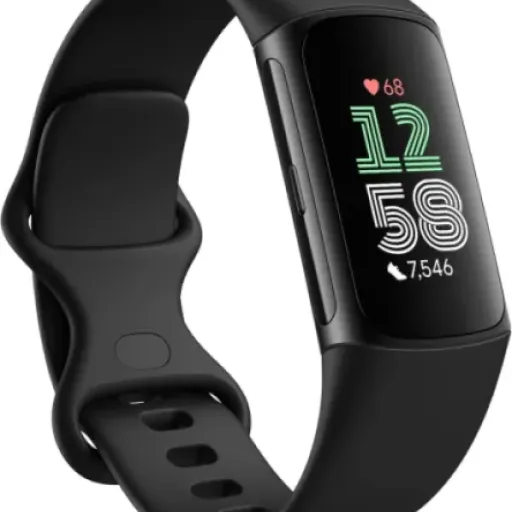
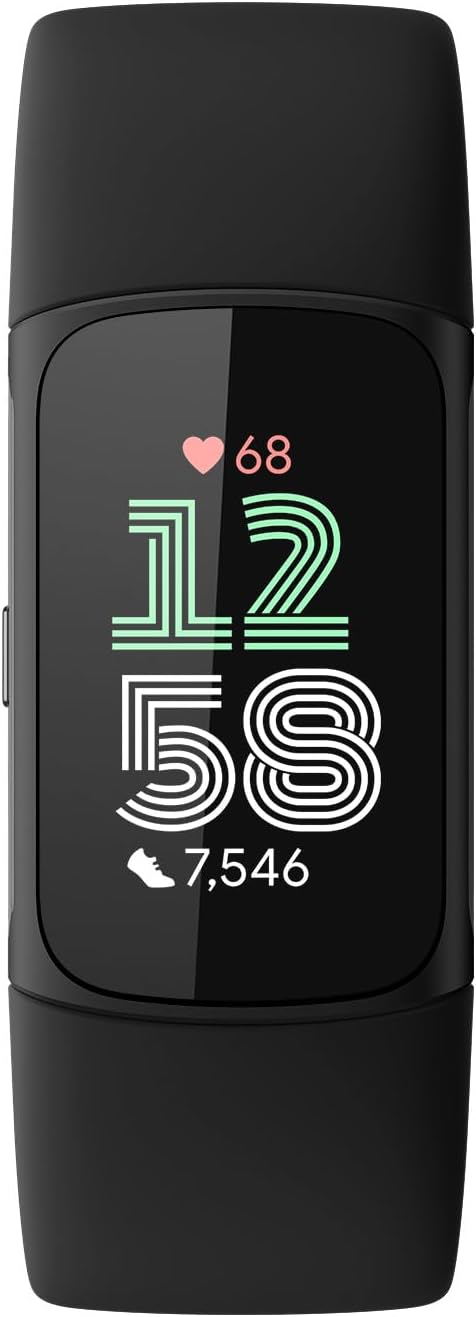
The design is basically a narrow rectangular pill with a small color screen and a silicone strap. It’s light and low-profile, which I like a lot compared to chunky smartwatches. You can wear it all day, including sleep, without feeling like you’ve got a brick on your wrist. The Obsidian/Black version is very neutral, so it doesn’t scream “fitness gadget” too much. For work or daily life, it blends in fine. If you want more style, you’ll probably end up buying third-party bands, because the included one is very basic sport-style rubber.
The screen is 1.04 inches, which is small but usable. The brightness is decent indoors and okay outside, though in bright sunlight you sometimes need to tilt your wrist a bit to read it. Text and icons are clear enough. It’s not going to impress anyone used to an Apple Watch or high-end Garmin, but for a tracker, it’s fine. Navigation is a mix of swipes and a side haptic “button”. Once you get the hang of it, it’s okay, but it’s not super intuitive at first, especially if this is your first Fitbit.
One thing that bugs me a bit is the limited choice of watch faces. There are some options, but not a ton, and a lot of them waste space with a huge clock and not enough useful stats. I ended up picking the least annoying one, but I still feel like the layout could be better. Also, you can’t fully customize complication layouts like on some smartwatches. It’s basically “pick a face and deal with it”. For a tracker, it’s acceptable, but it feels a bit locked down.
Build-wise, it feels solid enough for daily use. It’s survived bumps on door frames and gym equipment without visible damage so far. It doesn’t feel premium, but it doesn’t feel cheap toy-level either. Just be aware you’re wearing a fitness band, not a piece of jewelry. If your priority is something that looks fancy on your wrist, this isn’t the one. If you just want something you don’t mind beating up a bit, the design works.
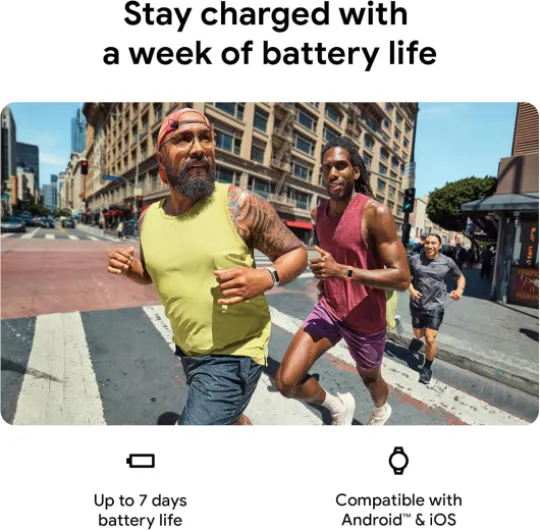
Battery life: finally a tracker you don’t charge every day
The battery life is one of the main reasons to choose this over a full smartwatch. With my usage (notifications on, always-on screen off, a few workouts per week without GPS, sleep tracking every night), I’m seeing around 5–7 days on a charge. That’s in line with what other users report. Compared to something like an Apple Watch that needs daily or every-other-day charging, this is a big relief. You don’t have to plan your life around the charger, and you can actually track sleep consistently without running out of juice.
When you start to push the features more, the battery drops faster. Using GPS for outdoor runs or rides definitely eats into it. If you were to use GPS several times a week for long sessions, you’d probably be charging more like every 3–4 days. Still not terrible, but less impressive. Brightness level and how often the screen wakes also matter. I left it on default settings most of the time and that seemed like a good balance between visibility and battery.
Charging itself is straightforward: a proprietary cable that snaps onto the back of the tracker with magnets. It’s not my favorite thing to have yet another special charger, but that’s the reality with most wearables. A full charge doesn’t take crazy long; you can go from low to full in roughly an hour or so. I usually just plug it in while I’m showering and getting ready once or twice a week, and that’s enough to keep it from ever fully dying.
If your main frustration with previous devices has been “I forget to charge it and then miss days of data”, the Charge 6 is a big improvement. It’s not the longest-lasting tracker on earth, but it sits in a very comfortable zone where you don’t think about the battery every day. Just be realistic: if you hammer GPS and keep everything cranked up, you won’t get that advertised week-long life.
Comfort: easy to live with, especially for sleep
Comfort is where the Charge 6 does pretty well. It’s lightweight and slim, so you don’t feel like you’re wearing a brick 24/7. Compared to an Apple Watch or a big Garmin, it’s night and day for sleeping. I’ve gone through full nights and even daytime naps without noticing it much. I’ve had bulkier watches leave my wrist sore or leave marks; this one doesn’t really do that as long as you don’t strap it way too tight.
The included band is soft enough, with a classic watch-style buckle. It’s not fancy, but it doesn’t irritate my skin, even with sweat during workouts. The fact that you get both small and large sizes in the box is practical. You don’t need to overthink the sizing when you buy it. I found the strap holes close enough together to get a decent fit, which matters because for heart-rate accuracy you want it snug, but not cutting off circulation. One finger above the wrist bone, snug but not crushing, works best in my experience.
For everyday stuff like typing, driving, working at a desk, or doing chores, it doesn’t really get in the way. It sits low enough that it doesn’t constantly catch on clothing or pockets. In the gym, it’s fine for most movements, though if you do a lot of barbell work, you’ll still want to position it a bit higher up your forearm so it doesn’t get smashed between the bar and your wrist. That’s not specific to Fitbit; it’s just how wrist trackers are.
The only minor comfort downside is the sensor bump on the underside. If you wear it too tight, you can feel that pressing into your skin a bit. Also, if you sweat a lot and never take it off to rinse and dry, you can get some irritation under the band over time. I just make a habit of taking it off for a couple of minutes after showers to let the skin breathe. Overall, for all-day and all-night wear, it’s pretty solid. Definitely more comfortable than most full smartwatches I’ve tried.
Durability and long-term reliability: mixed picture
Physically, the Charge 6 holds up pretty well to regular abuse. The case and screen haven’t picked up major scratches in normal use, and it’s handled bumps at the gym and around the house without falling apart. The band is simple but doesn’t feel like it’s going to snap randomly. It’s also fine with water from showers and swims as long as you use the water lock. So from a day-to-day toughness point of view, it feels solid enough for the price.
Where things get a bit more mixed is long-term reliability. Reading through other users’ experiences, there are people who have used Fitbit trackers for years with no problem, and others who see weird issues after 1–2 years: battery not holding charge, screen glitches, syncing problems, or just the device slowly dying. One of the reviews you provided mentioned a Charge 6 basically giving up after about two years, which isn’t ideal. To be fair, this isn’t unique to Fitbit; a lot of wearables seem to have a 2–3 year “lifecycle” before something starts acting up.
Software-wise, updates can occasionally introduce bugs or change the interface in ways you might not like. Also, since everything goes through the Fitbit/Google app and servers, you’re kind of at their mercy if they change features or move things behind the Premium paywall. That’s a different kind of durability: not hardware, but how long the device stays useful and supported. So far, Charge 6 is a current model, so support is fine, but it’s something to keep in mind if you plan to keep it for several years.
My take: if you expect this to last forever, you’ll probably be disappointed. If you go in thinking “if I get a solid two to three years of daily use out of it, that’s acceptable”, it’s more realistic. For the price, the physical durability is decent, but the long-term electronics and battery longevity are a bit of a question mark, just like most wearables in this bracket.
Tracking performance: good overall, with typical wrist sensor limits
On the tracking side, the Charge 6 is generally reliable but not perfect, which is pretty much what I expect from a wrist tracker in this price range. For daily steps and basic activity, it does the job. It might overcount a bit when you wave your arms around, and sometimes miss a few steps if your hands are in your pockets, but nothing dramatic. For me, it gives a good enough picture of how active I’ve been in a day without obsessing over every single step.
Heart-rate tracking during normal day-to-day use and light workouts (walking, steady cycling, light jogging) is decent. It lines up with how I feel and with occasional spot checks using a separate device. During more intense intervals or weight training, you can see the usual optical sensor issues: slight delay in catching peaks, occasional spikes or dips that don’t fully match reality. It’s not unusable, but if you’re a data nerd who wants perfect HR graphs for HIIT, you’ll probably want a chest strap paired to something else. For most people just wanting zones and averages, it’s fine.
GPS performance is okay but not on the level of dedicated sports watches. It can take a little while to lock on, and routes aren’t razor sharp. Distance and pace are close enough for casual runners or walkers, but if you’re training for a serious race and care about exact splits, this might annoy you. Also, using GPS drains the battery much faster, which is expected but still something to keep in mind. I tend to only use GPS when I really care about the route map.
Sleep tracking is one of the stronger points. It’s pretty good at detecting when I fall asleep and wake up, and the sleep stages (light, deep, REM) feel believable most nights. With Premium, you get more breakdowns and a “sleep score”, which is nice as a quick summary. Is it medically precise? No. But as a trend over days and weeks, it’s useful. Same for things like readiness and stress: they’re based on HRV, sleep, activity, etc. I treat them as hints, not absolute truth. Overall, performance is solid enough for regular users, but not at the level of high-end sports gear.
What the Fitbit Charge 6 actually offers
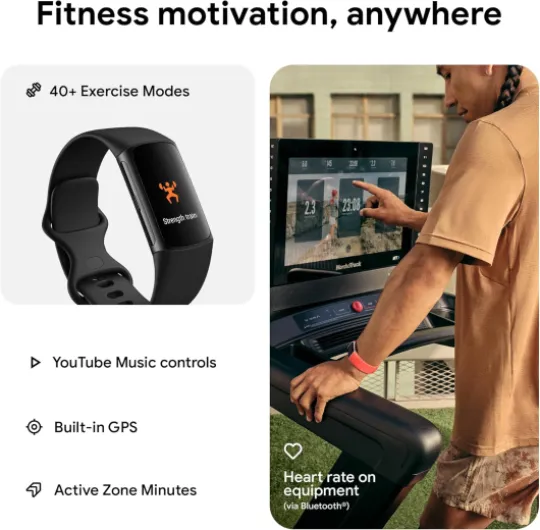
On paper, the Fitbit Charge 6 is a slim fitness tracker with a 1.04-inch color touchscreen, built-in GPS, heart-rate monitoring, ECG, SpO2, sleep tracking, stress and readiness metrics, and some basic smart features like notifications and Google apps. It connects to your phone via Bluetooth, and you manage everything through the Fitbit app. It comes with both small and large bands in the box, so you don’t need to guess your wrist size. It’s rated for water resistance for swimming and showers, and you can enable a water lock mode so the screen doesn’t go crazy when wet.
Fitbit (now under Google) has clearly tried to make this thing more “connected” by adding Google Maps turn-by-turn directions, Google Wallet for contactless payments, and controls for YouTube Music. In reality, these are nice extras but not the main use case. You still need your phone nearby for most of that stuff, and setup can be a bit annoying if you’re not already deep in the Google world. If you’re on iPhone, you still get notifications and tracking, but the Google integration feels a bit awkward.
Where this tracker is strongest is the health side: continuous heart rate, workout tracking (running, walking, cycling, gym stuff, etc.), sleep stages, and various scores like readiness, stress, and activity minutes. The included 6 months of Fitbit Premium unlocks more detailed analytics, guided workouts, sleep profiles, and so on. After that, it’s a paid subscription. You can use the Charge 6 without Premium, but you clearly lose some of the “fancy” data and insights that they like to promote.
In practice, I’d describe the Charge 6 as: small band, decent screen, solid health tools, okay smart features, and very tied to an app and subscription. If you’re okay living in that ecosystem and you mainly care about health numbers rather than smartwatch tricks, the feature set is pretty solid for the price. If you hate apps and subscriptions or want something truly independent from your phone, this isn’t it.
Pros
- Lightweight and comfortable enough for all-day and all-night wear
- Battery typically lasts 5–7 days with moderate use
- Strong health and sleep tracking features for the price, with GPS and ECG included
Cons
- Some advanced metrics and insights locked behind a paid Premium subscription after 6 months
- GPS and heart-rate accuracy still have typical wrist-tracker limits, especially during intense workouts
- Long-term reliability (2+ years) can be hit-or-miss based on user reports
Conclusion
Editor's rating
The Fitbit Charge 6 is a good fit for people who want solid health and fitness tracking in a small, comfortable band, without dealing with the bulk and short battery life of a full smartwatch. It tracks steps, workouts, heart rate, sleep, and general readiness well enough for most users, and the battery easily lasts several days, often close to a week with moderate use. The Google extras (Wallet, Maps directions, YouTube Music controls) are nice bonuses but not the main reason to buy it. Comfort is a strong point, especially if you plan to wear it at night for sleep tracking.
On the downside, it’s not perfect. GPS and heart-rate tracking are fine but not pro-level, long-term durability is a bit uncertain based on some user reports, and the whole experience leans heavily on the Fitbit app and the Premium subscription. Without Premium, you lose a chunk of the detailed insights that make the device interesting. If you are okay with that ecosystem and you mainly care about health numbers, the Charge 6 offers good value for money. If you want a watch you can reply to messages on, install lots of apps, or keep for five years without worrying about subscriptions or ecosystem changes, you should probably look at something else.