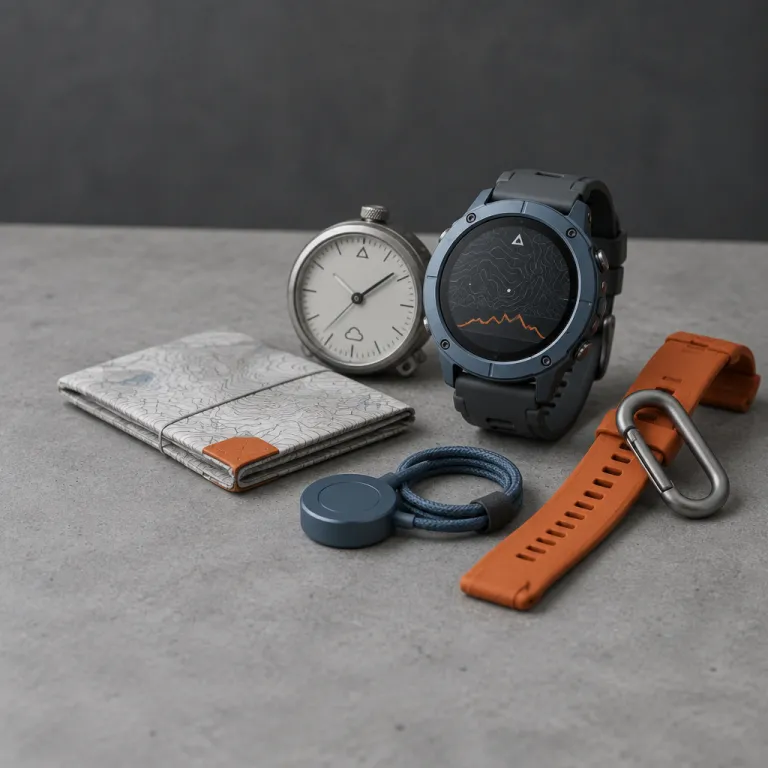
The three non negotiables for the best smartwatch hiking GPS altimeter
A trail focused GPS watch lives or dies on three pillars. You need reliable multi band gps, a barometric altimeter that tracks real elevation changes, and offline maps or at least breadcrumb navigation that still work when your phone has no signal. Without this trio, even the best looking watches become risky toys once you leave the parking lot.
Multi band gps mode that uses both L1 and L5 signals shrinks position error from roughly 5–15 m to about 1–3 m under dense trees. On rugged routes this accuracy matters more than any shiny AMOLED display, because a few metres off can place your track on the wrong side of a ridge or river. Among current gps watches, the Garmin Fenix series, the latest Garmin Enduro and the Suunto Vertical families stand out for consistently strong gps tracking in difficult terrain.
A true best smartwatch hiking GPS altimeter also needs a barometric sensor, not just gps derived altitude. The barometer reads air pressure changes and translates them into elevation gain, which reacts faster and more accurately during steep climbs than gps alone, especially in narrow valleys. Models such as the Garmin Fenix Solar variants, the Garmin Instinct Solar and the Coros Apex line pair this barometric data with topo maps to show your vertical progress in real time.
Offline maps separate serious hiking watches from everyday smartwatches that only mirror your phone. Garmin Fenix and Garmin Enduro models with TopoActive maps let you follow coloured trails, see contour lines and even reroute on the fly when you miss a junction. Coros Apex and Suunto Vertical watches rely more on breadcrumb style navigation, but their route lines remain readable on the wrist even when the display is smaller and the price is lower.
Navigation features must stay usable when you are tired, wet and wearing gloves. Large physical buttons on a rugged watch case beat touch only controls once rain or sweat hits the screen and the AMOLED display becomes smudged. If you want the best gps experience for long hikes, prioritise a watch with clear maps, a responsive barometric altimeter and a gps mode that locks on quickly under tree cover.
Battery life and gps hours for real world hikes
Battery life claims on product pages rarely match what hikers see on trail. Brands quote ideal numbers for smartwatch mode or stripped down gps mode, but real use mixes navigation, heart rate monitoring and frequent backlight activations. To choose the best smartwatch hiking GPS altimeter, you need to translate those marketing figures into hours of reliable recording for your own routes.
For a typical day hike of 6–8 hours, almost any modern gps watch can cope, but the margin for error varies wildly. An Apple style device with a bright AMOLED display might manage roughly 6 hours gps with maps and heart rate tracking before the battery warning appears. By contrast, a Garmin Fenix Solar or Garmin Enduro with efficient gps tracking can stretch to dozens of hours gps, especially when solar charging adds a trickle of extra energy in bright conditions.
Multi day treks and ultramarathons change the equation completely. Here, watches like the Garmin Enduro and Suunto Vertical offer extreme hours gps in dedicated endurance mode, sacrificing some gps sampling frequency to extend battery life beyond 40 hours of continuous tracking. Coros Apex models are also known for strong battery performance, often delivering several days of mixed activity tracking with gps mode enabled for long stretches.
Solar features help, but only if you understand their limits. The Garmin Instinct Solar and Fenix Solar editions can extend battery life when the watch spends several hours per day in direct sunlight, yet they do not create free energy from shade or clothing covered wrists. Treat solar charging as a safety buffer that slows battery drain rather than a replacement for starting with a full battery before a demanding route.
When comparing prices on Amazon or any retailer, look beyond the headline battery number. Check how long the watch lasts in full gps mode with heart rate and maps enabled, not just in smartwatch mode on your desk. For a serious mountain day, aim for at least 16 hours gps tracking so unexpected detours, weather delays or navigation errors do not leave you with a dead screen before you reach the trailhead.
For a deeper dive into how multi band positioning behaves under trees and cliffs, a technical guide on gps accuracy on trails and multi band fixes explains why some gps watches hold a lock while others wander. Understanding that behaviour helps you judge whether a claimed best gps system will actually keep your breadcrumb trail glued to the path. Battery numbers mean little if the recorded track snakes wildly away from the real route.
Map quality, displays and how navigation really feels on the wrist
Map data and how it appears on the display shape your entire navigation experience. A best smartwatch hiking GPS altimeter is not just about sensors and battery, it is about how quickly you can read the screen when your lungs are burning on a steep climb. The difference between full topo maps and a simple breadcrumb line becomes obvious the first time you hit an unmarked junction in fog.
Garmin Fenix and Garmin Enduro models with TopoActive maps offer the richest on wrist cartography today. You see contour lines, trail names, water sources and even small tracks, all rendered clearly on a high resolution screen that remains legible in bright sun. The trade off is that these watches are heavier and more expensive, so you pay both in grams and in price for that mapping power.
Suunto Vertical and Coros Apex watches take a slightly different approach to maps. They support offline routes with breadcrumb navigation and basic topographic shading, which keeps the interface clean and the battery demands lower than full colour maps. For many hikers, this balance between simple visuals and long battery life feels like the best gps compromise for multi day trips.
Display technology matters as much as the maps themselves. An AMOLED display looks stunning indoors and makes colourful maps pop, but it can drain the battery faster than a transflective screen when you keep the backlight high during long hours gps tracking. Garmin Fenix series watches use transflective displays that stay readable in direct sun, while some newer adventure watches experiment with AMOLED display panels and then compensate with larger batteries.
Interface design also shapes how safe you feel when navigating. Clear zoom controls, a responsive map cursor and a logical menu for switching activity mode or checking heart rate zones reduce the time your eyes leave the trail. If you often run as well as hike, pairing your gps watch with a running pod can refine pace and form metrics, and a guide on how a running pod enhances smartwatch training shows how these accessories complement strong gps tracking.
When you compare watches on Amazon or scroll through view Amazon style product cards, pay attention to screenshots of the maps, not just the marketing text about navigation features. A best smartwatch hiking GPS altimeter should show a crisp route line, clear elevation data and legible waypoints at a glance. If the sample images already look cluttered or tiny, they will not magically improve once you are cold, wet and trying to read them through scratched lenses.
Weather, safety alerts and the weight trade offs hikers actually feel
Weather can turn a pleasant hike into a safety problem faster than most people expect. A serious gps watch with a barometric altimeter can track pressure trends and warn you when a storm front is approaching, even without a data connection. That early vibration on your wrist sometimes buys you the extra hour you need to clear a ridge before lightning or heavy rain arrives.
Garmin Instinct, Garmin Instinct Solar and many Garmin Fenix series models include storm alerts based on rapid pressure drops. Suunto Vertical and Coros Apex watches also expose barometric graphs, though their alert logic may be less aggressive than Garmin’s defaults. In practice, hikers should treat these warnings as one more signal alongside darkening clouds, wind shifts and temperature drops, not as a perfect forecast.
Weight is the other safety feature nobody markets but every wrist feels. A fully loaded Garmin Fenix Solar or Garmin Enduro with metal bezel, large battery and maps can feel chunky after ten hours of swinging trekking poles. Lighter gps watches such as Coros Apex or smaller Instinct models reduce fatigue and wrist irritation, which matters on multi day treks where you sleep with the watch on to track heart rate and recovery.
There is always a trade off between weight, battery life and features. Ultralight hikers often choose simpler gps watches with fewer mapping options but excellent hours gps, accepting that they will rely more on a paper map or phone for detailed navigation. Others prefer the all in one approach of a heavier best smartwatch hiking GPS altimeter that handles maps, tracking and safety alerts in a single rugged shell.
Price also reflects these compromises. A premium Garmin Fenix or Garmin Enduro with full maps, solar charging and long battery life costs significantly more than a basic gps watch that only records tracks. When you compare prices, ask whether you truly need on wrist maps for every outing, or whether a lighter, cheaper watch plus a dedicated navigation app on your phone offers a better balance for your style of hiking.
For overnight trips, consider how the watch fits into your broader safety system. A reliable gps mode with storm alerts, strong battery and clear display complements, but never replaces, a physical map, compass and emergency communication device. The best gps watches are those you barely notice until the moment you really need them, when a quiet vibration or clear arrow keeps you off a corniced ridge or guides you back to camp in the dark.
Health, fitness tracking and how hiking data shapes long term training
Trail ready watches are not only about navigation, they are also health tools. A best smartwatch hiking GPS altimeter tracks heart rate, sleep and daily activity so you can see how big mountain days affect your recovery. Over time, this data helps you plan training blocks that build endurance without tipping you into chronic fatigue.
Most modern gps watches include optical heart rate sensors that log beats per minute continuously. Garmin Fenix, Garmin Instinct, Coros Apex and Suunto Vertical models all translate this into heart rate zones during hikes, showing when you are grinding in threshold territory instead of staying in an easier aerobic range. If you pair a chest strap, these watches can also record more precise heart rate data during cold weather when wrist sensors sometimes struggle.
Smartwatch mode features such as step counts, stress scores and sleep tracking may sound secondary to maps and gps tracking. Yet for regular hikers who also run, cycle or lift, these metrics reveal whether your body is absorbing the workload or quietly falling behind. Long strings of poor sleep combined with high resting heart rate after big weekends in the mountains are a clear sign to schedule lighter activity mode sessions.
Battery life again shapes how much of this health data you actually capture. A watch that dies halfway through a weekend trip leaves gaps in your sleep and heart rate records, making trends harder to interpret. Devices like the Garmin Instinct Solar, Fenix Solar and some Coros models use solar charging and efficient screens to stretch smartwatch mode over many days, so you return home with a complete picture of your effort and recovery.
If you are curious about how wearables handle night time metrics, a detailed analysis of sleep tracking with a dedicated smart ring shows how different sensors capture subtle changes in heart rate and movement. Combining a ring for sleep with a rugged gps watch for daytime activity can give you a more nuanced view of your overall health. In the end, the value of any best smartwatch hiking GPS altimeter lies not only in the track it records, but in how clearly it helps you understand the strain and adaptation behind every summit.
FAQ
How many gps hours do I really need for a day hike ?
For most hikers, 10–12 hours of continuous gps tracking is enough for a full day on trail with a safety margin. If your routes often involve complex navigation, frequent photo stops or slow scrambling, aim for at least 16 hours gps to cover delays. Multi day treks or ultramarathons demand watches that can handle 24–40 hours gps or more without recharging.
Is a barometric altimeter essential, or is gps altitude good enough ?
A barometric altimeter is strongly recommended for serious hiking and mountaineering. Gps derived altitude tends to lag and fluctuate, especially in steep valleys or near cliffs, which can distort your total elevation gain. A barometric sensor reacts faster to real pressure changes, giving more accurate ascent data and more reliable storm alerts.
Are solar charging watches worth the higher price for hikers ?
Solar charging on models like Garmin Instinct Solar and Fenix Solar slows battery drain but does not replace regular charging. You see the biggest benefit on long summer days when the watch spends several hours in direct sunlight. If you mostly hike in forests, winter conditions or under clothing layers, solar panels add only a modest extension to battery life.
Should I prioritise AMOLED display quality or maximum battery life ?
AMOLED displays offer richer colours and sharper maps, which help in quick glances, but they usually consume more power. Transflective screens on many Garmin Fenix and Garmin Enduro models look less dramatic indoors yet remain readable in bright sun while using less energy. If you do frequent multi day trips without charging, battery life should take priority over display aesthetics.
What is the main difference between Garmin Fenix, Garmin Enduro and Coros Apex for hikers ?
Garmin Fenix focuses on a balance of full topo maps, strong training features and solid battery life in a relatively heavy case. Garmin Enduro pushes battery life even further, sacrificing some everyday smartwatch features and sometimes maps to maximise endurance for ultra distance events. Coros Apex offers lighter weight and excellent battery at a lower price, but its mapping is simpler and relies more on breadcrumb navigation than rich on device maps.