
Summary
Editor's rating
Value: good deal if you want battery and Wear OS, less if you chase brand polish
Big, bold, and not exactly discreet
Battery: finally more than one day, but forget the 16 days in real life
Comfort: light for its size, but still a chunky block on the wrist
Titanium body is nice, strap is just okay
Durability and water resistance: feels built to take a beating
Performance and smart features: finally a smooth Wear OS experience
What you actually get with the OnePlus Watch 4
Pros
- Battery life of around 3–4 days in real use, better than many Wear OS competitors
- Light titanium body with solid durability and good overall build quality
- Smooth Wear OS performance with Google Wallet, Maps, notifications, and plenty of sport/health features
Cons
- Large and chunky 47 mm size not ideal for small wrists or people who want a discreet watch
- Software support and polish from OnePlus are behind Samsung and Google
- Stock silicone strap is average and can be uncomfortable or irritating for sensitive skin

Specifications
View full product page →| Brand | OnePlus |
A Wear OS watch that finally lasts more than a day
I’ve been using the OnePlus Watch 4 (47 mm, black) as my main smartwatch for a few weeks, paired with an Android phone. I came from a Samsung Galaxy Watch and, before that, a couple of older Wear OS watches, so I’m pretty familiar with the usual problems: weak battery, laggy interface, and random bugs. I bought this mostly because I was tired of charging every night and wanted something I could wear for sleep tracking without stressing about the charger.
Right away, the big thing that stands out is the battery life. This is the first Wear OS watch I’ve used where I don’t feel forced to think about the battery every few hours. It’s not magic, but it’s clearly better than most watches in the same category. The second thing is the size: this thing is big. If you have a thin wrist or you’re used to slim watches, you’ll feel it on day one. It’s not unwearable, but it’s not discreet either.
Feature-wise, it’s packed: heart rate, SpO2, sleep tracking, GPS, NFC for payments, loads of sport modes, and that 60-second health check that tries to give you a quick overview of your stats. It runs Wear OS 6, so you get Google apps, Google Wallet, notifications, proper watch faces, all the stuff we actually want on a smartwatch. There’s also the whole Gemini integration thing, but honestly, it’s just “Google Assistant with AI sauce” from the watch – handy sometimes, but not life-changing.
Overall, my feeling after a few weeks is this: the OnePlus Watch 4 is a solid everyday smartwatch if you care about battery and Android integration, and you don’t mind a big, slightly chunky watch on your wrist. It’s not perfect: software support from OnePlus feels a bit behind Samsung and Google, some health metrics are more “nice to have” than truly useful, and the included strap won’t suit everyone. But for the price and what it offers, it’s one of the more convincing Wear OS options right now.
Value: good deal if you want battery and Wear OS, less if you chase brand polish
In terms of value for money, the OnePlus Watch 4 sits in an interesting spot. It’s generally cheaper than a top Samsung Galaxy Watch or Pixel Watch, while offering better battery life than both in most real-world scenarios. You get a premium-feeling titanium body, a bright OLED screen, full Wear OS with Google services, NFC payments, GPS, and a long list of health and sport features. On paper, that’s a strong package for the price.
Where you feel the cost savings is mainly in software polish and ecosystem support. Samsung and Google put a lot of effort into updates, deep integration with their phones, and small quality-of-life tweaks. OnePlus isn’t terrible, but it’s clearly not at the same level. If you already own a Samsung phone, the Galaxy Watch will still feel more integrated (e.g., better call handling, tighter health sync). If you’re deep into Google’s ecosystem, the Pixel Watch will probably get new features first. So you’re trading a bit of software polish for better battery and a slightly lower price.
Compared to cheaper fitness trackers or basic smartwatches, the OnePlus Watch 4 obviously offers more flexibility thanks to Wear OS: you can install apps, use Google Wallet, Maps, etc. That alone might justify the extra cost if you actually use those features. If you just want steps, notifications, and sleep tracking, a mid-range Fitbit or Amazfit could do the job for less money, but you’d lose the full smartwatch experience.
Overall, I’d say the value is pretty solid: you get a strong mix of build quality, performance, and features for what you pay. It’s not the absolute best in every area, but if your priorities are battery life + Android integration + proper apps, it’s a good deal. If you care more about tight brand ecosystem and guaranteed long-term software love, you might prefer paying a bit more for Samsung or Google.
Big, bold, and not exactly discreet
The design of the OnePlus Watch 4 is pretty straightforward: big round face, metal body, two physical buttons on the side. It definitely leans more towards a chunky sports watch than a slim dress watch. At 47 mm, it’s large. On my average wrist, it fills the whole top area, and under a tight shirt cuff you will feel it catching. If you’re used to G-Shock or larger mechanical watches, you’ll probably be fine. If you’ve only ever worn small Fitbits, this will feel huge at first.
The LTPO OLED screen looks sharp and bright. Text is easy to read, even outdoors, and watch faces look clean. The bezels are not ultra-thin, but they’re reasonable, and after a couple of days I stopped thinking about them. Always-on display works well and is readable, though obviously it hits the battery a bit more. The watch feels more like a piece of gear than jewelry. It doesn’t scream luxury, but it doesn’t look cheap either.
Button placement is decent. The main button is used for the app list, the secondary one is customizable (I set it to workouts). The haptics are okay, not super sharp like an Apple Watch, but you feel the notifications without getting annoyed. Overall navigation via swipes and buttons feels natural. I didn’t have many accidental touches, even when wet or during workouts, which is important for a watch this size.
My main criticism on design: it’s not for small wrists. One of the Amazon reviewers said it’s massive and chunky, and that matches my experience. It wears big and has presence. If you want something that disappears under clothes and feels almost invisible, this isn’t it. But if you like a watch that looks like a proper watch and not a slim tracker, the design is pretty solid and practical. Just be aware of the size before you hit buy.
Battery: finally more than one day, but forget the 16 days in real life
Battery life is probably the main reason to consider this watch, so let’s be concrete. OnePlus claims up to 16 days in power saving mode and around 5 days in smart mode. In reality, with normal use, you’re not hitting 16 days unless you basically neuter the smartwatch features. That said, it still does much better than a lot of Wear OS watches I’ve used.
Here’s how it went for me: with always-on display off, heart rate on standard mode, sleep tracking enabled, a couple of short GPS workouts per week, and regular notifications, I was getting around 3.5 to 4 days per charge. If I turned always-on display on and used a bright animated watch face plus constant sleep breathing monitoring, it dropped more into the 2.5–3 day range. That matches pretty well with one of the Amazon reviewers who said they got nearly 4 days with AOD and a high-energy watch face. So the 5 days are possible, but only if you’re a bit conservative with features.
Power saving mode is actually useful. When I knew I’d be away from a charger, I flipped it on, and the watch turned into more of a basic notification + time + simple tracking device. In that mode, getting close to a week is doable. One user mentioned forgetting their charger and surviving several days on power saver, and I had a similar experience. It’s not something you’d want to use every day, but it’s good as a backup when the battery drops low.
Charging itself is fast enough. You can plug it in while you shower and get a solid chunk of battery back. It’s not as crazy fast as OnePlus phone charging, but it’s far from painful. Overall, I’d say the battery is one of the strong points: it doesn’t free you from charging forever, but going from daily charging (Samsung / Pixel) to every 3–4 days is a big practical difference. Just don’t buy it expecting true 16-day battery unless you’re okay using it more like a basic tracker.
Comfort: light for its size, but still a chunky block on the wrist
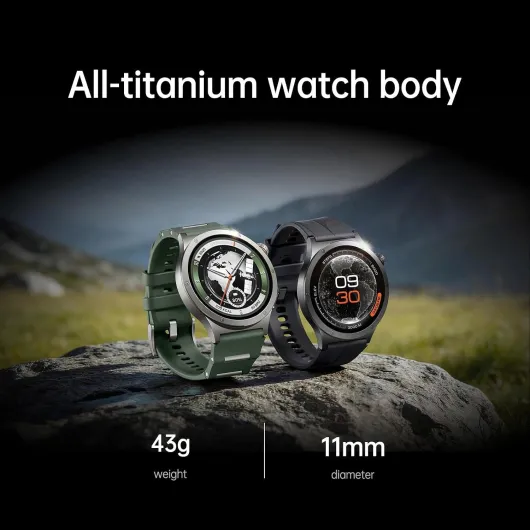
Comfort is a bit of a mixed bag. On one hand, at around 43 g and only 11 mm thick, the OnePlus Watch 4 is relatively light for a big 47 mm watch. Once you get used to the footprint, the weight itself is not a big issue. I could wear it all day without my wrist feeling tired. During workouts, it stayed in place and didn’t bounce around too much, which is good for heart rate accuracy and just general comfort.
On the other hand, the size and shape are still very noticeable. When you sleep with it, you’re aware it’s there, especially if you’re someone who moves a lot at night or sleeps with your hand under your head. I managed to sleep with it on most nights, but it did occasionally get caught on the pillow or sheet. Compared to smaller watches like a Galaxy Watch in a smaller size or a Fitbit, it’s definitely more intrusive. If sleep tracking is your main thing and you hate feeling anything on your wrist, this might annoy you.
The strap is where comfort can really vary. For me, it was fine but not great. After a full sweaty day, the silicone felt a bit sticky, and I sometimes got a light red mark under the buckle. One Amazon reviewer mentioned that the strap flared up their eczema and they even got a dry spot where the sensor sits. I didn’t have it that bad, but I can see how that could happen if your skin is reactive. The watch also needs to be snug for accurate tracking, which doesn’t help if your skin doesn’t like silicone.
Once I swapped the strap for a softer third-party band, comfort improved a lot, especially for sleep. So my take: the watch itself is surprisingly comfortable for its size, but it’s still a big device, and the stock strap is just average. If you have sensitive skin or tiny wrists, don’t expect miracles. Plan to try a couple of different bands until you find something that works for you.
Titanium body is nice, strap is just okay
The materials are one of the selling points here. The watch uses an all-titanium alloy body, which helps keep it lighter than you’d expect for the size. Compared to stainless steel watches I’ve had, this feels a bit lighter on the wrist without feeling hollow. After a few weeks, I don’t see any major scratches or dings on the case, even though I’ve knocked it on door frames and weights at the gym a couple of times. One of the Amazon reviews said they had to get really close to see a scratch after a hit, and I’d say that lines up with my experience too.
The screen uses an OLED panel with a protective glass that seems reasonably tough. I still wouldn’t trust it naked long term if you’re clumsy, but for normal use it holds up. I personally didn’t put a screen protector on it for the first weeks, and it survived just fine. If you’re picky about micro-scratches, you might want one, but for most users I think it’s acceptable out of the box.
Where things are more average is the stock strap. It’s not terrible, but it’s nothing special. It’s a basic silicone band that’s fine for workouts and daily wear, but it doesn’t feel particularly premium. Also, like one reviewer mentioned, if you have sensitive skin or eczema, this kind of strap can be irritating. I didn’t get a rash, but I did notice some itchiness during hot days when sweating. The good news is you can swap it easily for a third-party 22 mm strap, and that’s what I’d recommend if you’re planning to wear it 24/7.
Overall, the materials are solid where it matters: the titanium case feels durable and light, the glass isn’t super fragile, and the watch gives a decent sense of quality when you pick it up. Just don’t expect miracles from the included strap, and budget for a better band if you’re picky about comfort or style.
Durability and water resistance: feels built to take a beating
Durability-wise, the OnePlus Watch 4 holds up pretty well. The titanium body plus the MIL‑STD‑810H rating isn’t just marketing fluff; the watch feels solid and has handled everyday abuse fine for me. I’ve knocked it on metal gym equipment, door handles, and kitchen counters more times than I’d like to admit, and so far there are only tiny marks that you really have to look for. This matches what some Amazon reviewers reported: small knocks don’t instantly ruin the look.
The 5ATM + IP68 rating means it’s fine for swimming and showers. I used it in the shower and a couple of quick dips in a pool with zero issues. One reviewer said they used it in the bath with no problem, which sounds about right. I wouldn’t go deep-sea diving with it, but for normal life – rain, sweat, pool, beach – it’s clearly built for that. The buttons still feel clicky after exposure to water and sweat; no mushiness so far.
The strap, again, is the weaker part. Over time, cheaper silicone can crack or attract dust and lint, and this one feels like it might go that way eventually. Mine hasn’t failed yet, but based on the feel, I don’t expect it to last as long as the watch body itself. Luckily, replacement straps are cheap and easy to swap, so this is not a big disaster, just something to keep in mind.
In short, the core hardware feels tough and reliable. If you’re someone who bangs their watch around a lot, this is a decent choice. You’ll probably want to either add a screen protector or just accept a few micro-scratches over time, but there’s nothing here that screams “fragile.” For the price point, durability is more than acceptable.
Performance and smart features: finally a smooth Wear OS experience
In terms of raw performance, the OnePlus Watch 4 is one of the smoother Wear OS watches I’ve used. The combo of Snapdragon W5 and the co-processor seems to do its job. Swiping through tiles, opening notifications, and launching common apps (Google Wallet, Maps, Spotify) felt quick enough that I didn’t think about it. I never hit the “why is this so slow?” frustration I had with older Wear OS models like my old TicWatch.
Notifications are handled well: you can read full messages, reply with voice, quick replies, or the tiny keyboard. Voice dictation works decently as long as you’re not in a very noisy place. Calls from the wrist are okay for quick chats; the speaker is not amazing, but people could hear me, and I could hear them fine indoors. Outside in traffic, it’s more hit and miss, but that’s pretty standard.
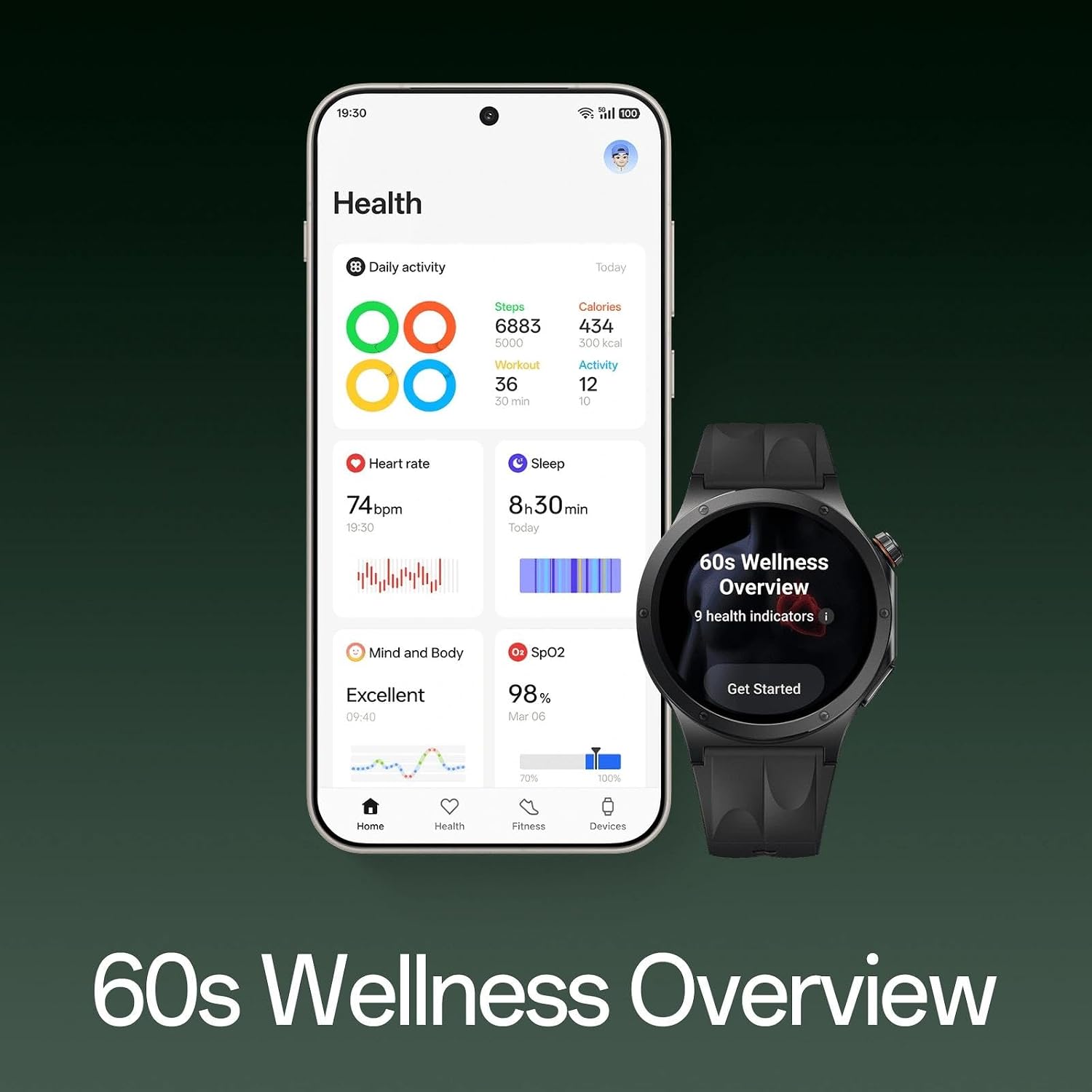
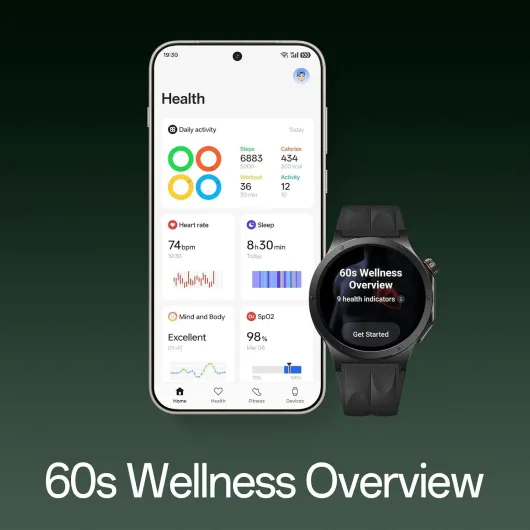
The fitness tracking is fairly complete. It auto-detects basic activities like walking and running, which actually worked for me most of the time. GPS tracking for runs and walks was accurate enough compared to my phone. The extra metrics (aerobic training effect, recovery time, etc.) are nice to look at, but like on most consumer watches, you have to take them as rough guidelines, not medical data. The 60s Wellness Overview is a cool idea: in one minute, it checks heart rate, SpO2, stress, and a few other indicators. In practice, I used it the first week a lot, then only occasionally when I was curious. It’s more of a geeky toy than a daily essential, but it does work.
Where performance is slightly weaker is in software support and polish from OnePlus. Compared to Samsung or Google, you don’t feel the same tight ecosystem. Updates are less frequent, and some small bugs stick around longer. It’s not a disaster, but if you’re used to the Pixel Watch getting regular improvements, this will feel a bit slower on that front. Still, for day-to-day use, the watch is fast, reliable enough, and feature-rich, which is what most people care about.
What you actually get with the OnePlus Watch 4
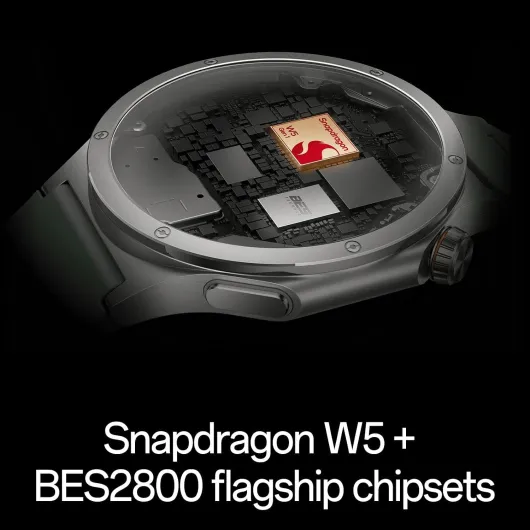
On paper, the OnePlus Watch 4 ticks a lot of boxes. You get a 47 mm round LTPO OLED display, an all-titanium body that keeps the weight around 43 g, and it runs Wear OS 6. It’s rated 5ATM + IP68 and has MIL‑STD‑810H durability, so it’s fine for showers, swimming, and general abuse. Under the hood, there’s a dual-engine setup: Snapdragon W5 plus a BES2800 chip, basically to juggle smart functions and low-power tasks for better battery life.
Function-wise, it’s a full smartwatch: Bluetooth, GPS, NFC (Google Wallet works), microphone, speaker, and the usual sensors for heart rate, blood oxygen, sleep, stress, etc. It supports 100+ sport modes and does some more advanced fitness metrics: aerobic training effect, VO2-like cardiopulmonary capacity, recovery time, heart rate recovery. You also get that 60s Wellness Overview that tries to give you a health snapshot in one minute. The watch syncs with the OHealth app, and you can also hook into Google Fit if you prefer that ecosystem.
In daily life, this means you can: take calls from your wrist, pay in shops, start workouts with GPS, track your sleep, check notifications, and install regular Wear OS apps from the Play Store (Spotify, Strava, Google Maps, etc.). Nothing here is revolutionary; it’s more about how reliably it all works together. The good news: UI speed and smoothness are solid. I didn’t get that “cheap Wear OS” feeling where every swipe lags half a second. Apps open at a normal speed, and scrolling through tiles is fluid.
Where it’s a bit weaker is in software polish and updates. Compared to Samsung or Google Pixel Watch, you can feel that OnePlus is still catching up. Some settings are buried in odd menus, translations are sometimes a bit off, and you don’t get the same sense of long-term software roadmap. It’s not broken, it just feels one step behind the big brands. If you’re the kind of person who wants monthly feature drops and super tight integration, that might bother you. If you mainly want a watch that covers the basics and doesn’t choke, it’s fine.
Pros
- Battery life of around 3–4 days in real use, better than many Wear OS competitors
- Light titanium body with solid durability and good overall build quality
- Smooth Wear OS performance with Google Wallet, Maps, notifications, and plenty of sport/health features
Cons
- Large and chunky 47 mm size not ideal for small wrists or people who want a discreet watch
- Software support and polish from OnePlus are behind Samsung and Google
- Stock silicone strap is average and can be uncomfortable or irritating for sensitive skin
Conclusion
Editor's rating
The OnePlus Watch 4 is a big, capable Wear OS smartwatch that finally fixes one of the main problems of this platform: terrible battery life. It doesn’t reach the marketing 16 days unless you heavily limit features, but going 3–4 days between charges in normal use is already a big step up from a lot of competitors. Add a bright OLED screen, a titanium body, full Google services (Wallet, Maps, Assistant/Gemini), and more fitness metrics than most people will ever use, and you get a watch that covers pretty much everything you’d expect in 2026.
It’s not flawless. The size will be too much for small wrists or people who want something discreet. The stock strap is average and may irritate sensitive skin, so plan to replace it. Software support and overall polish are a bit behind Samsung and Google, and some of the advanced health stats feel more like nice graphs than truly actionable data. But in daily life, it’s fast, reliable enough, and doesn’t need to live on its charger, which is what matters for most users.
If you’re on Android, want proper apps and NFC payments, and are tired of watches that die every evening, the OnePlus Watch 4 is a good fit, especially if you don’t mind a chunky watch and are okay with OnePlus’s slightly weaker software ecosystem. If you have very small wrists, super sensitive skin, or you care more about tight brand integration and long-term updates than battery life, you might be better off with a Samsung Galaxy Watch or a Pixel Watch instead.