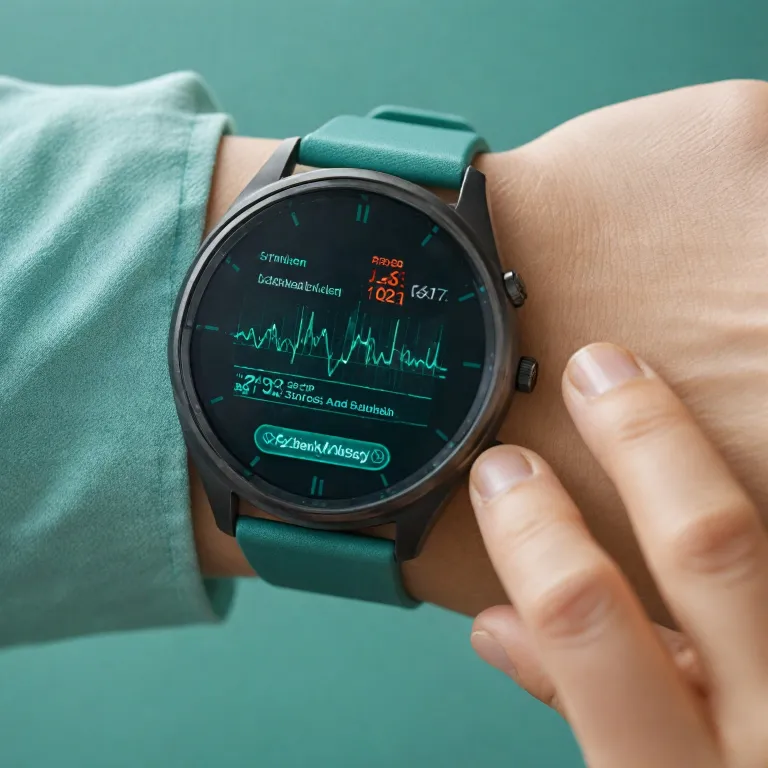
Rmssd meaning in everyday smartwatch use
Understanding rmssd meaning starts with the broader concept of hrv. Heart rate variability reflects how much the time between each heart beat changes, and this subtle variability carries rich information about your health. In a smartwatch, the device tracks these intervals between beats to estimate how your nervous system is coping with daily demands.
Among all hrv metrics, the rmssd value focuses on very short term changes. It looks at the root square of the mean of the square successive differences between adjacent heart beats, which sounds complex but serves a clear purpose. This specific measure is strongly linked to the parasympathetic nervous system, the branch that calms the body after stress.
When your smartwatch reports rmssd, it is translating raw intervals into a practical health indicator. Higher rmssd values usually suggest better parasympathetic activity and stronger recovery capacity, while persistently low values may signal accumulated stress. In this context, rmssd meaning becomes a window into how your body balances effort, rest, and emotional load.
Modern wearable devices use optical sensors to track heart rate and then compute rate variability over time. They transform these successive differences into an hrv score that you can follow across days and weeks. By learning how rmssd, sdnn, and other hrv measurements behave, you gain a more nuanced view of your body than with heart rate alone.
Because rmssd is a time domain metric, it is less affected by breathing patterns than some frequency domain measures. This makes it particularly suitable for sleep tracking and quiet resting measurements. For smartwatch users, that stability helps turn complex physiology into reliable daily health feedback.
How rmssd compares with sdnn and other hrv metrics
To grasp full rmssd meaning, it helps to compare it with sdnn. While rmssd focuses on short term changes between successive beats, sdnn reflects the standard deviation of all normal to normal intervals over a longer window. In practice, sdnn captures both low frequency and high frequency influences on heart rate variability, including circadian rhythms and overall autonomic nervous balance.
Smartwatch apps often present an overall hrv score without explaining which metrics they use. Some rely mainly on rmssd, others blend rmssd sdnn and additional frequency domain indicators. When you read these health metrics, remember that rmssd is more sensitive to rapid parasympathetic nervous responses, whereas sdnn integrates broader time scales.
In the context of stress, rmssd tends to drop quickly when the autonomic nervous system shifts toward fight or flight. Sdnn may also decrease, but the change can be slower because it averages variability over longer time. This is why many wearable devices use rmssd based calculations to measure hrv during short rest tests or guided breathing sessions.
During sleep, both rmssd and sdnn provide valuable information about recovery. Higher night time rmssd values usually indicate stronger vagus nerve activity and better restorative processes. However, sdnn still matters, because it reflects how your body maintained variability across the entire sleep period, not just in isolated moments.
When choosing a smartwatch, it is worth checking how transparently the brand explains its hrv measurements. Some models aimed at enthusiasts detail rmssd, sdnn, and frequency domain components, while others hide them behind simple readiness scores. For readers comparing design and function, this guide to a distinctive black band white watch for advanced tracking shows how style and deep metrics can coexist.
Physiology behind rmssd, the vagus nerve, and the autonomic nervous system
At its core, rmssd meaning is inseparable from the autonomic nervous system. This system regulates heart rate, blood pressure, digestion, and many unconscious functions that keep the body in balance. It has two main branches, the sympathetic system that accelerates the heart and the parasympathetic system that slows it down.
The parasympathetic nervous branch acts largely through the vagus nerve, which connects the brain to the heart and other organs. When vagal activity is strong, heart rate variability increases, and rmssd values tend to rise. When stress, lack of sleep, or illness dampen this activity, variability falls and rmssd becomes low for extended periods.
Because rmssd focuses on short term successive differences, it is particularly sensitive to rapid vagal adjustments. Each tiny change in the time between beats reflects how the nervous system is fine tuning the heart from one moment to the next. This is why researchers often use rmssd to measure hrv in controlled breathing or meditation studies.
Age also influences rmssd and other hrv metrics, with younger people usually showing higher variability. As the body and nervous system mature and then age, both sdnn and rmssd values often decline gradually. However, lifestyle, fitness, and sleep quality can significantly modify this trajectory, so age is only one part of the picture.
For smartwatch buyers comparing advanced models, understanding rmssd meaning can guide feature choices. Devices that provide detailed time domain and frequency domain data allow more precise tracking of autonomic nervous balance. If you are evaluating performance oriented options, this analysis of which smartwatch fits your needs for training and recovery illustrates how hrv metrics support long term planning.
Rmssd during sleep, stress, and daily life
In real life, rmssd meaning becomes clearest when you observe it across different contexts. During deep sleep, heart rate slows, parasympathetic nervous activity rises, and rmssd values often peak. This night time increase in rate variability signals that the body is repairing tissues, consolidating memories, and restoring energy.
By contrast, during acute stress, the autonomic nervous system shifts toward sympathetic dominance. Heart rate climbs, variability shrinks, and both rmssd and sdnn can drop, especially in the short term. If your wearable shows consistently low rmssd during the day and limited rebound at night, it may indicate that stress is outpacing recovery.
Many smartwatch platforms now use rmssd based hrv measurements to generate daily readiness or stress metrics. These scores combine time domain and sometimes frequency domain data, including low frequency and high frequency components. They aim to translate complex nervous system signals into simple guidance about training load, rest, and workload.
However, rmssd meaning should never be interpreted in isolation from context. A single low reading after intense exercise or poor sleep is less concerning than a persistent downward trend. Tracking patterns over time, and relating them to your behaviour, gives a more trustworthy view of health hrv and overall resilience.
Because smartwatches are always on your wrist, they can measure hrv repeatedly without disrupting your routine. This continuous stream of intervals and successive differences allows more accurate assessment than occasional clinic visits. For users who care about both data and aesthetics, a dedicated article on choosing the right watch box for your Apple Watch shows how to protect the device that quietly tracks your nervous system every day.
Interpreting rmssd values in smartwatch apps
When you open a smartwatch app and see an rmssd number, context is essential. Absolute values vary widely between individuals, so rmssd meaning lies mainly in personal trends. A stable or gently rising pattern over weeks usually reflects improving rate variability and better autonomic nervous balance.
Many platforms convert rmssd and related metrics into an overall hrv score. This score may blend time domain measures like rmssd and sdnn with frequency domain indicators such as low frequency and high frequency power. While the exact algorithms are often proprietary, the underlying goal is to measure hrv in a way that correlates with perceived energy, stress, and recovery.
Users should pay attention to how sleep, alcohol, illness, and training load affect their rmssd values. A sharp short term drop after a late night or intense workout is common and usually temporary. More concerning is a pattern where rmssd remains low despite adequate rest, which may warrant medical advice, especially if accompanied by other symptoms.
It is also important to consider measurement conditions, because posture, breathing, and movement can influence intervals. For the most reliable hrv measurements, many experts recommend checking rmssd at the same time each day, ideally during quiet rest. Night time averages during stable sleep stages can also provide robust indicators of parasympathetic nervous activity.
Smartwatch users should remember that rmssd, sdnn, and other metrics are not diagnostic tools on their own. They are early warning signals that the body and nervous system may be under strain. Used thoughtfully, these metrics encourage healthier routines rather than replacing professional medical evaluation.
Limitations, best practices, and future directions for rmssd in wearables
Despite its strengths, rmssd meaning in smartwatch data comes with limitations. Optical sensors can misread heart rate during vigorous movement, which distorts intervals and reduces the accuracy of rate variability estimates. For this reason, many devices calculate rmssd primarily during rest or sleep, when motion artefacts are minimal.
Another limitation is that consumer wearables rarely provide full access to raw intervals or detailed frequency domain analysis. Users often see simplified hrv metrics without clear explanations of how rmssd, sdnn, and other components are combined. This opacity can make it harder to understand why a particular hrv score changed from one day to the next.
Best practice involves focusing on long term trends rather than isolated readings. By correlating rmssd values with sleep duration, perceived stress, and training logs, you can build a personal map of how your nervous system responds. Over time, this map helps you adjust workload, rest, and lifestyle choices to support more stable health hrv patterns.
Future smartwatch generations are likely to refine how they measure hrv and interpret rmssd. Improvements in sensors, algorithms, and on device processing should reduce noise and enhance the reliability of short term and long term variability estimates. As transparency improves, users may gain clearer access to time domain and frequency domain data, including low frequency and high frequency components.
For now, the most effective approach is to treat rmssd as one valuable signal among many. Combined with heart rate, sleep quality, activity levels, and subjective wellbeing, it enriches your understanding of how the body and autonomic nervous system adapt. Used with care, rmssd meaning becomes a practical guide to balancing effort, rest, and sustainable health.
Key statistics about rmssd and heart rate variability
- Average resting heart rate variability tends to be higher in younger adults and gradually declines with age, affecting both rmssd and sdnn values.
- Short term hrv measurements based on rmssd are strongly influenced by parasympathetic nervous activity, especially during deep sleep and quiet rest.
- Studies show that chronic stress, poor sleep, and overtraining can significantly reduce rmssd, leading to persistently low hrv scores in wearable data.
- Frequency domain analysis often reveals that high frequency power correlates closely with rmssd, while low frequency power reflects a mix of sympathetic and parasympathetic influences.
- Regular endurance training and consistent sleep routines are associated with higher time domain and frequency domain hrv metrics, including improved rmssd trends.
Common questions about rmssd meaning in smartwatches
What does rmssd actually measure in my smartwatch readings ?
Rmssd measures the root square of the mean of the square successive differences between normal heart beats. In simpler terms, it quantifies how much the time between each beat changes from one moment to the next. This makes rmssd a sensitive indicator of short term parasympathetic nervous activity and overall heart rate variability.
Why is my rmssd sometimes low even when my heart rate looks normal ?
A normal heart rate can coexist with low rmssd because they reflect different aspects of physiology. Heart rate shows how fast the heart is beating, while rmssd reveals how flexible the intervals between beats are. Stress, poor sleep, dehydration, or recent intense exercise can reduce variability and lower rmssd without dramatically changing average rate.
How often should I measure hrv and rmssd with my wearable device ?
For meaningful trends, it is helpful to measure hrv at consistent times, such as once each morning during quiet rest. Many smartwatches also calculate nightly rmssd and other hrv metrics automatically during sleep. Combining these regular measurements provides a clearer picture of how your nervous system and body respond to daily demands.
Can improving my lifestyle really change my rmssd values over time ?
Yes, lifestyle changes can influence rmssd and broader heart rate variability metrics. Better sleep, regular moderate exercise, stress management, and balanced nutrition often lead to higher rmssd and more stable hrv measurements. These improvements reflect stronger parasympathetic nervous activity and a more resilient autonomic nervous system.
Should I worry if my smartwatch shows a sudden drop in rmssd one day ?
A single short term drop in rmssd is usually not a reason for alarm. Temporary factors such as a late night, alcohol, illness, or heavy training can lower variability for a day or two. Concern is more justified when rmssd remains low over many days, especially if you also feel unwell, in which case professional medical advice is appropriate.