
Summary
Editor's rating
Value for money: good fitness watch, but watch the subscription trap
Design: light, simple, and not trying too hard
Battery life: the real reason to pick this over an Apple Watch
Comfort: you forget it’s there most of the time
Performance: tracking is solid, app is clear, but not pro-level
What the Versa 4 actually offers in real life
Pros
- Comfortable and light enough for true 24/7 wear, including sleep
- Battery realistically lasts 4–6 days with mixed use and charges quickly
- Good all-round fitness and sleep tracking with built-in GPS and clear app
Cons
- Many advanced insights (like Daily Readiness Score) require a paid Fitbit Premium subscription
- Smartwatch features and app ecosystem are basic compared to Apple/Samsung
- Raise-to-wake gesture and screen visibility in bright sun can be a bit inconsistent

Specifications
View full product page →| Brand | Fitbit |
A fitness watch for people who just want things to work
I’ve been using the Fitbit Versa 4 as my daily watch for a few weeks, mainly for steps, sleep, and workouts, plus basic notifications. I’m not a hardcore triathlete, just someone who goes to the gym, runs a bit, and wants to keep an eye on health stats without babying another gadget all day. I came from an older Versa model and I’ve also used an Apple Watch, so I had a decent idea of what to expect.
Right away, the Versa 4 felt familiar: same Fitbit vibe, simple interface, not overloaded with fancy stuff. It focuses on steps, heart rate, sleep, and basic GPS workouts, and that’s pretty much what I wanted. It doesn’t try to replace your phone like some high-end smartwatches. It’s more like a fitness tracker with a bigger screen and a few smart extras like Alexa and notifications.
In daily life, the thing that stood out most for me was the battery. With always-on display turned off and a few workouts per week, I was easily getting 4–6 days between charges. Coming from an Apple Watch that needed charging almost every day, that felt very freeing. I could actually track sleep every night without planning my life around the charger.
It’s not perfect though. A lot of the more advanced stuff, like the Daily Readiness Score and some deeper health metrics, are locked behind Fitbit Premium, which is a bit annoying when you already paid for the watch. Also, the smart features are basic compared to a full smartwatch. But if you mainly care about fitness tracking, sleep, and not charging all the time, it’s a pretty solid option.
Value for money: good fitness watch, but watch the subscription trap
In terms of price vs what you get, the Versa 4 sits in a kind of middle zone. It’s cheaper than many high-end smartwatches from Apple or Samsung, but more expensive than basic fitness bands. For that price, you’re getting: a decent color screen, built-in GPS, 24/7 heart rate, pretty good sleep tracking, water resistance, notifications, calls, Alexa, and a battery that lasts several days. For an everyday user who wants a solid fitness and sleep tracker that also tells the time and shows texts, I’d say it’s good value overall.
Where it gets a bit tricky is the Fitbit Premium side. A lot of the marketing around "Daily Readiness Score" and deeper insights assumes you’re on the subscription. Without Premium, the watch still works fine and you still get core stats, but you’re not getting the "coaching" style insights that they like to promote. If you add a monthly or yearly Premium fee on top of the watch price, over a couple of years it starts to add up. For some people, that extra analysis and guided workouts might be worth it; for others, it’s just an extra cost for stuff they’ll barely use.
Compared to competitors: if you’re deep in the Apple ecosystem and want heavy app integration and smoother smart features, an Apple Watch SE might feel more polished, but you’ll charge it more often and pay a bit more. If you mostly care about serious sports tracking (running, cycling, triathlon), a Garmin or similar might give you better training features at a similar or slightly higher price. The Versa 4 sits in the middle: it does a bit of everything, but focuses on casual fitness and health rather than hardcore training or deep smart features.
So in simple terms: if you want a reliable, easy-to-use fitness and sleep watch that works with both Android and iOS, and you don’t mind that some advanced stuff is paywalled, the Versa 4 offers pretty solid value for money. If you hate subscriptions on principle or you want pro-level sport features, there are better choices for you in the same or slightly higher budget.
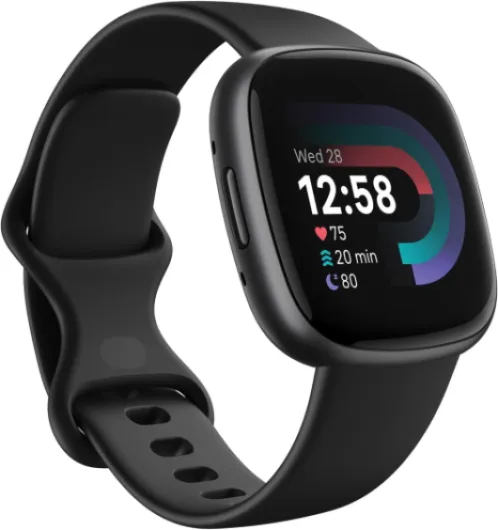
Design: light, simple, and not trying too hard
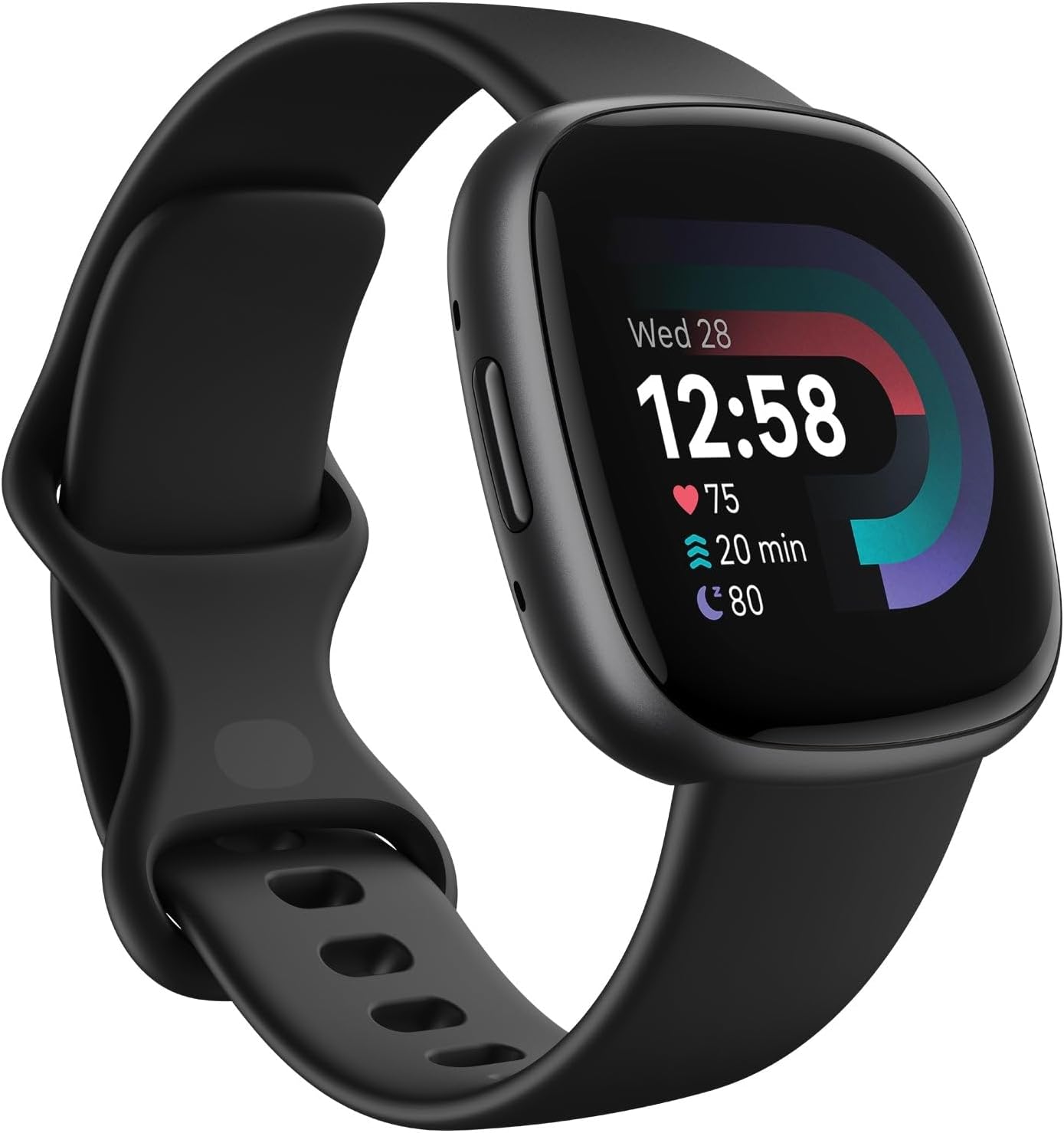
Design-wise, the Versa 4 is pretty low-key, which I liked. The Black/Graphite version just looks like a simple black smartwatch that doesn’t scream for attention. The case is slim and fairly light (around 82g with everything), so it doesn’t feel like you’ve strapped a brick to your wrist. The screen is 1.34 inches, which is big enough to read stats and notifications without squinting, but not huge or bulky like some outdoor sports watches.
The shape is more of a rounded square, similar to older Versa models and kind of Apple Watch-ish, but simpler. Bezels are still there – you don’t get a full edge-to-edge display – but for this price range it’s fine. Indoors, the screen is bright and clear, and I had no problem reading it at the gym or in the house. Outside in direct sun, you sometimes need to tilt it a bit, but it’s still usable. The raise-to-wake gesture works most of the time, though it occasionally lags or doesn’t trigger, which can be slightly annoying during workouts.
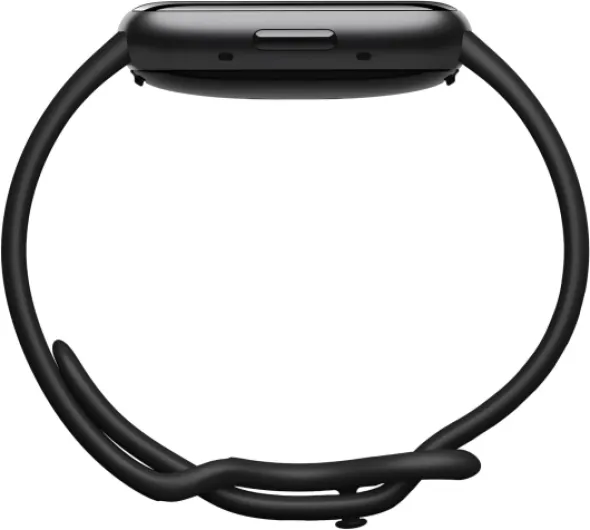
There’s a physical button on the side again, which is a good move compared to the weird touch-sensitive side on some older Fitbits. Having a real button makes it easier to start/stop workouts without looking, especially when you’re sweaty or in the rain. Menus are simple: swipe up/down/left/right, nothing fancy. It’s not the smoothest animation-wise compared to high-end smartwatches, but it doesn’t bug or freeze on me.
Overall, the design is practical rather than flashy. It fits in fine with casual clothes, gym gear, or office wear. If you want a watch that looks like a luxury piece of jewelry, this isn’t it. But if you just want something that’s light, discreet, and easy to wear all day and night, the Versa 4 does the job pretty well.
Battery life: the real reason to pick this over an Apple Watch
The battery life is honestly one of the main selling points of the Versa 4. Fitbit claims "6+ days" and in real life, it’s in that range if you don’t abuse the GPS and you keep the always-on display off. For me, with 24/7 wear, a few GPS workouts per week, notifications on, and no always-on screen, I was getting around 4–6 days per charge. That’s a huge difference compared to something like an Apple Watch that usually needs a daily or every-other-day charge.
When I pushed it harder with more GPS runs and played with the screen brightness, battery life dropped closer to 3–4 days, but still well above the 1–2 days you see on more advanced smartwatches. If you’re doing a GPS workout every single day, expect the lower end of the range. If you mostly use it as a step/sleep tracker with occasional workouts, you’ll be closer to the higher end. Either way, it’s enough that you don’t obsess about charging all the time.
Charging itself is pretty quick. From around 15–20%, I could get back to almost full in under an hour while I was showering and getting ready. That makes it practical to keep wearing it at night for sleep tracking, because you can just top it up during a short window in the day. The charger is the usual Fitbit proprietary magnetic puck. It snaps on easily enough, but of course it’s another custom cable you have to keep track of, not USB-C directly on the watch.
Overall, if you want a watch you can wear day and night without babysitting the battery, this is one of the strong points of the Versa 4. It’s not a multi-week battery monster like some basic fitness bands, but for something with a color screen, GPS, and smart features, 4–6 days of real use is pretty good. For me, this alone made it much easier to actually use all the sleep tracking and health features consistently.
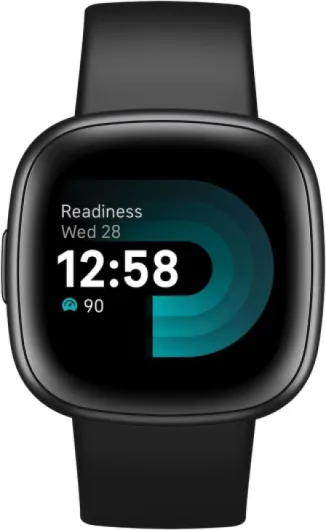
Comfort: you forget it’s there most of the time
Comfort is actually one of the things I liked most about the Versa 4. I wore it day and night, including in bed, the shower, and at the gym, and it rarely bothered me. It’s light, the case is slim, and it doesn’t dig into the wrist like some chunkier watches. I’ve had bulkier watches that I always ended up taking off at night; with this one I mostly left it on without thinking about it.
The default band is the usual Fitbit soft silicone style. It’s not fancy, but it’s soft, flexible, and doesn’t irritate the skin, even with sweat and water. I have slightly sensitive skin and I didn’t get any major redness or itching, as long as I rinsed my wrist occasionally after workouts or swimming. The strap system is their quick-release style: once you figure out the little latch, swapping bands is easy, but the first time it’s a bit fiddly.
For workouts, the watch stays in place well enough for consistent heart rate readings, as long as you wear it a bit higher on the wrist and snug but not too tight. During running and strength training, it didn’t slide around or feel like it was going to fly off. I also wore it in the pool a few times; no issues with the strap coming undone or any weird feeling underwater. Being water-resistant up to 50m means you can shower and swim without stressing about it, which is kind of essential for a watch you’re supposed to wear 24/7.
If I nitpick, the only comfort downside is that during very hot days, the silicone band can feel a bit sticky, like most rubbery straps. Swapping to a fabric or leather third-party band would probably fix that. But overall, in terms of comfort for 24/7 wear and sleep tracking, the Versa 4 is one of the easier watches I’ve worn. You genuinely forget it’s there after a while, which is exactly what you want from a health tracker.
Performance: tracking is solid, app is clear, but not pro-level
For fitness and health tracking, the Versa 4 is good enough for most everyday users. Steps were in the same ballpark as my phone and another watch I occasionally wore on the other wrist. Heart rate during steady-state cardio (like jogging or cycling) lined up fairly well with the machines at the gym. During interval training or quick changes in intensity, it lagged a bit, which is pretty normal for wrist-based optical sensors. For general zones (fat burn, cardio, peak), it’s accurate enough.
The built-in GPS is handy if you like running or walking without your phone. Lock-on time is usually under a minute, and distance/pace data has been close to what I got from my phone’s GPS and known routes. It’s not perfect to the meter, but for non-competitive runners it’s fine. You can see your route maps in the Fitbit app afterward, along with pace splits and heart rate graphs. If you’re a serious runner who obsesses over every second and meter, you’ll probably want a more advanced running watch, but for casual training this is enough.
Sleep tracking is where Fitbit still does pretty well. You get sleep stages (light, deep, REM), total time, and a sleep score. Over several nights, the watch matched pretty well with how I felt: nights where I woke up a lot or went to bed late got a lower score. It’s not a medical device, but it gives you a decent idea of whether you’re actually resting or just lying in bed scrolling. With Premium you get more analysis, but even the basic view is already useful.
In terms of speed and reliability, the watch is stable. Menus load quickly enough, I didn’t have crashes, and syncing with the app was mostly automatic when I opened it. Sometimes there’s a small delay for the latest workout to appear, but nothing dramatic. Notifications come through reliably as long as Bluetooth is behaving and your phone’s settings are right. Overall, for an everyday user who wants clear stats and doesn’t need ultra-detailed sport science, the performance is pretty solid, even if it’s not at the level of high-end sport watches.
What the Versa 4 actually offers in real life
On paper, the Fitbit Versa 4 sounds packed: built-in GPS, 24/7 heart rate, sleep tracking, 40+ workout modes, Alexa, 6+ day battery, water-resistant to 50m, works with iOS and Android. In practice, it feels more like a fitness tracker with a smartwatch skin on top. You get the essentials: steps, calories, heart rate zones, and relatively detailed sleep analysis. The watch syncs to the Fitbit app, which is still one of the clearer apps for just seeing your day and week at a glance.
The 40+ exercise modes are nice on paper, but honestly, I mostly used running, walking, weights, and cycling. The watch automatically detects some activities like walks and runs after a bit of time, which is handy if you forget to start a workout. GPS is built-in, so you don’t have to carry your phone on runs, and the distance/pace data has been close enough to my phone GPS and gym treadmills for casual training. Not perfect, but fine for non-competitive use.
On the smart side, you get notifications for calls, texts, and apps, and you can take Bluetooth calls if your phone is nearby. It’s convenient to see who’s calling or texting without pulling out your phone, but you’re not getting the deep app ecosystem of Apple or Samsung. Alexa built-in works, but I found myself using it a lot less than I thought; it’s okay for quick weather checks or setting a timer, but not life-changing.
The big caveat is Fitbit Premium. A lot of the advanced insights – like the Daily Readiness Score, more detailed sleep breakdowns, and guided workouts – are pushed through the subscription. The watch still works fine without it, you still see steps, heart rate, sleep stages, etc., but some of the "smart" interpretations are behind that paywall. For a casual user, it’s not a deal-breaker, but it’s something to keep in mind when budgeting for this watch.
Pros
- Comfortable and light enough for true 24/7 wear, including sleep
- Battery realistically lasts 4–6 days with mixed use and charges quickly
- Good all-round fitness and sleep tracking with built-in GPS and clear app
Cons
- Many advanced insights (like Daily Readiness Score) require a paid Fitbit Premium subscription
- Smartwatch features and app ecosystem are basic compared to Apple/Samsung
- Raise-to-wake gesture and screen visibility in bright sun can be a bit inconsistent
Conclusion
Editor's rating
After living with the Fitbit Versa 4, my take is simple: it’s a solid everyday fitness and sleep watch for people who don’t want to charge their wrist every night and don’t need ultra-advanced training tools. The strengths are clear: light and comfortable to wear 24/7, battery that actually lasts several days, decent built-in GPS, and one of the more straightforward apps for checking your activity and sleep. For normal users who go to the gym, run or walk a few times a week, and just want to keep an eye on their health, it gets the job done without drama.
On the downside, a chunk of the "smart" insights and some of the fancier health metrics lean heavily on Fitbit Premium, which turns into an ongoing cost if you want the full experience. And if you’re expecting a full-on smartwatch with tons of apps and deep integration like an Apple Watch or Galaxy Watch, you’ll probably find this limited. It’s more of a fitness tracker with a watch face than a mini phone on your wrist.
Who is it for? People who want simple, reliable tracking, good sleep data, and strong battery life, and who are okay with a basic but functional smart feature set. Who should skip it? Hardcore athletes who need advanced training metrics, or folks who hate subscriptions and want everything unlocked out of the box. If your expectations line up with what it actually does best, the Versa 4 is a pretty solid choice in the mid-range fitness watch space.