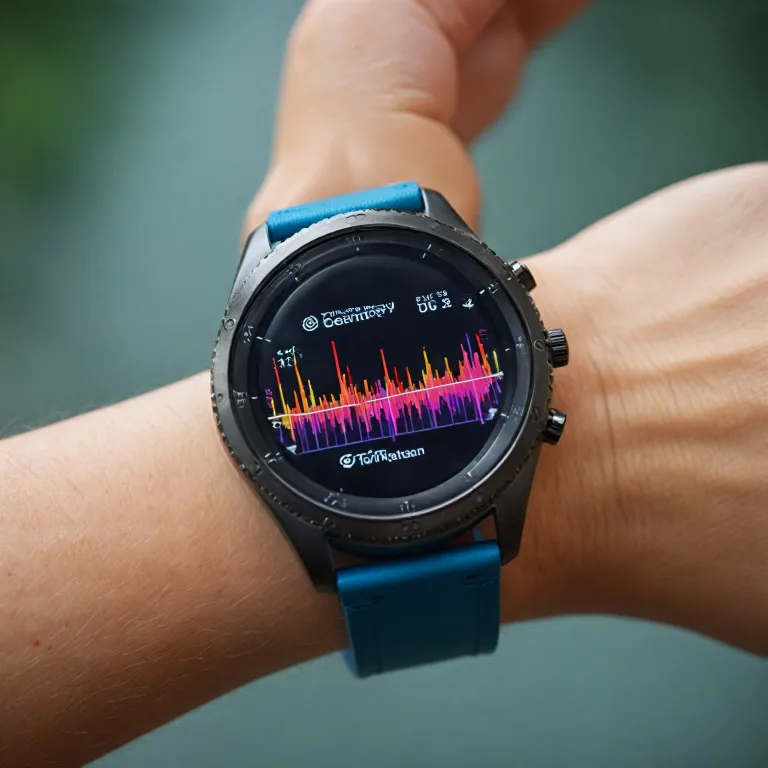

Understanding what RMSSD means in smartwatch heart rate tracking
Many smartwatch owners ask what is RMSSD when they first explore heart data. The term sits at the core of heart rate variability analysis, which modern wearables use to translate subtle beat changes into a meaningful health score. By examining these changes in time, RMSSD helps reveal how your autonomic nervous system responds to daily activity and stress.
RMSSD stands for root mean square of successive differences between beat intervals, and it belongs to the time domain family of HRV measurements. In practice, your smartwatch measures heart rate beat by beat, calculates the time between intervals, then derives RMSSD values that reflect short term parasympathetic activity. Higher RMSSD and higher rate variability usually indicate a more flexible parasympathetic system, while very low values can signal increased sympathetic activity and potential stress risk.
Unlike SDNN, which captures both long term and short term variability HRV, RMSSD focuses mainly on high frequency changes linked to the parasympathetic nervous system. This makes RMSSD SDNN comparisons useful when you want to separate overall autonomic nervous influences from rapid recovery responses. When a smartwatch uses RMSSD HRV measurements, it can generate a daily variability score that summarizes how your body handled physical activity, mental load, and resting heart patterns.
Because RMSSD is a time domain metric, it does not directly show frequency domain details such as low frequency power or high frequency power. However, in many healthy users, RMSSD correlates reasonably with high frequency components that represent parasympathetic activity in the frequency domain. For everyday smartwatch interpretation, understanding what RMSSD means helps you read heart rate variability trends without needing complex frequency power graphs.
How RMSSD reflects the balance of your autonomic nervous system
To understand what is RMSSD in a smartwatch report, you need to see how it mirrors the autonomic nervous system. This system includes the sympathetic system, which prepares the body for action, and the parasympathetic system, which supports recovery and rest. RMSSD, as a measure HRV tool, is particularly sensitive to parasympathetic activity and therefore to how efficiently you shift from stress to relaxation.
When your resting heart rate is low and your RMSSD values are relatively high for you, your smartwatch is capturing strong parasympathetic activity in the time domain. These RMSSD HRV measurements suggest that beat intervals vary smoothly from one heartbeat to the next, indicating a resilient autonomic nervous balance. In contrast, when stress rises or sleep quality drops, heart rate variability often falls, RMSSD decreases, and the resulting variability score may warn you about mounting physiological strain.
Smartwatches use continuous heart rate tracking to follow changes in beat intervals across the day and night. During deep sleep, high frequency variability HRV tends to increase, and RMSSD often climbs as the parasympathetic nervous system dominates. Many devices combine RMSSD, SDNN, and other rate variability metrics to estimate recovery, readiness, and overall health, sometimes linking to advanced features such as an Apple Watch sleep tracker for more detailed autonomic nervous insights.
Because RMSSD focuses on short term changes, it reacts quickly to acute stress, intense activity, or sudden illness. A smartwatch that can measure HRV overnight and compare RMSSD SDNN patterns over time gives you a clearer picture of long term nervous system adaptation. Understanding what RMSSD means in this context helps you interpret whether a low variability score reflects temporary sympathetic activity spikes or a more persistent health risk that deserves medical attention.
RMSSD, SDNN, and other HRV measurements in smartwatch analytics
When people ask what is RMSSD, they often encounter SDNN and other HRV measurements in the same smartwatch dashboard. Both RMSSD and SDNN are time domain metrics derived from beat intervals, but they capture different aspects of heart rate variability. RMSSD focuses on short term, high frequency changes driven mainly by parasympathetic activity, while SDNN reflects overall variability HRV across longer recordings.
In smartwatch analytics, combining RMSSD SDNN values helps distinguish rapid recovery responses from broader autonomic nervous patterns. For example, a user might show high RMSSD but moderate SDNN after a nap, indicating strong short term parasympathetic system activation without major long term shifts. Over weeks, tracking these HRV RMSSD and SDNN trends can reveal how training load, stress, and sleep affect both short term and long term heart rate variability.
Some advanced wearables also estimate frequency domain metrics such as high frequency power and low frequency power, although these are less commonly displayed than time domain values. Even when frequency domain graphs are hidden, RMSSD still serves as a practical proxy for high frequency parasympathetic activity in many smartwatch algorithms. For users monitoring fertility or early physiological changes, pairing RMSSD based variability score trends with tools like an Oura Ring body change tracker can provide additional context about subtle autonomic nervous shifts.
Because each device uses its own method to measure HRV and smooth noisy beat intervals, absolute RMSSD values can differ between brands. What matters more is how your personal RMSSD, SDNN, and heart rate variability change over time in response to activity, rest, and stress. Understanding what RMSSD means within your specific smartwatch ecosystem helps you avoid overinterpreting single scores and instead focus on meaningful long term patterns.
Interpreting RMSSD values, variability score, and health signals
Once you know what is RMSSD in theory, the next challenge is interpreting real world values from your smartwatch. Most devices translate RMSSD and other HRV measurements into a variability score, often scaled from low to high, to simplify complex autonomic nervous data. Rather than chasing a universal “good” RMSSD, you should watch how your own heart rate variability and resting heart rate evolve over weeks.
Higher RMSSD values for your baseline usually indicate stronger parasympathetic activity and better short term recovery capacity. When your smartwatch shows a sudden drop in RMSSD, combined with elevated heart rate and reduced variability HRV, it may signal mounting stress, insufficient sleep, or early illness. Over the long term, consistently low RMSSD and SDNN could point to increased cardiovascular risk, although only a clinician can interpret these patterns in the context of your overall health.
Smartwatch dashboards often highlight daily changes in RMSSD based on night time beat intervals, because sleep offers a stable window to measure HRV. During this period, high frequency components of rate variability dominate, and the parasympathetic system should guide the body into recovery. If your variability score remains low despite calm nights and light activity, it may be worth discussing these time domain findings with a healthcare professional who understands autonomic nervous metrics.
For users comparing devices, it is important to remember that each brand processes heart rate and beat intervals differently. One smartwatch might apply heavy smoothing to measure HRV, while another emphasizes raw RMSSD SDNN calculations, leading to different absolute values. Reading independent reviews of top smartwatches with heart rate monitor features can help you choose a model whose HRV RMSSD reporting style matches your need for detailed health insights.
RMSSD in daily smartwatch use for stress, activity, and recovery
In everyday life, understanding what is RMSSD helps you use smartwatch data to manage stress and activity more intelligently. When your device measures heart rate continuously, it can track beat intervals and calculate RMSSD during rest, exercise, and recovery. By comparing these time domain values across different situations, you see how your autonomic nervous system reacts to physical and emotional load.
During intense activity, heart rate rises, beat intervals shorten, and short term variability HRV usually decreases as sympathetic activity dominates. After you stop, a rapid rebound in RMSSD and other HRV measurements signals strong parasympathetic activity and efficient recovery, often reflected in an improving variability score. If RMSSD remains suppressed for many hours, despite low resting heart rate and calm conditions, your smartwatch may be flagging accumulated stress or inadequate recovery.
Some devices use RMSSD SDNN combinations to generate training readiness or stress balance indicators. These metrics rely on the relationship between long term and short term rate variability, as well as frequency domain estimates of high frequency power linked to the parasympathetic system. By watching how your RMSSD values respond to changes in sleep, nutrition, and workload, you can adjust daily decisions to support better health and lower cardiovascular risk.
It is important to remember that smartwatch sensors, while advanced, still provide indirect estimates of autonomic nervous function. Motion artifacts, irregular rhythms, and poor skin contact can all distort beat intervals and therefore measure HRV accuracy. For this reason, experts recommend focusing on consistent measurement conditions, such as similar night time windows, when using HRV RMSSD trends to guide long term lifestyle adjustments.
Limitations, risks, and best practices when using RMSSD on a smartwatch
Understanding what is RMSSD also means recognizing the limitations of smartwatch based HRV measurements. Optical sensors infer heart rate from light absorption, which can introduce noise into beat intervals and reduce time domain precision compared with clinical electrocardiograms. As a result, RMSSD, SDNN, and other variability HRV metrics from wearables should be viewed as approximations rather than diagnostic tools.
People with arrhythmias or other heart conditions may show irregular beat intervals that confuse algorithms designed to measure HRV in healthy rhythms. In such cases, RMSSD values and the resulting variability score may not accurately reflect parasympathetic activity or overall autonomic nervous balance. Relying solely on smartwatch rate variability to assess health risk could therefore delay necessary medical evaluation, especially when symptoms such as chest pain or severe fatigue appear.
To reduce these risks, use your smartwatch HRV RMSSD data as a complement to, not a replacement for, professional care. Track resting heart rate, RMSSD SDNN patterns, and frequency domain estimates over the long term, and share notable changes with a clinician who understands both time domain and frequency domain analysis. When possible, align smartwatch readings with occasional clinical tests to see how well wearable based heart rate variability corresponds to more precise measurements.
Best practice also includes measuring HRV at consistent times, ideally during night time sleep or quiet morning rest. This approach minimizes the influence of acute stress, random activity, and sympathetic activity spikes on beat intervals and high frequency variability. By respecting these constraints, you can use what RMSSD shows about your parasympathetic system to support informed, cautious decisions about training, recovery, and everyday health management.
How to make RMSSD and HRV data genuinely useful for your health
For smartwatch owners, the real value in asking what is RMSSD lies in turning abstract numbers into practical habits. Start by establishing a personal baseline for resting heart rate, RMSSD, and other HRV measurements over several quiet weeks. This baseline helps you interpret future variability score changes as meaningful signs of improved fitness, rising stress, or potential health risk.
Next, pay attention to how specific lifestyle choices influence your heart rate variability and beat intervals. Heavy late night meals, alcohol, or intense late workouts often reduce short term RMSSD and high frequency variability HRV, while regular sleep and moderate activity tend to strengthen parasympathetic activity. By correlating these time domain shifts with how your body feels, you transform RMSSD SDNN graphs into a feedback loop that supports healthier decisions.
Use your smartwatch to measure HRV at similar times each day, ideally during night time rest when the parasympathetic system should dominate. Over the long term, look for gradual upward trends in RMSSD and stable SDNN, rather than obsessing over single low values that may reflect temporary sympathetic activity. If your HRV RMSSD remains consistently depressed despite good habits, or if your resting heart rate climbs without clear cause, consult a healthcare professional to explore underlying autonomic nervous issues.
Ultimately, RMSSD is one piece of a broader health puzzle that includes activity levels, sleep quality, mental stress, and medical history. When interpreted cautiously and combined with other smartwatch metrics, RMSSD based rate variability can guide more balanced training, earlier recognition of strain, and better communication with clinicians. By respecting both the power and the limits of what RMSSD reveals, you can use your smartwatch as a supportive partner in long term cardiovascular and overall health.
Key statistics about RMSSD and heart rate variability
- Include here quantitative statistics about typical RMSSD ranges in healthy adults, noting how values vary with age, fitness level, and resting heart rate.
- Mention the proportion of smartwatch users who regularly check HRV measurements, highlighting how many rely on RMSSD based variability score indicators.
- Summarize data on the association between low heart rate variability and increased cardiovascular risk, emphasizing the role of time domain metrics such as RMSSD and SDNN.
- Indicate how often autonomic nervous system imbalances, reflected in reduced high frequency variability HRV, are linked with chronic stress and poor sleep.
Frequently asked questions about RMSSD on smartwatches
What is RMSSD in simple terms on my smartwatch?
RMSSD is a time domain measure of heart rate variability that looks at how much successive beat intervals differ from each other. On a smartwatch, higher RMSSD usually means stronger parasympathetic activity and better short term recovery capacity. It is one of the main HRV measurements used to generate an overall variability score for your health dashboard.
How is RMSSD different from SDNN in HRV reports?
RMSSD focuses on short term, high frequency changes in beat intervals that mainly reflect parasympathetic system activity. SDNN captures overall heart rate variability across a longer recording, combining both sympathetic activity and parasympathetic influences. Together, RMSSD SDNN comparisons help distinguish rapid recovery responses from broader long term autonomic nervous patterns.
What RMSSD values are considered healthy in smartwatch data?
There is no single RMSSD value that defines health for everyone, because heart rate variability depends on age, fitness, and individual physiology. Instead of chasing a universal target, track your own RMSSD, SDNN, and resting heart rate over time to establish a personal baseline. Changes relative to that baseline, especially persistent drops in HRV RMSSD, are more informative than isolated numbers.
Can I use RMSSD from my smartwatch to diagnose heart problems?
No, smartwatch RMSSD and other HRV measurements are not diagnostic tools for heart disease. Optical sensors estimate beat intervals and rate variability, but they cannot replace clinical electrocardiograms or professional evaluation. Use RMSSD based variability score trends as supportive information and consult a healthcare provider for any concerns about cardiovascular risk or autonomic nervous disorders.
How often should I check RMSSD and HRV on my smartwatch?
For most people, checking RMSSD and heart rate variability once per day, usually after night time measurements, is sufficient. This routine allows you to follow long term trends in parasympathetic activity and recovery without overreacting to short term fluctuations. More frequent checks may be useful during specific training blocks or stress periods, but consistency and context remain more important than sheer measurement frequency.
Trusted sources : American Heart Association ; European Society of Cardiology ; Heart Rhythm Society.