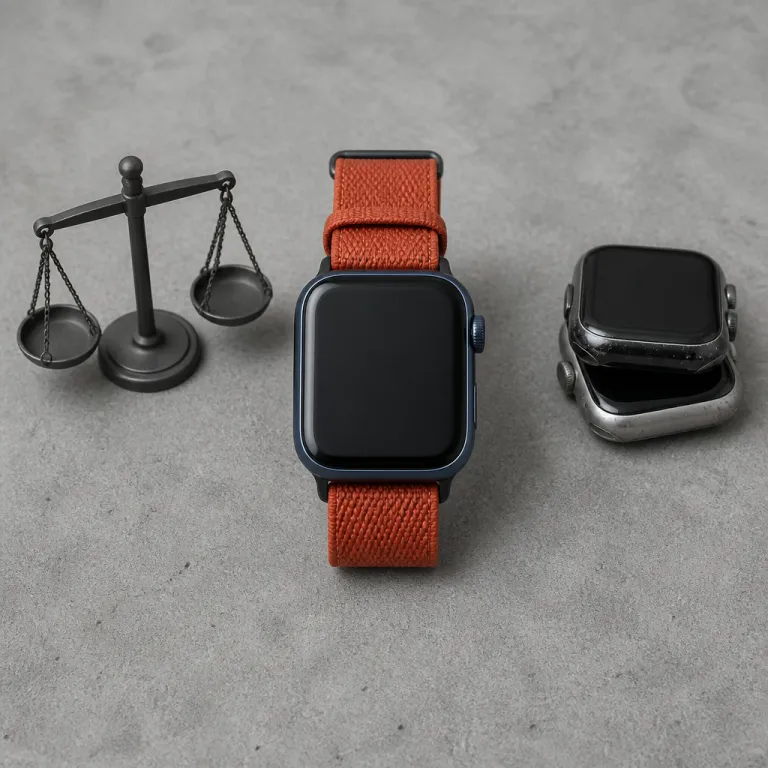
The shrinking gains of yearly smartwatch upgrades
Ask yourself bluntly : should you upgrade smartwatch every year or wait. The answer for most active runners and cyclists is no, because the performance gap between one year and the next has narrowed dramatically. A modern smartwatch now feels more like a long term training partner than a disposable phone accessory.
Look at the typical watch on an athlete’s wrist and you will see this clearly. An Apple Watch that is two years old still tracks intervals, shows pace, and handles notifications with almost the same speed as the latest series Apple model. The same pattern holds for a Samsung Galaxy Watch or a Google Pixel Watch, where software updates quietly deliver many of the headline features that marketing teams shout about during launch events.
From a hardware perspective, the big leaps have slowed down over the last few years. Apple kept the same S9 chip across multiple Apple Watch generations, so the jump from one watch series to the next often feels cosmetic rather than transformational. On the Samsung side, the biggest change came when the Samsung Galaxy Watch line adopted a more efficient chipset, but since then the year over year improvements have been mostly about polishing existing features.
Battery life tells the same story for most smartwatches used by endurance athletes. A Galaxy Watch that comfortably lasts a full training day with GPS and music will still do so after a couple of years, provided you manage charging habits and avoid constant always on display at maximum brightness. When you compare watches across several years instead of every year, the real gains in battery performance and efficiency become more obvious and more worth paying for.
Health and fitness features have also matured to the point where incremental changes feel less urgent. Sleep tracking on a mid range smartwatch from two years ago already provides reliable sleep stages, heart rate variability trends, and basic recovery guidance. Newer watch models may add a few extra graphs or a slightly sharper AMOLED screen, but the underlying training value for most people barely shifts from one year to the next.
For many buyers the real question is not should you upgrade smartwatch every year, but whether your current device still supports your training goals. If your Apple Watch or Samsung Galaxy Watch still receives software updates and security patches, it will handle structured workouts, interval alerts, and daily activity tracking just fine. In that situation, the smarter move is usually to wait at least two or three years before considering a major upgrade.
There is also the physical side of wearing a watch all day, especially for smaller wrists. A heavier watch classic design or a bulky watch ultra style case can feel exciting at first, but the weight becomes noticeable during long runs and sleep tracking sessions. Before you chase the latest watch models, it is worth reading a detailed guide on smartwatch sizing for smaller wrists to understand how case thickness, lug shape, and strap design affect comfort over the lifespan smartwatch owners actually experience.
Brands like Redmi and Google Pixel have also shifted towards longer software support windows. A Redmi smartwatch or a Pixel Watch now typically receives software updates and security patches for several years, which stretches the useful life of the hardware. That extended support makes the idea of upgrading every year feel less like a necessity and more like an expensive habit.
When you step back and look at the last five years of watch releases, a pattern emerges. The biggest jumps in features and performance usually happen every two or three generations, not every year. For most people who train regularly, skipping at least one cycle is the easiest way to save money without sacrificing meaningful performance or health insights.
Three clear reasons that genuinely justify an annual upgrade
There are still situations where upgrading a smartwatch every year is rational. The first is when a new health sensor arrives that directly affects your training or medical needs. If a new watch series adds clinically validated blood pressure monitoring or more accurate ECG readings that your doctor recommends, that can justify breaking the usual two to three year cycle.
The second legitimate trigger is a platform shift that changes how the watch behaves day to day. Moving from a basic real time operating system to Wear OS or watchOS can transform app availability, software support, and long term security patches. In that case, the question should you upgrade smartwatch every year becomes more about escaping a dead end platform than chasing marginal features.
The third reason is simple but often overlooked : physical damage that compromises reliability. If your watch ultra style device has taken one impact too many and the crown sticks during intervals, or if water resistance has clearly failed, then an immediate upgrade makes sense. No amount of software updates can fix a cracked sensor window or a corroded charging port.
For performance focused athletes, battery life can also be a tipping point. When a watch that once handled a marathon with GPS and music now struggles to finish a half marathon, a battery replacement might extend the lifespan smartwatch owners expect, but only if the manufacturer offers that service at a reasonable cost. If the price of replacing the battery approaches half the cost of a new watch, upgrading after a couple of years can be the more rational choice.
Comfort and fit are another under rated reason to change watches sooner than planned. A watch classic design that felt fine in the shop can start to cause hot spots or strap irritation during long tempo runs or overnight sleep tracking. In those cases, switching to a lighter watch pro model or a slimmer watch galaxy variant can improve both training consistency and sleep quality.
Size and ergonomics matter more than most spec sheets admit, especially for smaller wrists. Case diameter tells only part of the story, because lug to lug length and strap flexibility determine how a watch sits on the wrist bone. If your current smartwatch feels like a wobbling brick during intervals, it is worth revisiting that detailed guide on how a watch fits smaller wrists before you decide whether to upgrade now or wait another year.
Platform stability and software support also play a role in this decision. If your older Apple Watch or Samsung Galaxy Watch stops receiving software updates or security patches, that is a strong signal that the watch has reached the end of its supported life. In that scenario, upgrading sooner rather than later protects both your data and your training reliability.
Finally, there are edge cases for early adopters who test new features for a living. Coaches, sports scientists, and reviewers sometimes need the latest watch models every year to validate new metrics or compare watch series across brands. For everyone else, those same experts can act as a filter, showing which upgrades genuinely matter before you commit your own money.
How firmware updates close the gap between generations
One reason the answer to should you upgrade smartwatch every year is usually no comes down to firmware. Modern smartwatches are software first devices, and brands increasingly use software updates to deliver new features long after launch. That strategy quietly erodes the advantage of buying a new watch every year.
Garmin is the clearest example, even though this article focuses on Apple, Samsung, Google Pixel, and Redmi devices. A two year old multisport watch often gains training readiness metrics, new sport profiles, and improved GPS algorithms through firmware alone. The same philosophy is slowly appearing in the Apple Watch and Samsung Galaxy ecosystems, where watchOS and Wear OS updates bring new workout modes and safety features to older watch models.
On an Apple Watch, major watchOS releases routinely add health features, interface tweaks, and new complications to several generations at once. That means an older series Apple device can still receive improved sleep tracking, heart rate zone views, and cycling power support without any hardware change. When you see those updates arrive on your wrist, the urge to upgrade every year tends to fade quickly.
Samsung takes a similar approach with the Galaxy Watch line, especially for the watch classic and watch pro variants. Wear OS updates and Samsung Health improvements roll out across multiple watch series, so last year’s Samsung Galaxy Watch often gains many of the same training features as the newest watch galaxy model. For runners and cyclists, that translates into better interval handling, more accurate GPS smoothing, and refined recovery suggestions without buying new hardware.
Google’s Pixel Watch range leans heavily on software support as well. The latest Google Pixel Watch receives regular software updates that improve battery life, refine always on display behavior, and add new tiles for training metrics. Those same updates usually reach the previous Pixel Watch generation, which makes a strict every year upgrade cycle hard to justify unless you crave the very latest case design.
Even budget focused brands like Redmi have started to extend software support windows. A Redmi smartwatch may not receive as many flashy features as an Apple Watch, but it often gets essential security patches and stability fixes for several years. That extended support keeps the watch safe to use with your phone and preserves core training functions over time.
From a financial perspective, this software first approach changes the upgrade math. If your current smartwatch still receives security patches and performance updates, its resale value stays higher for longer, especially during the first two years. That makes it more attractive to hold the watch until a genuinely new generation arrives, then sell it privately and use the proceeds to offset a bigger upgrade rather than a small annual step.
Timing your purchase also matters more than ever, because prices fluctuate across the year. Instead of asking should you upgrade smartwatch every year, it is smarter to ask when in the product cycle you should buy, and a detailed guide on when to buy a smartwatch to save money can help you avoid paying launch premiums. By combining longer software support with smarter timing, you can stretch each watch’s life while still enjoying modern features.
The financial and practical case for skipping a generation
The strongest argument against upgrading a smartwatch every year is financial. A typical mid range or premium watch now costs between 250 and 500 dollars, which is a significant recurring expense if you replace it annually. When you spread that cost over three years instead, the price per year of use drops dramatically while the training experience barely changes.
Resale value is where the numbers get interesting for anyone who tracks their gear budget. A one year old Apple Watch or Samsung Galaxy Watch still under warranty can often be sold privately for 60 to 70 percent of its original price, especially if the battery life remains strong and the case shows minimal wear. Wait three or four years, and that same watch may be worth little more than a spare parts device, because software support and security patches will be nearing their end.
That dynamic suggests a smarter rhythm for many athletes. Instead of asking should you upgrade smartwatch every year, consider a two or three year cycle where you sell your watch while it still has strong resale value and software support. You then put that money towards a genuinely new generation that offers better battery life, more accurate sensors, or a lighter case that improves comfort during long training blocks.
Battery replacement is another lever, but it is not always the bargain it appears to be. Official battery replacement services for premium watches can cost a substantial fraction of the price of a new device, especially for models like the watch ultra or watch pro that require careful resealing to maintain water resistance. If your watch is already three or four years old, paying for a new battery may extend the lifespan smartwatch owners enjoy, but it will not restore full software support once updates stop.
There is also the rare case where patience backfires because a generational leap arrives unexpectedly. When a platform like the Pixel Watch line jumps from one major Wear OS version to another and adds significantly better battery life and new health sensors, skipping that generation can mean living with a noticeably inferior experience for several years. The same could happen if a future Apple Watch or Samsung Galaxy Watch introduces a validated blood pressure sensor that changes how you manage training and recovery.
For most people, though, those leaps are the exception rather than the rule. The safer strategy is to hold your watch until a clearly meaningful change appears, such as a new health metric you will actually use or a major improvement in GPS accuracy that affects your pacing. When that happens, upgrading once every few years feels like a deliberate choice rather than a reflex.
Throughout this decision process, remember that the best watch is the one you keep wearing. A lighter watch classic model with solid battery life and reliable sleep tracking will support your training better than a bulky flagship that spends most of its time on a charger. If you want help judging which specifications really matter for long term use, a focused guide on the smartwatch specs that predict long term wear can be more valuable than any launch keynote.
In the end, the smartest move is to treat your smartwatch like a piece of training equipment, not a fashion accessory. Evaluate each potential upgrade in terms of concrete gains in battery life, sensor accuracy, and comfort rather than the excitement of a new watch face. Over several years, that mindset will save you money, reduce e waste, and keep your focus where it belongs : on the next workout, not the next product announcement.
Key figures on smartwatch upgrades and longevity
- Market research from Counterpoint Research reported that global smartwatch shipments grew by roughly 9 percent in a recent year, but average replacement cycles stretched closer to three years, showing that most buyers do not replace their watch every year.
- Apple typically provides around five years of watchOS software support for an Apple Watch, which means a watch bought today can receive software updates and security patches for roughly twice as long as most phone contracts.
- Samsung has committed to several years of software support for recent Samsung Galaxy Watch models, including multiple generations of Wear OS updates, which reduces the need for annual upgrades purely for security reasons.
- Battery health data from various user reports suggests that many smartwatches retain around 80 percent of their original battery capacity after two to three years of daily use, which is usually sufficient for a full day of mixed training and notifications.
- Resale listings on major marketplaces often show that a one year old premium smartwatch can retain 60 to 70 percent of its original value, while three year old watches may drop below 30 percent, reinforcing the financial benefit of a two to three year upgrade rhythm.
Sources
- Counterpoint Research, global smartwatch market reports
- Apple, watchOS software support documentation
- Samsung, Galaxy Watch software update policies