
Summary
Editor's rating
Value: good for serious fitness users, less so if you just want notifications
Design: sporty, modern, and not screaming “fitness nerd”
Battery life: the main reason to buy this over a “full” smartwatch
Comfort: all‑day wear is actually realistic
Durability: holds up well to sweat, showers, and daily abuse
Performance and GPS: solid tracking with a few quirks
What you actually get with the Venu 4 bundle
Pros
- Genuinely long battery life (about a week in real use) with a bright AMOLED screen
- Strong fitness and health features: 80+ sports modes, Garmin Coach, body battery, sleep and stress tracking
- Comfortable 45 mm design that’s light enough for 24/7 wear, including sleep
Cons
- App ecosystem and Connect IQ experience feel limited and a bit clunky compared to Apple/Google
- Proprietary charging cable and no true fast charging
- More expensive than simpler trackers if you don’t fully use the training features

Specifications
View full product page →| Brand | Garmin |
A fitness watch that finally ditches daily charging
I’ve been using the Garmin Venu 4 (45 mm, Slate/Black) as my main watch for a couple of weeks, swapping it in for a Samsung Galaxy Watch and an older Apple Watch I had lying around. I bought it mainly because I was tired of charging my watch every night and wanted something that leaned more toward fitness than apps. On paper, 12 days of battery and a bright AMOLED screen sounded like marketing talk. In practice, it’s actually pretty close to reality, which surprised me.
I used it like a normal person, not an ultra runner: a couple of runs per week with GPS, daily walks, a few strength sessions, sleep tracking always on, notifications from my phone, and wrist-based heart rate 24/7. I also played with music storage and Garmin Pay just to see if they were worth using or just gimmicks. I paired it with an Android phone first, then briefly with an iPhone to see if there was a big difference.
From day one, the general feeling is that this is a fitness watch first, smartwatch second. If you’re coming from a full-blown smartwatch with a big app store, you’ll feel that trade-off right away. You don’t get dozens of third‑party apps, but you get a lot of sports profiles, health metrics, and training tools that feel more serious than what you find on most generic smartwatches. Whether that’s a good thing depends on what you actually do with your watch day to day.
Overall, the Venu 4 sits in that middle zone: more polished and lifestyle‑friendly than a hardcore Forerunner, but clearly more training‑oriented than a basic Fitbit or cheap smartwatch. It’s not perfect, and there are some annoying bits with apps and custom watch faces, but if your priority is tracking workouts and not babysitting a charger, it’s already off to a pretty solid start.
Value: good for serious fitness users, less so if you just want notifications
On the value side, the Venu 4 sits in that mid‑to‑high price range where you start comparing it with Apple Watches, Galaxy Watches, and some Forerunner models. If your main goal is fitness tracking with long battery life, I think it’s a good deal. You’re paying for solid GPS, a nice AMOLED screen, a bunch of training tools, and a battery that doesn’t force daily charging. The bundle extras (wall charger, USB‑C adapter, cloth) are nice but not a big factor; they’re just small bonuses.
If you’re more into apps, smart home control, and heavy smartwatch features, the value looks weaker. Garmin’s OS is fine for fitness, but the app ecosystem is limited and a bit clunky. Connect IQ has some useful bits, but it doesn’t compete with Apple’s or Google’s app stores. So if you mainly want Spotify control, messaging apps, banking apps, and all that on your wrist, you might feel like you’re paying a premium for features you won’t fully use.
Where it shines is for people who actually train a few times a week and want structured help: Garmin Coach, daily suggested workouts, body battery, sleep analysis, stress tracking, etc. Those features are not just random graphs; they’re actually coherent, and the battery life makes it realistic to use them 24/7. In that sense, it offers good value for money compared to buying a cheaper smartwatch that dies in two days and gives you half‑baked training tools.
There is competition from Garmin’s own lineup though. If you’re a pure runner, some Forerunner models might give you similar or better running metrics for similar money, but with a less fancy screen and more plasticky design. If you care about looks, AMOLED, and still want serious fitness features, the Venu 4 justifies its price better. So, not the cheapest option out there, but for the right user profile, it feels like money reasonably well spent rather than a flashy toy.
Design: sporty, modern, and not screaming “fitness nerd”
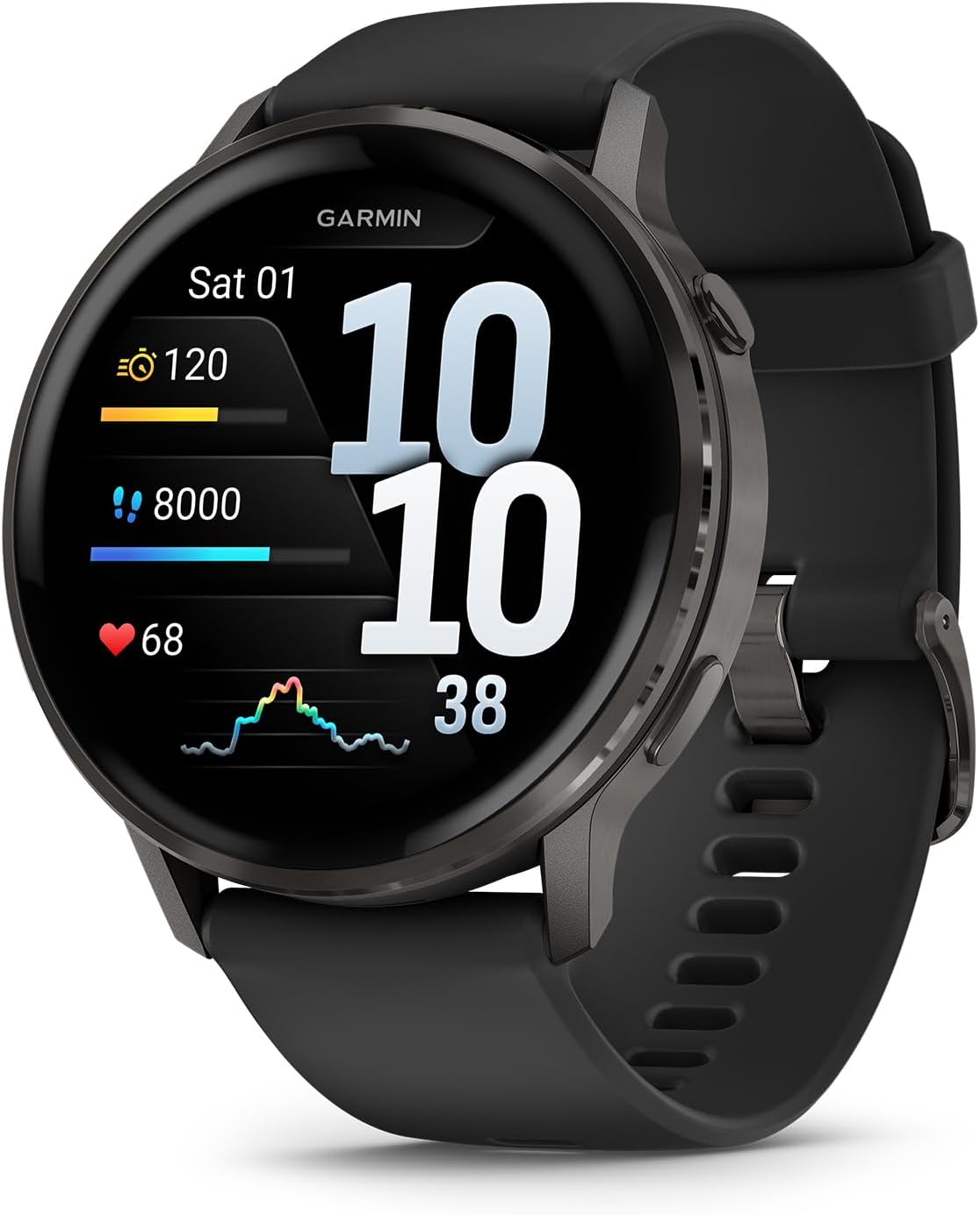
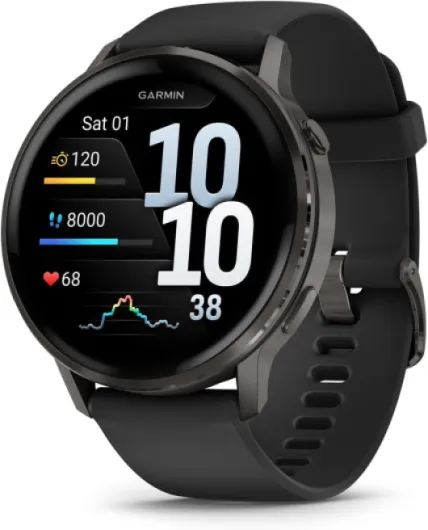
Design-wise, the Venu 4 hits a nice middle ground. The 45 mm round case with the slate metal finish looks clean and modern without going full fashion watch. It’s clearly a sports watch, but I didn’t feel weird wearing it with jeans and a shirt at work. The bezel is slim, the lugs are not too aggressive, and the black band keeps the whole thing low key. If you’re coming from something like a Fenix, this will feel much less bulky and more wearable for everyday life.
The AMOLED screen is the star here in terms of looks. Colors pop, text is sharp, and watch faces actually look good instead of washed out. I tried a few different faces from Garmin’s store. Some were a bit buggy or slow to sync, but once installed, they looked fine. The default faces are simple but practical, with clear data fields for steps, heart rate, and battery. The touch response is decent; not phone‑level smooth, but good enough that you don’t feel like you’re fighting with it.
You get two physical buttons on the right side. One acts as a main action/start button for workouts, and the other is more of a back/menu button. I like this combo: you can operate most things with touch, but during runs or sweaty workouts the buttons save you from mis‑taps. Compared to my old Galaxy Watch, the interface feels less flashy but more focused. Menus are more text‑based, less animation, which is fine by me. It’s quicker to get to what I need: start a run, check sleep, see body battery, etc.
If I had to nitpick, it’s not exactly a “dress” watch. The slate metal and black band are neutral, but the overall vibe is still sporty. If you want something that looks like a classic analog watch, this isn’t it. Also, the bezels aren’t razor thin, so if you’re obsessed with edge‑to‑edge screens, you’ll notice. For me, it’s a good compromise: good‑looking enough for daily wear, clearly built to be sweated on, and not so flashy that you’re scared to bump it on a door frame.
Battery life: the main reason to buy this over a “full” smartwatch
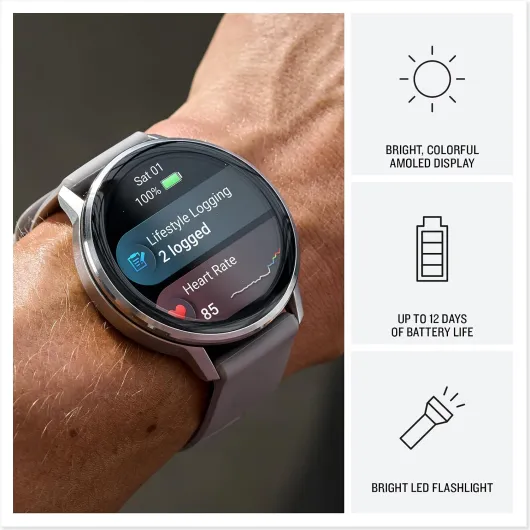
Battery life is honestly the main reason I stuck with the Venu 4. Garmin claims up to 12 days in smartwatch mode, and while I didn’t hit the full 12 with everything turned on, I consistently got around 7–9 days per charge with real‑world use. That’s with always‑on heart rate, sleep tracking every night, notifications, about 3–4 GPS workouts per week, and the screen on auto (not full always‑on). Compared to my old Galaxy Watch that barely survived two days, this felt like freedom.
When I turned on always‑on display and did more GPS sessions, battery life dropped but still stayed in the 5–6 day range, which is perfectly fine for me. If you hammer GPS every day for long runs, obviously it’ll go down more, but for a normal user mixing office life and workouts, you’re realistically charging once a week. That completely changes how you use the watch. I stopped thinking about battery anxiety and just wore it, which makes features like sleep and body battery actually useful.
Charging speed is decent. From around 10% to full took roughly an hour and a bit for me using the included wall charger and cable. It’s not blazing fast phone‑style charging, but when you only do it once a week, it’s no big deal. The cable is Garmin’s usual proprietary connector, which is a bit annoying because you can’t just grab any USB‑C cable lying around. If you lose it, you’ll need to buy another specific Garmin cable, which is a downside.
One thing I liked is how clearly the watch shows battery estimates and power use. You can see how much GPS, backlight, and sensors are affecting things, and there are battery saver modes if you’re traveling or just trying to stretch a charge. Overall, if you’re sick of nightly charging but still want an AMOLED screen and solid tracking, the Venu 4’s battery is one of its strongest points. It’s not magic, but it’s genuinely long‑lasting compared to most smartwatches I’ve tried.
Comfort: all‑day wear is actually realistic
On the comfort side, the Venu 4 is pretty easy to live with all day and night. The 45 mm size worried me a bit at first because I don’t have huge wrists, but after a couple of days I stopped noticing it. The watch sits flat enough that it doesn’t catch on sleeves too much, and it’s light enough that sleeping with it isn’t a big deal. I usually hate wearing watches at night, but I kept this one on for sleep tracking without feeling annoyed.
The included silicone band is standard Garmin stuff: soft, slightly stretchy, and with enough adjustment holes to dial in the fit. The buckle is basic but secure. During runs and strength sessions, it stayed in place and didn’t rub. I didn’t get any skin irritation, even with sweat and showering with it on. The quick‑release pins make swapping bands easy; I tried another 22 mm band I had lying around, and it clicked in without drama. That’s a nice plus if you want a more “office‑friendly” band during the week and a sportier one for training.
For heart rate accuracy, you do need to wear it a bit snug, especially during intervals or lifting. If you keep it too loose, you’ll see some weird spikes or drops. That’s normal for wrist‑based HR, but it’s worth mentioning because comfort and accuracy fight each other a bit. I found a middle ground where it was tight enough to stay put during workouts but loose enough that I forgot about it the rest of the day. After a long workday plus an evening run, I didn’t get that red imprint some heavier watches leave on your skin.
If you have very small wrists, this 45 mm version might feel a bit big and top‑heavy, and you might want to look at the smaller size. But for average to larger wrists, comfort is one of the strong points. You can actually wear it 24/7 like Garmin wants you to, which is important if you care about sleep, stress, and body battery metrics. No point in those features if the watch is annoying to keep on, and here, it gets the job done without fuss.
Durability: holds up well to sweat, showers, and daily abuse
Durability-wise, the Venu 4 has held up better than I expected for something with a shiny AMOLED screen. I wore it basically non‑stop: workouts, showers, dishwashing, and a couple of light rain runs. No water issues at all, and the water resistance seems perfectly fine for everyday life and basic swimming. I didn’t take it diving or anything extreme, but for a regular user who sweats a lot and forgets to take the watch off, it’s clearly built for that.
After a couple of weeks, the screen had no visible scratches, even though I definitely bumped it on door frames and a metal squat rack once. I don’t baby my watches, so that’s a good sign. The metal bezel has a few tiny hairline marks if you look very closely under strong light, but nothing you’d notice at a glance. The silicone band still looks new: no cracking, no weird discoloration, and no stretched holes. It’s the kind of band you can easily replace anyway, but the stock one is solid.
The buttons still click nicely with no mushiness, and the LED flashlight works like day one. I used the flashlight more than I expected, especially at night when I didn’t want to turn on room lights. It’s not super bright, but for finding a keyhole or not tripping over stuff, it’s handy. The only long‑term concern I have is the usual one: the proprietary charger port. If dust or sweat builds up there and you’re not careful, you might run into charging issues over the years, but that’s the same with most sports watches.
Compared to cheaper smartwatches I’ve tried from random brands, this feels clearly more solid and reliable. It’s not a tank like some of Garmin’s outdoor models, but for a daily fitness watch, it strikes a good balance. I’d be comfortable using it as my only watch for sports and everyday wear without worrying that it’ll fall apart in a year. Just don’t expect it to shrug off hardcore mountaineering abuse; that’s not really what it’s built for.
Performance and GPS: solid tracking with a few quirks
In terms of performance, this is where the Venu 4 feels more serious than a generic smartwatch. I used it mainly for running, walking, and some basic strength sessions. GPS lock was usually fast, around 5–10 seconds in open areas and maybe 15–20 seconds in more built‑up zones. The multi‑band GPS with SatIQ seems to help in tricky spots; routes on the map matched reality pretty closely, with only minor zig‑zags near tall buildings or trees. Compared to my phone’s GPS and an older Garmin, the tracks were clearly cleaner.
During runs, you get all the usual data: pace, distance, heart rate, plus extras like cadence, stride length, and wrist‑based running power. I’m not a data freak, but it’s nice to have. The pace felt stable enough once I warmed up; there’s always a bit of lag when you change speed quickly, but nothing crazy. Heart rate matched fairly well with a chest strap I used for a few runs, with small differences during intervals but generally in the same ballpark. For casual to intermediate runners, it’s more than enough.
The daily suggested workouts and Garmin Coach plans are actually useful if you don’t want to think too hard about your training. On days when I had no idea what to do, I just followed the suggestion, and it gave me reasonable sessions based on my recent activity and recovery. Strength training is decent: it tracks sets and reps, but sometimes miscounts if your form is weird or you’re doing unusual exercises. You can edit sessions in the app afterward if you care enough.
Outside workouts, the general performance is fine but not blazing fast. Menus open quickly enough, but you do feel that this isn’t a high‑end smartphone chip. Notifications come through reliably, and you can answer calls and read texts on the wrist, which is handy. The only performance annoyance I had was with Connect IQ watch faces and apps: syncing and installing can be slow, and sometimes it feels a bit buggy. Once set up, it’s okay, but the first day of tweaking stuff took longer than I liked. Overall though, as a sports tracker, it’s pretty solid and does what I expect without weird surprises.
What you actually get with the Venu 4 bundle
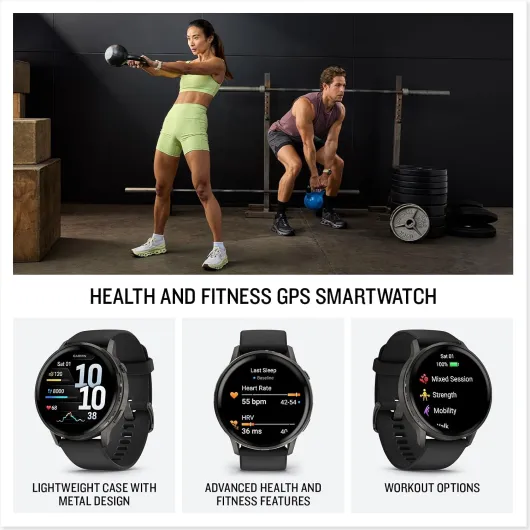
The version I tried is the Venu 4 45 mm Slate/Black fitness bundle. In the box, you get the watch with a black silicone band already attached, the charging cable, plus a wall charger, a USB‑C adapter, and a microfiber cloth. Nothing fancy, but it covers what you need. The watch itself weighs about 0.49 pounds according to the specs, but on the wrist it feels lighter than that number suggests. It’s closer to a regular sports watch than a heavy metal smartwatch.
The screen is a 1.4‑inch AMOLED panel, and that’s one of the strong points. It’s sharp, bright, and readable outdoors, even during sunny runs. You can keep it in always‑on mode or let it wake on wrist raise. I kept always‑on for a while, and it still held up well on battery. The case size is 45 mm, which on my medium wrist looks sporty but not ridiculous. If you have tiny wrists, it might feel a bit big; if you’re used to chunky watches, it will feel normal.
Feature-wise, Garmin packed in 80+ sports profiles, multi‑band GPS with SatIQ, Garmin Pay, music storage (about 8 GB), a built‑in LED flashlight, and all the usual sensors: heart rate, sleep, stress, steps, calories, etc. It runs Garmin’s own OS, so you don’t get the big app stores like Google Play or Apple’s App Store. You do get Garmin Connect IQ for extra watch faces and some simple apps, but it’s more limited and, honestly, a bit clunky to use at first.
In daily use, the overall package feels like a watch built around people who actually train: runners, cyclists, gym users, hikers. You have guided workouts, Garmin Coach plans, daily suggested workouts, and a bunch of metrics like cadence, stride length, and wrist-based running power. If you just want a notification machine for your wrist, this might feel like overkill. But if you care about structured training and tracking your progress without living in spreadsheets, the feature set makes sense.
Pros
- Genuinely long battery life (about a week in real use) with a bright AMOLED screen
- Strong fitness and health features: 80+ sports modes, Garmin Coach, body battery, sleep and stress tracking
- Comfortable 45 mm design that’s light enough for 24/7 wear, including sleep
Cons
- App ecosystem and Connect IQ experience feel limited and a bit clunky compared to Apple/Google
- Proprietary charging cable and no true fast charging
- More expensive than simpler trackers if you don’t fully use the training features
Conclusion
Editor's rating
Overall, the Garmin Venu 4 is a fitness‑focused smartwatch that actually works well as a daily watch. It nails the basics that matter to me: reliable GPS, solid heart rate tracking, good training tools, and, most importantly, battery life that doesn’t force you onto a nightly charging routine. The AMOLED screen looks good, the 45 mm case is comfortable for all‑day and night wear, and the watch doesn’t scream “hardcore sports nerd” when you’re just at the office or out with friends.
It’s not perfect. The app ecosystem is limited, and setting up Garmin Connect and Connect IQ the first day is a bit of a pain. Custom watch faces can be finicky, and if you’re coming from an Apple Watch or full Wear OS device, you’ll feel the downgrade on pure “smart” features. If you mostly care about apps, phone integration, and fancy watch faces, there are better choices for the same or less money.
I’d say this watch is for people who actually exercise regularly and want structure: runners, gym goers, cyclists, walkers who track every session, and anyone who cares about sleep and recovery metrics. If you want a watch that helps you move more, tracks your health decently, and doesn’t die every two days, it’s a strong option. If you just want notifications on your wrist and don’t really use training tools, you can probably save money with a simpler smartwatch or fitness band.