
Summary
Editor's rating
Value for money: strong hardware, but not the cleanest ecosystem
Chunky, sporty design with a clever dual display
Battery life: finally a Wear OS watch that doesn’t live on the charger
Comfort: fine for sports, borderline bulky for small wrists
Durability and water resistance: built to take a bit of abuse
Performance and health tracking: fast watch, decent but not perfect metrics
What you actually get with the Ticwatch Pro 5
Pros
- Very good battery life for a full Wear OS watch (around 2–3 days in real use)
- Fast and smooth performance thanks to Snapdragon W5+ and 2 GB RAM
- Dual display is practical, with useful low-power mode and heart-rate-based backlight colors
Cons
- Bulky design that can feel big and awkward on smaller wrists
- Mobvoi health app and ecosystem are less polished than some competitors
- Android-only compatibility limits long-term flexibility if you change phones

Specifications
View full product page →| Brand | Ticwatch |
Big, powerful Android watch that actually lasts more than a day
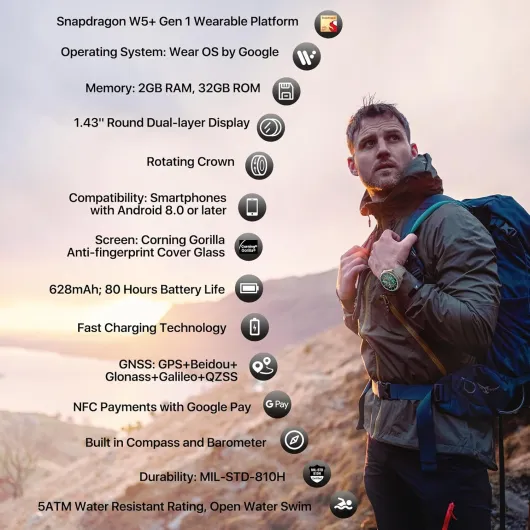
I’ve been using the Ticwatch Pro 5 as my main Android smartwatch for a few weeks, paired with a Pixel 7. I came from a Galaxy Watch 4 Classic, so I already knew what Wear OS could do, and I mainly wanted two things: better battery life and something a bit more rugged for workouts and hiking. On paper, the Ticwatch Pro 5 ticks all the boxes: Snapdragon W5+ chip, 80-hour battery claim, dual display, loads of sensors, and proper 5ATM water resistance.
In daily use, the first thing that stood out is the battery. Compared to my old Galaxy Watch that needed charging every night, this one easily gives me two full days with everything on, and close to three if I tone down some notifications and the always-on stuff. I didn’t reach the full 80 hours with heavy use, but it’s clearly better than most Wear OS watches I’ve tried.
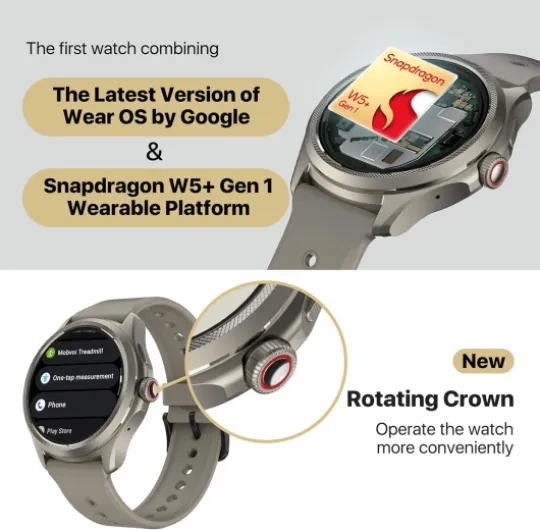
The second big point is performance. The watch is fast. Menus scroll smoothly, apps open quickly, and Google Maps and Spotify don’t feel sluggish like on older Wear OS devices. The rotating crown helps a lot to move through tiles without constantly swiping, especially when I’m running or wearing gloves. It’s not perfect, there are still some tiny lags here and there, but overall the experience is pretty solid.
That said, it’s not all good. The watch is on the chunky side, Wear OS still has its quirks, and Mobvoi’s own apps (TicHealth, TicExercise, etc.) are okay but not brilliant. Some health features feel more like nice extras than things I’ll seriously rely on. So overall: a powerful watch with real strengths, but not the magic solution for everyone.
Value for money: strong hardware, but not the cleanest ecosystem
In terms of price, the Ticwatch Pro 5 usually sits in the same range as high-end Android watches from Samsung, sometimes a bit cheaper depending on discounts. For that money, you get a fast chipset, big battery, dual display, 32 GB storage, and a full set of sensors. From a pure hardware perspective, it’s pretty solid value. The watch feels capable and doesn’t feel outdated a year later, which is important at this price point.
Where the value is less clear is the software and ecosystem side. Wear OS itself is fine now, with access to Google services and a decent app selection. The weaker link is Mobvoi’s own apps. The health and fitness dashboards are usable but less polished than what Samsung, Garmin, or Fitbit offer. Some screens feel cluttered, translations are a bit off in places, and syncing can be a bit slow sometimes. Nothing catastrophic, but for a watch at this price, you expect a smoother overall experience.
Also, this watch is Android-only. If you ever switch to iPhone, it instantly becomes useless as a smartwatch, which hurts the long-term value if you like to change phones. On Android, it’s flexible and works well, but you need to be okay with being locked out of iOS. Compared to a Galaxy Watch, you also lose some of the tighter integration with Samsung phones (like advanced call features or some health extras), but you gain better battery and a more universal Android experience.
Overall, I’d say the Ticwatch Pro 5 offers good value if your priorities are battery and performance and you’re fine with a slightly less polished health app and a bulkier design. If you want the smoothest ecosystem and a more compact watch, a Galaxy Watch might make more sense, even if you charge it more often. For me, the balance is acceptable, but it’s not the obvious choice for everyone.
Chunky, sporty design with a clever dual display
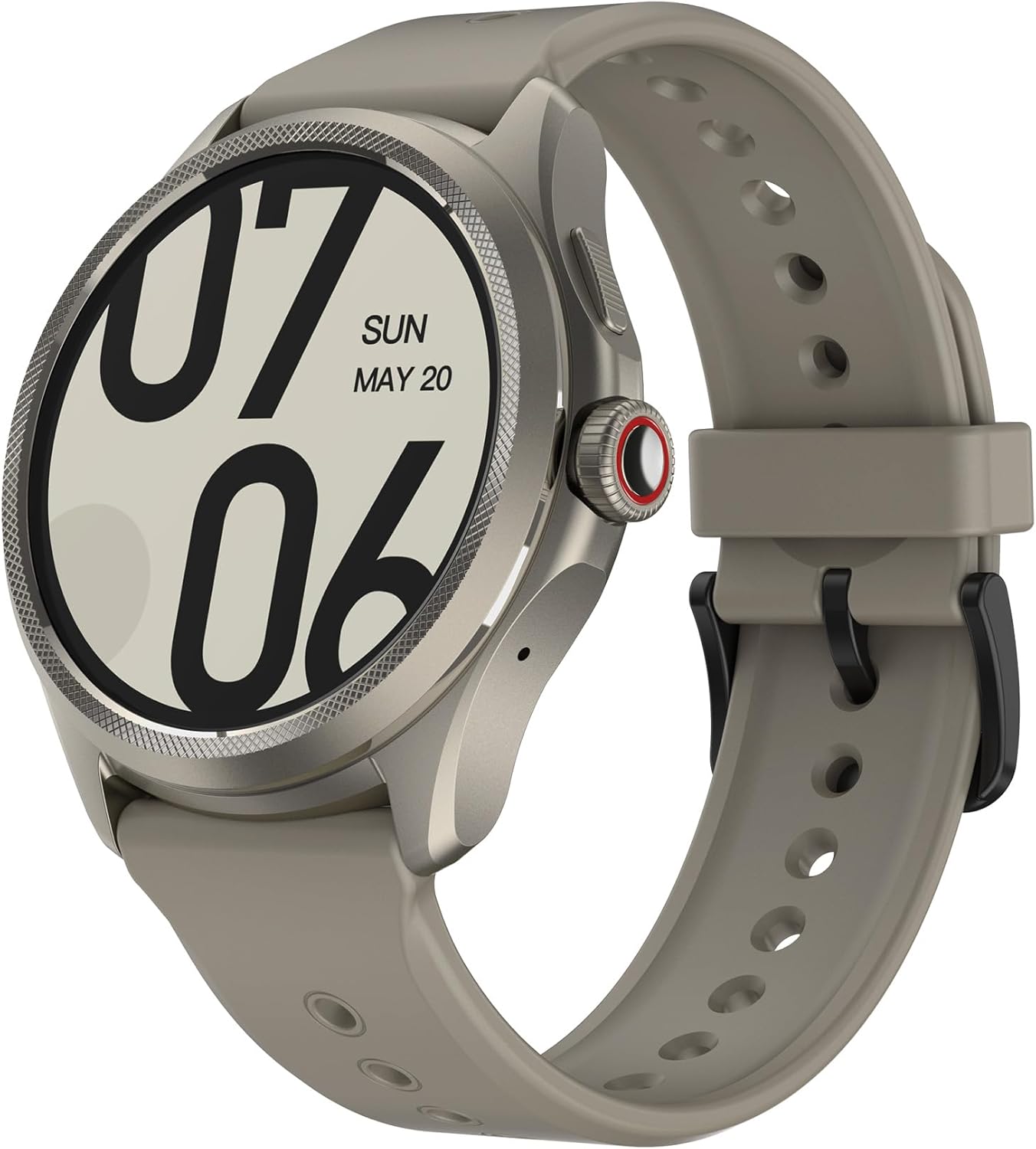
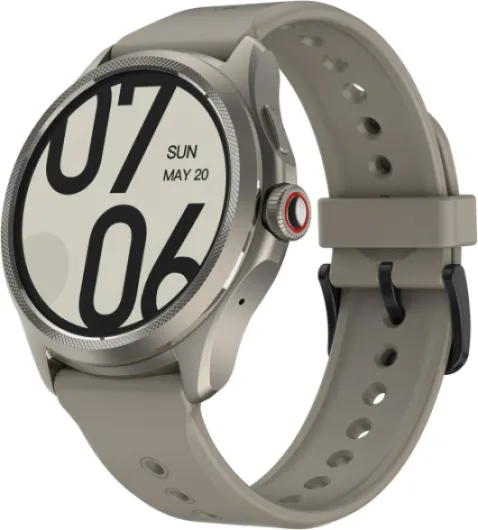
Design-wise, this is not a small or discreet watch. On my average-sized wrist, the Ticwatch Pro 5 looks definitely like a “gear” piece, not a dress watch. The case is fairly thick and wide, but the weight is surprisingly manageable. If you’re used to slim analog watches, this will feel big. If you’ve worn a Garmin Fenix or a Galaxy Watch Classic, it’s in that ballpark, maybe a bit lighter.
The cool part is the dual display: there’s an OLED panel underneath and an ultra-low-power FSTN display on top. In essential mode or when the main screen sleeps, you see this basic monochrome-style screen with time, steps, heart rate, and some other info. You can customize the backlight color (there are a lot of choices) and even tie colors to heart rate zones. During runs, the backlight changing with my heart rate was actually handy – I could see roughly where I was without staring at numbers.
The rotating crown on the right side is another strong point. It has decent haptic feedback and makes scrolling through tiles and menus much easier than swiping all the time. I used it a lot when my hands were a bit sweaty or when I was walking and didn’t want to block the whole screen with my finger. There’s also a side button, but most of the control ends up being crown + touch.
On the downside, this is not a dressy watch. With the stock strap and its size, it looks clearly like a tech gadget. You can swap the strap for leather or metal to dress it up a bit, but the thickness still gives it away. If you want something slim and more discreet under a shirt cuff, this will probably annoy you. For me, as a casual / sporty everyday watch, the design is fine and practical, but I wouldn’t call it stylish in a classic sense.
Battery life: finally a Wear OS watch that doesn’t live on the charger
Battery life is clearly one of the main selling points, and here the Ticwatch Pro 5 does pretty well. The brand talks about up to 80 hours, and in my use I got something like 2.5 days on average with: always-on display enabled, 24/7 heart rate, sleep tracking, a few short workouts with GPS every week, and regular notifications (WhatsApp, emails, calls). If I disabled always-on and reduced some notifications, I pushed it close to 3 days, but not much more.
The dual display helps a lot. The low-power screen kicks in when the main OLED is off, so you can still see time and basic info without draining the battery like crazy. There’s also an Essential Mode that relies mostly on that low-power display and strips down smart features. In that mode, you can stretch the battery much further, but you lose a lot of the smart stuff, so I only used it once during a weekend trip where I didn’t want to bring the charger.
Charging is fast enough to be practical. With the supplied cable, I usually saw around 0–65% in about 30 minutes, which matches the claim. A quick 15-minute charge before leaving home was enough to get me through a full day if I started from around 20%. The downside is the proprietary charger: lose it and you’re stuck until you buy another one. I’d have preferred a standard like USB-C directly on the watch, but that’s rare in this category.
Compared to my old Galaxy Watch 4 that barely survived a day with similar usage, this is a clear improvement. It doesn’t reach the week-long endurance of some Garmin or simpler fitness trackers, but for a full Wear OS watch with apps, Google services, and bright OLED, the battery is one of its strongest points. If you’re tired of charging your watch every single night, this one is a relief.
Comfort: fine for sports, borderline bulky for small wrists
In terms of comfort, the Ticwatch Pro 5 is a bit of a mixed bag. The silicone strap is soft enough and didn’t irritate my skin, even when I wore it 24/7 for several days, including at night for sleep tracking. The inside of the strap has some grooves that help with sweat, so it never felt like a sticky plastic band, even during runs. The buckle is basic but secure, and I never felt like it was going to fall off.
Where comfort can be an issue is the size and thickness. On my wrist (about 17 cm circumference), it’s okay but you definitely feel the watch is there. When I did push-ups or anything where my wrist bends a lot, the case could dig a little into the top of my hand. Not painful, just noticeable. At night, the size is more obvious: if you’re a light sleeper, you might find it annoying at first. I got used to it after a few nights, but if you hate sleeping with big watches, this might not be ideal.
During runs and workouts, the watch stayed in place without bouncing too much. The weight is well-balanced, so it doesn’t feel like a rock on the wrist. The heart rate sensor needs a fairly snug fit, and with that tightness, it still remained reasonably comfortable for 1–2 hour sessions. If you have very thin wrists, though, it will probably overhang a bit and feel more awkward.
Overall, I’d say comfort is decent but not great. It works for all-day wear and sports if you’re used to bigger watches, but it’s not the kind of watch you forget you’re wearing. If you prioritize a slim, almost invisible watch, this is not it. If you’re okay with a bit of bulk in exchange for features and battery, it’s acceptable.
Durability and water resistance: built to take a bit of abuse
The Ticwatch Pro 5 is advertised with US Military Standard 810H durability and 5ATM water resistance, which basically means it should handle daily abuse, some shocks, and swimming. I didn’t throw it against walls, but I did use it for runs in the rain, showers, and a few pool sessions. No issues so far: no fog under the screen, no weird behavior after water exposure. For open water swim, the watch tracked distance and time decently, though I’m not a hardcore swimmer.
The screen is protected by Corning Gorilla glass with an anti-fingerprint coating. In reality, fingerprints are still there (it’s a touchscreen, after all), but they wipe off easily. After a few weeks, I don’t see any scratches, even though I bumped it a couple of times on door frames and gym equipment. I didn’t put any extra screen protector on it. The bezel slightly protects the screen from flat impacts, which helps.
The case itself feels solid but is not metal all around; it uses a mix of materials that keep it light while still giving a rugged impression. The strap is the weak point in terms of long-term durability in my opinion. It’s fine now, but like most silicone straps, I expect it to show wear or tear after a year or so of daily use, especially around the holes and edges. The good news is that it uses standard lug sizes, so swapping to another band is easy and cheap.
Overall, for everyday use, workouts, and even some rough handling, durability seems pretty solid. I wouldn’t treat it like a dedicated outdoor watch designed for extreme sports, but for normal life plus regular workouts, it feels trustworthy. If you go climbing or do heavy manual work, I’d still be a bit careful, but that’s the case with most smartwatches anyway.
Performance and health tracking: fast watch, decent but not perfect metrics
The Snapdragon W5+ Gen 1 chip and 2 GB RAM do their job. Navigation is smooth, apps open quickly, and I rarely saw any serious lag. Swiping between tiles, opening notifications, using Google Assistant, everything feels more responsive than older Wear OS watches I’ve tried. The only slowdowns I noticed were right after a reboot or after installing multiple apps from the Play Store, which is pretty normal.
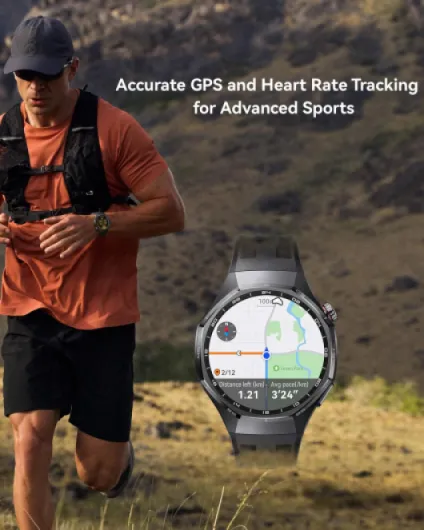
For fitness and GPS, I tested it mostly on outdoor runs, walks, and a bit of cycling. GPS lock was usually quick (10–20 seconds outdoors), and the tracks in Google Maps were mostly accurate, with some minor wobbles in dense city areas, but nothing dramatic. Compared to my phone’s GPS, distance and pace were close enough for casual training. Heart rate during steady runs looked reasonable, but during intervals or sudden changes in pace, it sometimes lagged or overshot for a bit before stabilizing. Good enough for general training, not ideal if you’re obsessed with perfect HR graphs.
The health features are plentiful: one-tap measurement of multiple metrics, VO2 Max, recovery time, stress, and sleep tracking. VO2 Max gave me a value in the same range as my Garmin, which is reassuring. Recovery time estimates felt a bit optimistic sometimes, telling me I was ready sooner than I actually felt, so I took those numbers with a grain of salt. The one-tap measurement is fun to use, but I didn’t see it changing how I live; it’s more of a gadget feature for me.
Sleep tracking is okay but not perfect. It usually detected sleep and wake-up times fairly well, but short awakenings in the middle of the night were not always captured. The breakdown into deep/light/REM is interesting to look at, but like on most watches, I don’t fully trust those details. As a general indicator of how long and roughly how well I slept, it gets the job done. Overall, performance is strong, and health tracking is good enough for casual users, but there are more accurate options out there if you’re very serious about data.
What you actually get with the Ticwatch Pro 5
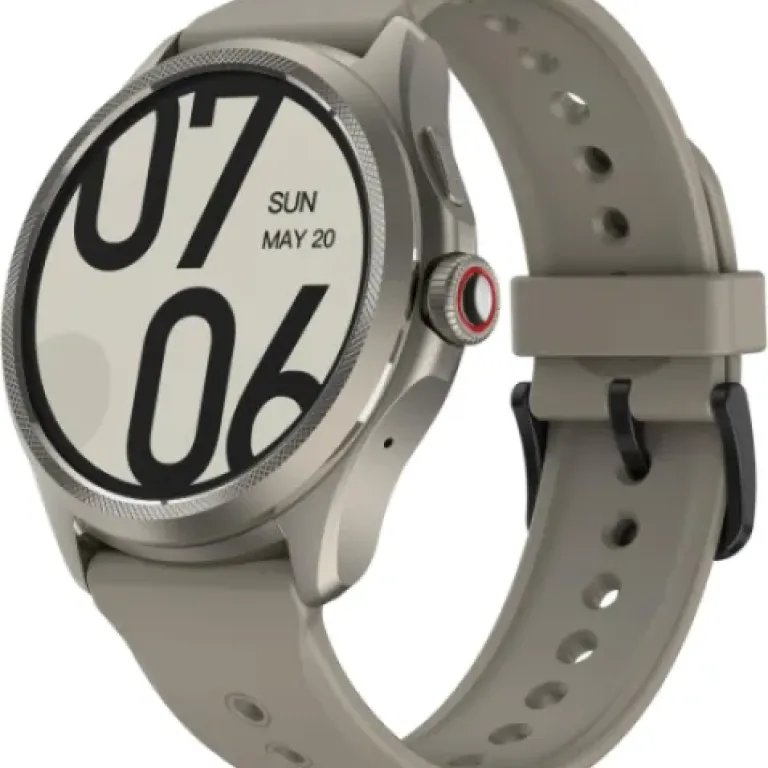
Out of the box, the Ticwatch Pro 5 looks like a typical “sporty men’s smartwatch”: round 1.43" OLED screen, fairly big body, silicone strap, and a rotating crown on the side. My unit is the Sandstone version, which is basically a light, slightly beige/grey tone. It’s not flashy, more neutral, which I like because it doesn’t scream “fitness toy” at work. In the box you get the watch, a proprietary charging cable, and the usual papers. No extra strap, no charger brick.
Setup is done through the Mobvoi app plus the normal Wear OS pairing flow. On my Pixel, pairing took around 10–15 minutes including updates and signing into Google. Nothing dramatic, but you do need a bit of patience the first time. Once set up, you have access to the Play Store on the watch, Google Maps, Google Wallet, notifications, and all the usual Wear OS stuff. The watch has 2 GB of RAM and 32 GB of storage, so there’s enough room for apps and offline music.
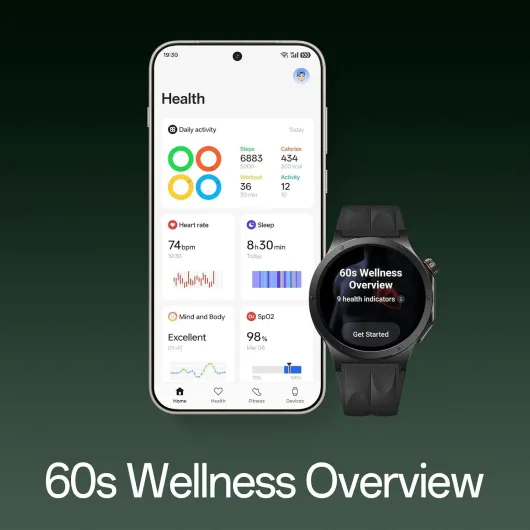
On the health side, the watch pushes a lot of features: 24/7 heart rate, SpO2, stress tracking, sleep tracking, VO2 Max, recovery time, and the one-tap measurement that checks several metrics at once. In practice, I used heart rate, sleep, and workouts the most. The one-tap measurement is more of a curiosity for me – fun to try, but not something I check daily. Still, it’s there if you like data.
Overall, the positioning of this product is clear: it’s a high-end Android-only smartwatch that wants to compete with the Galaxy Watch but with much better battery and a more rugged feel. It’s not the most polished ecosystem, and the Mobvoi app still feels a bit clunky compared to Samsung Health or Fitbit, but everything you’d expect from a modern smartwatch is there and works reasonably well.
Pros
- Very good battery life for a full Wear OS watch (around 2–3 days in real use)
- Fast and smooth performance thanks to Snapdragon W5+ and 2 GB RAM
- Dual display is practical, with useful low-power mode and heart-rate-based backlight colors
Cons
- Bulky design that can feel big and awkward on smaller wrists
- Mobvoi health app and ecosystem are less polished than some competitors
- Android-only compatibility limits long-term flexibility if you change phones
Conclusion
Editor's rating
The Ticwatch Pro 5 is a solid option if you want a powerful Android smartwatch that doesn’t die every night on the charger. The combination of the Snapdragon W5+ chip, 2 GB RAM, and the dual display gives you a fast watch with genuinely better battery life than most Wear OS rivals. For everyday use, notifications, music, Google Maps, and casual workouts, it handles everything without feeling slow or limited. The 5ATM water resistance and rugged build also make it reassuring for sports and outdoor use.
On the flip side, it’s a big and fairly bulky watch, so if you have small wrists or want something discreet under a shirt, this isn’t ideal. The Mobvoi health ecosystem is decent but not on the same level as Samsung or Garmin in terms of polish and insights. Some of the advanced health features feel more like nice extras than tools you’ll really depend on. And of course, it’s Android-only, so iPhone users should skip it entirely.
If you’re an Android user who cares more about battery life, performance, and a rugged feel than about having the slickest app and the slimmest design, the Ticwatch Pro 5 is a good fit. If you want a more compact watch or the cleanest software experience, I’d look at a Galaxy Watch or even a simpler fitness tracker instead. It’s a **strong all-rounder with clear strengths and a few trade-offs you need to accept.