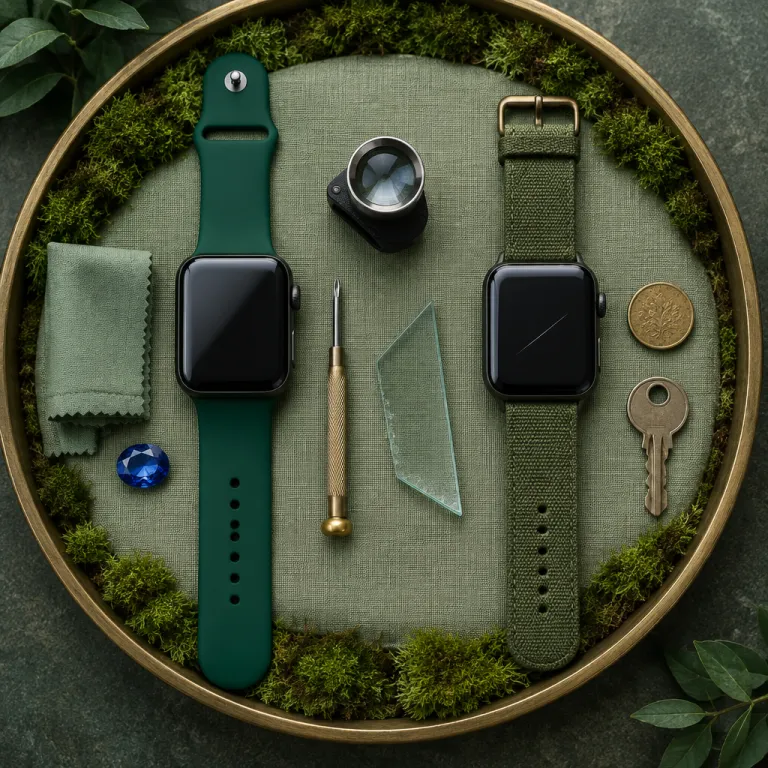
Smartwatch sapphire glass vs gorilla glass in real training life
On paper, the smartwatch sapphire glass vs gorilla glass debate looks simple. Sapphire crystal sounds premium, glass gorilla branding sounds tough, and marketing suggests one clear winner for every watch. Real training life is messier, and your wrist, pocket, and handlebars will give a different answer.
Think about what actually hits your watch screen during a week of workouts. Keys, zippers, sand at the track, barbell knurling, and the occasional rock on a steep outdoor trail all test scratch resistance in ways spec sheets rarely explain. Over several years of daily wear, those tiny contacts either leave a scratch or they do nothing, and that is where the mohs scale and mohs hardness numbers finally matter.
On the Mohs hardness scale, sapphire rates 9 while most strengthened glass sits around 6 to 7. That means sapphire glass on a Garmin Fenix or Apple Watch Ultra will shrug off quartz sand that can mark a standard glass sapphire alternative or a typical glass gorilla style panel. The tradeoff is that sapphire crystal is less forgiving when a hard impact tries to scratch break or even break gorilla style glass, because glass strong composites can flex slightly while sapphire will chip or shatter instead.
In practice, a sapphire smartwatch screen stays visually cleaner, with better long term optical clarity under bright sun. A Gorilla Glass or similar glass sapphire hybrid panel on midrange watches often shows micro scratches after months, especially if you train outdoor on dusty trails or lift weights without a screen protector. The smartwatch sapphire glass vs gorilla glass choice is therefore not about perfection, but about which type of damage you are more willing to accept on your watch.
Mohs scale, scratch resistance and what really attacks your watch
The mohs scale sounds academic until you realize your running path is basically a sandpaper factory. Quartz in sand sits around 7 on the Mohs hardness scale, which means it can scratch most toughened glass but not sapphire crystal. That single detail explains why some watches look tired after a season of trail runs while others still show pristine optical clarity.
When you compare smartwatch sapphire glass vs gorilla glass in pockets, gyms, and commutes, you are really comparing which materials can resist the hardest particles they meet. Keys and coins are usually softer than both sapphire and Gorilla Glass, so they rarely cause a scratch break event on either type of screen. Sand, concrete dust, and tiny rocks are harder, and they will test whether your glass will stay scratch resistant or slowly collect a haze of marks.
Sapphire glass wins the scratch resistance battle because sapphire is harder than almost everything your watch encounters. That is why premium outdoor watches like the Garmin Fenix series and Apple Watch Ultra rely on sapphire crystal for their main screen, especially for users who climb, hike, or ride gravel. By contrast, many everyday devices such as the Apple Watch SE or Samsung Galaxy Watch standard models use Gorilla Glass or similar glass gorilla composites, trading some scratch resistance for better impact absorption.
If you already plan to use a screen protector, the equation shifts. A thin tempered glass screen protector or a flexible film adds a sacrificial layer that takes the scratch first, whether the underlying panel is sapphire gorilla style glass or pure sapphire. In that case, you might get more value by spending on a robust case, and resources like this guide to choosing the right case for a 44 mm Apple Watch can matter more than the raw glass better specification.
Scratch resistance vs shatter resistance: pros, cons and real damage
Every smartwatch buyer wants a screen that is both scratch resistant and impossible to crack. Physics refuses that wish, so the smartwatch sapphire glass vs gorilla glass choice becomes a pros cons tradeoff between scratch resistance and shatter resistance. Sapphire crystal is harder and more scratch resistant, while Gorilla Glass and similar glass strong composites are usually better at surviving hard impacts.
Imagine clipping a door frame during a sprint to the office, or smashing your watch against a squat rack upright. In those moments, the ability of glass gorilla style panels to flex slightly can prevent a catastrophic scratch break or full shatter, where a more brittle sapphire glass panel might chip or crack. That is why some brands keep Gorilla Glass on sport focused devices that expect frequent knocks, even when marketing could easily sell sapphire as an upgrade.
On the other hand, long term wear tells a different story. After a couple of years, many Gorilla Glass watches show a constellation of fine scratches that soften optical clarity, especially under harsh gym lighting or bright outdoor sun. Sapphire crystal watches often look almost new in the same timeframe, because the sapphire second layer of hardness keeps the surface smooth, even if a rare impact can still break gorilla style glass less often than it can chip sapphire.
For Apple Watch buyers, the split is clear. The Ultra and stainless steel models use sapphire glass for maximum scratch resistance, while the aluminum models rely on Ion X glass, which behaves closer to Gorilla Glass in terms of impact handling and scratch resistance. If you are pairing a Series 9 with a protective shell, a guide to choosing the right Apple Watch Series 9 case may matter more than whether the underlying glass will be sapphire or not.
Who really benefits from sapphire crystal on a smartwatch
Not every wrist needs sapphire, and not every budget should stretch for it. The smartwatch sapphire glass vs gorilla glass decision becomes easier when you map it to your training, your job, and how you actually wear your watch. Outdoor athletes, manual workers, and people who keep their devices offline during rugged trips usually see the most value from sapphire.
If you spend hours on rocky trails, scrambling over boulders or gripping rough handlebars, sapphire glass is more than a luxury. The higher mohs hardness and superior scratch resistance keep optical clarity intact, so maps, pace fields, and heart rate zones stay easy to read even after years of abuse. For climbers, mountain bikers, and trail runners, that peace of mind often justifies the extra cost, especially on watches like the Garmin Fenix with sapphire crystal and anti reflective coatings.
Gym heavy routines also push screens hard. Barbell knurling, kettlebell handles, and cable machine hardware can all leave marks on glass gorilla style panels, while sapphire tends to shrug them off. If you train four to six days a week and rarely remove your watch, the long term wear pattern strongly favors sapphire, particularly when combined with a low profile screen protector that adds impact cushioning without ruining optical clarity.
There is also a case for sapphire on devices you plan to keep for many years. A premium watch with sapphire glass will usually look fresher when you eventually resell or pass it on, because the screen remains almost scratch free. For athletes exploring advanced recovery tools like the Amazfit Helio strap, guides on what to expect from smarter training accessories show how a clear, undamaged screen helps you actually use those metrics during offline workouts.
When Gorilla Glass and good protection are the smarter spend
Plenty of buyers do not need sapphire, even if the marketing reply suggests otherwise. If your smartwatch mostly lives under a shirt cuff, tracks indoor workouts, and rarely meets rocks or sand, Gorilla Glass with a solid case and screen protector is usually enough. In those scenarios, the smartwatch sapphire glass vs gorilla glass difference shrinks, and the extra money can go into better sensors or a longer battery.
Desk based professionals who train on treadmills, road bikes, or gym machines see fewer hard particles and fewer violent impacts. For them, a glass gorilla style panel with decent scratch resistance and a cheap tempered glass screen protector often keeps the watch looking clean for years. The occasional micro scratch will appear, but it rarely affects optical clarity in normal indoor lighting, and many users stop noticing after a week.
There is also the simple reality that any glass will break if you hit it hard enough. Whether you choose sapphire glass or Gorilla Glass, a direct blow on a sharp edge can cause a scratch break or full shatter, and no marketing phrase like glass strong or glass better can change that. A robust case that raises the bezel, combined with a replaceable screen protector, often does more for real world resistance than the underlying material alone.
For buyers comparing pros cons across entire watch lineups, it helps to think in total package terms. A midrange watch with Gorilla Glass, great GPS, and reliable heart rate tracking can be a better training partner than a sapphire gorilla hybrid flagship with mediocre software. In the end, the best devices are the ones you trust every morning, because durability is not the spec sheet, but the tenth morning of tracked sleep when your watch still feels like a tool, not a worry.
FAQ
Is sapphire crystal really more scratch resistant than Gorilla Glass on a smartwatch?
Yes, sapphire crystal is significantly more scratch resistant than Gorilla Glass because sapphire rates around 9 on the Mohs hardness scale while Gorilla Glass sits closer to 6 or 7. That means sand and other hard particles that can mark Gorilla Glass usually slide off sapphire without leaving a scratch. The tradeoff is that sapphire can be more brittle under hard impacts, so it resists scratches better but may chip more easily if hit sharply.
Will my Gorilla Glass smartwatch screen look bad after a few years of wear?
Most Gorilla Glass smartwatch screens pick up fine scratches over several years of daily wear, especially if you train outdoors or work around dust and grit. Those marks rarely affect basic readability, but they can reduce optical clarity under bright light and make reflections more noticeable. A simple screen protector and a protective case can greatly slow this cosmetic aging.
Do I still need a screen protector if my watch has sapphire glass?
A sapphire glass screen is highly scratch resistant, but a screen protector can still help by absorbing impacts that might otherwise chip the crystal. Many athletes use a thin tempered glass or film protector on sapphire watches to add impact cushioning without sacrificing much clarity. This combination keeps the underlying sapphire almost pristine while making cheap, replaceable layers take the damage.
Is the extra cost of sapphire crystal worth it for casual smartwatch users?
For casual users who mostly work at a desk and exercise indoors, the extra cost of sapphire crystal often brings limited practical benefit. Gorilla Glass with a good case and screen protector usually offers enough resistance for that lifestyle, and the saved money can go toward better health features or a higher tier model. Sapphire becomes more compelling when you train outdoors frequently or expect to keep the watch for many years.
Which is better for impact resistance, sapphire or Gorilla Glass?
Gorilla Glass and similar strengthened glass types generally handle impacts better than sapphire because they can flex slightly instead of chipping. Sapphire excels at resisting scratches but is more brittle, so a sharp blow on a hard edge is more likely to crack it. If you often hit your watch against equipment or door frames, Gorilla Glass with a protective case may be the safer choice.